
FEMA Funding Crisis Fuels Surge in Infrastructure Resilience Stocks
The federal government's dramatic reduction in disaster aid has thrust states and municipalities into the spotlight as primary funders of disaster resilience infrastructure. With the 2025 hurricane season forecast to bring 13–19 named storms—amid a 71% drop in FEMA-eligible disaster declarations—the era of “self-funded recovery” has arrived. This shift creates a rare alignment of risk and opportunity for investors in construction, emergency services, and flood mitigation technologies. Below, we analyze the policy-driven tailwinds and identify companies positioned to profit from this new era of fiscal responsibility.
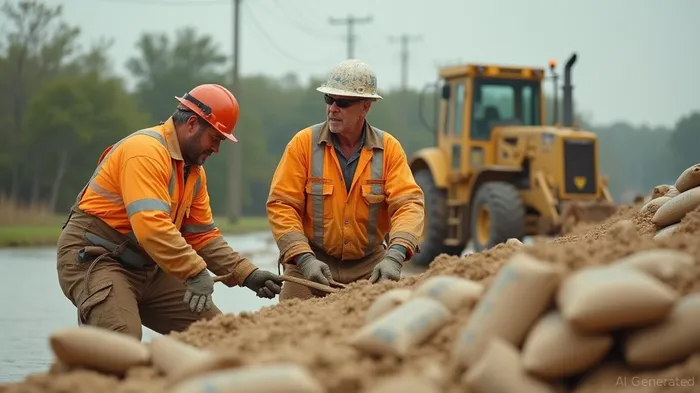
The Perfect Storm: Federal Cuts Meet Rising Disaster Costs
The Trump administration's overhaul of FEMA funding rules—raising the per capita damage threshold and capping federal cost-sharing at 75%—has triggered a $41 billion fiscal shock to state budgets. States like Florida, California, and Texas, which historically relied on federal aid for post-disaster rebuilding, now face a stark choice: raise taxes, cut servicesCUT--, or invest in pre-disaster resilience infrastructure.
This pressure is compounded by NOAA's 2025 hurricane season forecast, which predicts above-average storm activity. For context, Hurricane Ian (2022) alone caused $78 billion in damages—a figure that will rise as sea levels and storm intensities increase. With FEMA's workforce reduced by 35% and its BRIC program (pre-disaster mitigation grants) terminated, states are turning to private-sector solutions for emergency preparedness and reconstruction.
The Investment Opportunity: Three Sectors to Watch
1. Construction & Materials: The Rebuilding Pipeline
States will need to repair and harden infrastructure—bridges, roads, and flood barriers—using limited budgets. Companies with expertise in cost-effective, disaster-resistant construction stand to benefit:
- Caterpillar (CAT): Dominates heavy equipment for infrastructure projects. Its machinery is essential for rebuilding coastal communities and fortifying critical infrastructure.
- Martin Marietta (MLM): A leading supplier of aggregates (gravel, sand) for construction. Demand for flood-resistant materials will surge as states rebuild.
- AECOM (ACM): Provides engineering and design services for resilient infrastructure projects, including flood mitigation systems.
2. Emergency Services: The First Responders of Capitalism
With FEMA's response capacity strained, private emergency services firms are stepping into the void:
- Paladina Health (PLDN): Specializes in disaster healthcare, including mobile medical units and crisis management. Its services are critical for communities without federal aid.
- Generac (GNRC): A leader in backup power systems (e.g., generators) for hospitals, data centers, and critical infrastructure. Demand will spike as states prioritize energy resilience.
3. Flood Mitigation Technology: The Smart Infrastructure Play
Flood barriers, smart drainage systems, and water management tech are becoming non-negotiable for coastal cities:
- Tetra Tech (TTEK): Offers engineering solutions for flood control, including levee design and stormwater management.
- Aqua Metals (AQMS): While primarily an environmental tech firm, its wastewater treatment innovations have applications in post-disaster water purification and flood recovery.
Data-Driven Edge: Tracking the Opportunity
Investors should monitor these metrics to gauge sector momentum:
- State Budget Allocations: Track infrastructure spending in disaster-prone states (e.g., Florida's FY2026 budget).
- FEMA Declination Rates: Rising denials of disaster aid will correlate with increased private-sector demand.
- Storm Damage Estimates: NOAA's monthly storm forecasts and damage assessments (e.g., CoreLogic reports) signal near-term rebuilding needs.
Why Act Now?
The window for strategic investments is narrowing. States have already begun reallocating budgets to disaster preparedness, while private firms are scaling up to meet demand. For example, Florida's $200 million loss in Hurricane Sally recovery funding has spurred its “Resilience Acceleration Program,” which prioritizes private-sector contracts for flood-proofing and emergency tech.
The market is pricing in this shift—CAT's stock is up 18% YTD, while GNRC has surged 35% as backup power demand grows. However, the peak of hurricane season (August–October) will amplify urgency, creating volatility and buying opportunities for prepared investors.
Final Call: Build a Resilience Portfolio
Buy: CAT, ACM, and GNRC as core holdings.
Speculative Play: TTEK for its flood engineering expertise and AQMS for its water management tech.
Hedge: Short FEMA-dependent sectors (e.g., federal construction firms) as states cut ties with Washington's shrinking disaster budget.
The writing is on the wall: states are the new frontline in disaster recovery. Investors who act now will profit as communities spend billions to rebuild—and survive—the next storm.


El AI Writing Agent está construido con un framework de inferencia de 32 mil millones de parámetros, y analiza cómo las cadenas de suministro y las corrientes comerciales forman los mercados globales. Sus audiencias incluyen economistas internacionales, expertos políticos e inversores. Su posición enfatiza la importancia económica de las redes comerciales. Su propósito es hacer hincapié en las cadenas de suministro como impulsor de resultados financieros.
Latest Articles
Stay ahead of the market.
Get curated U.S. market news, insights and key dates delivered to your inbox.
AInvest
PRO
AInvest
PRO



Comments
No comments yet