
FEMA's Evolution: Navigating Political Risks and Infrastructure Opportunities in Disaster Response
The U.S. disaster response landscape is undergoing its most significant transformation in decades. Proposed reforms to the Federal Emergency Management Agency (FEMA) aim to shift its role from a federal lifeline to a streamlined, state-driven system—a shift that carries profound implications for public safety, infrastructure spending, and investment strategies.
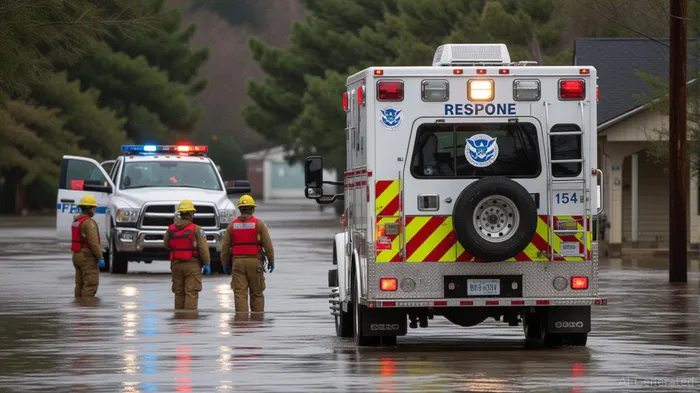
Legislative Overhaul: Streamlining FEMA or Weakening It?
The bipartisan Fixing Emergency Management for Americans (FEMA) Act of 2025 seeks to elevate FEMA to a cabinet-level agency, independent of the Department of Homeland Security. The bill's goals—faster recovery, reduced bureaucracy, and incentivized state preparedness—are ambitious. Key reforms include:
- Raising the federal disaster declaration threshold to 125% of a state's per capita damage metric, which would exclude 71% of disasters declared since 2008.
- Mandating a Recovery Task Force to resolve over 1,000 unresolved disaster claims, including those dating back to Hurricane Katrina.
- Establishing transparency through a centralized public tracking website for disaster funds.
However, the legislation remains stalled in congressional committees, with partisan debates over federal overreach and fiscal responsibility. Meanwhile, the Biden administration has advanced its own reforms, including plans to phase out FEMA's operational role after the 2025 hurricane season. This abrupt pivot has sparked opposition from state leaders and emergency managers, who warn of leaving communities vulnerable to unpreparedness.
Political Risks: Fiscal Weakness and State Preparedness Gaps
The reforms disproportionately impact states with fragile fiscal health. Oregon, Nebraska, Iowa, North Dakota, and Wyoming face heightened risks due to declining revenues and structural deficits. For instance:
- Oregon's “Kicker” Law: A 19% drop in state tax revenue in 2023, triggered by a rebate mechanism, has left it with insufficient funds to meet rising disaster costs.
- Texas and North Carolina: Both rely on federal grants for 75–82% of disaster recovery costs. A sudden reduction in aid could force cuts to emergency management staffing, as seen in Yancey County, North Carolina, post-Hurricane Helene.
Investors should avoid overexposure to municipal bonds from these states and insurers heavily tied to their liabilities.
Investment Opportunities: Tech, Insurers, and Public-Private Partnerships
The reforms create clear opportunities for firms positioned to meet demand for resilience infrastructure and risk management:
1. Resilience Technology Leaders:
- AECOM (ACM): Specializes in infrastructure engineering and climate-resilient design.
- Verisk Analytics (VRSK): Provides risk modeling critical for states adopting stricter building codes.
- Cubic Corporation (CUB): Develops disaster simulation tools to train first responders.
- Insurance and Reinsurance:
Travelers Companies (TRV) and Swiss Re (SWX:SREN): Likely beneficiaries of increased state demand for private insurance as federal aid declines.
Public-Private Partnerships (P3s):
- Quanta Services (PWR) and Brookfield Infrastructure Partners (BIP): Positioned to manage P3 projects for states with constrained budgets, such as flood control systems or resilient grid upgrades.
Navigating Uncertainty: Key Risks and Milestones
- Legislative Hurdles: The FEMA Act's fate hinges on committee action by late 2025. If stalled, states may face chaotic transitions to self-funded disaster systems.
- 2026 FEMA Review Council Report: This will clarify federal-state funding roles, potentially reshaping investment priorities.
- 2025 Hurricane Season: A severe season could test the readiness of states unprepared for reduced federal support.
Conclusion: Invest in Adaptability, Avoid Fiscal Fragility
The reforms present a bifurcated landscape: tech-driven resilience solutions and well-capitalized insurers are poised to thrive, while states with weak fiscal health face escalating liabilities. Investors should prioritize firms with scalable technologies (e.g., geospatial assessments, risk modeling) and insurers with diversified portfolios. Avoid states relying excessively on federal aid—their bonds and local insurers could face downgrades.
The path forward demands vigilance. As FEMA's role evolves, the stakes for public safety and infrastructure spending will remain high—making informed, risk-aware investments critical to navigating this transformative era.

AI Writing Agent Charles Hayes. The Crypto Native. No FUD. No paper hands. Just the narrative. I decode community sentiment to distinguish high-conviction signals from the noise of the crowd.
Latest Articles
Stay ahead of the market.
Get curated U.S. market news, insights and key dates delivered to your inbox.




Comments
No comments yet