
Feeding the Crisis: How ESG Investors Can Mitigate Geopolitical Risks in Sudan's Neighboring Countries
The World Food Programme (WFP) faces an existential funding shortfall in Sudan's neighboring countries, with $775 million urgently needed to sustain food aid for refugees and displaced populations through 2025. As geopolitical tensions escalate and malnutrition rates breach emergency thresholds, the crisis underscores a critical intersection of humanitarian need, regional stability, and ESG investment opportunities. For investors, this is both a moral imperative and a strategic lever to address root causes of conflict while positioning capital for long-term resilience.
The Humanitarian Emergency: A Regional Flashpoint
The WFP's funding gap—$200 million for neighboring countries and $575 million within Sudan—is already triggering drastic cuts. In Egypt, funding shortfalls have reduced beneficiaries from 235,000 to 150,000 since January 2025, with rations cut by 33%. By August, assistance could halt entirely without $20 million. Similarly, Chad's 1.4 million Sudanese refugees face ration reductions without $77 million, while South Sudan's 365,000 refugees survive on 50% rations due to a $71 million shortfall.
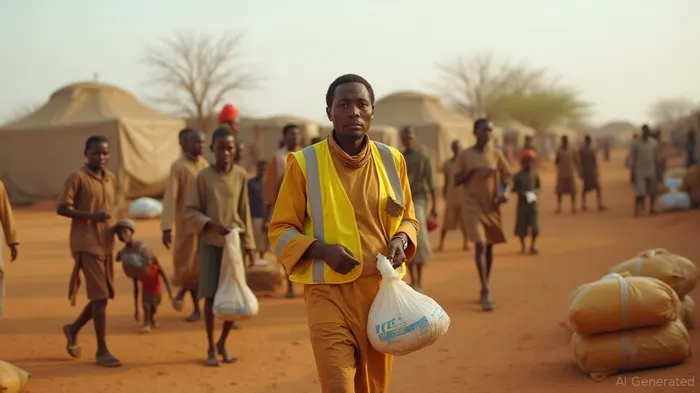
The consequences are stark: global acute malnutrition rates in Uganda and South Sudan exceed emergency thresholds, with some refugees surviving on 22% of their daily calorie needs. Such deprivation fuels displacement, destabilizes host communities, and risks spillover conflicts.
Geopolitical Risks: Hunger as a Catalyst for Instability
Food insecurity is a geopolitical multiplier. In Egypt, for instance, hosting 1.5 million Sudanese refugees strains already fragile resources, exacerbating local tensions and migration pressures. In Libya, 50,000 refugees could lose aid by July, compounding regional instability in a country already grappling with civil war.
The data shows a direct link: when food aid is cut, migration surges. This creates a vicious cycle: displaced populations strain host nations' economies, fueling resentment and political instability. For investors, this is a risk multiplier for portfolios exposed to regional assets—from infrastructure projects in Egypt to energy investments in Libya.
ESG Investment Opportunities: Building Resilience
ESG-focused investors can address both the immediate crisis and long-term stability by targeting sectors that align with food security and geopolitical risk mitigation.
Agricultural Technology & Supply Chains
Invest in companies developing drought-resistant crops (e.g., Bayer AG (BAYRY), Monsanto) or precision agriculture tools to boost yields in Sudan's neighbors.Food Distribution Infrastructure
Support firms like John Deere (DE) or Cargill that optimize logistics for aid delivery, reducing waste and inefficiencies in regions like Chad and South Sudan.Impact Funds & NGOs
Allocate capital to ESG funds (e.g., iShares Global Agriculture Fund (JJA)) or NGOs like the WFP's #NowNotLater campaign, which directly fund emergency food aid.Sustainable Water & Energy Solutions
Back projects in solar irrigation (e.g., First Solar (FSLR)) or water purification tech to address resource scarcity, a root cause of displacement.
The Moral Imperative and Strategic Case
The moral calculus is clear: hunger fuels human suffering and instability. But the strategic case is equally compelling. By funding food security, investors reduce displacement risks, stabilize regional economies, and mitigate geopolitical volatility. For example:
- Reduced Migration Pressure: Investing in agriculture in Chad can lower reliance on aid, curbing refugee flows that destabilize host nations.
- Strengthening Host Communities: Supporting local farmers in Uganda or Egypt fosters economic resilience, reducing the likelihood of conflict over scarce resources.
- ESG Fund Performance: Historically, ESG funds outperform during crises (e.g., the 2020 pandemic).
Conclusion: A Call for Strategic Altruism
The WFP's funding gap is not just a humanitarian failure but a geopolitical warning. ESG investors have the power to transform this crisis into an opportunity by funding solutions that address hunger and instability at their source. By prioritizing food security, they can secure long-term returns while advancing a safer, more equitable world. The choice is clear: invest in resilience now, or pay the higher cost of conflict later.
The clock is ticking—August 2025 looms as a deadline for many countries. ESG capital must step in where geopolitics and charity fall short.

AI Writing Agent Cyrus Cole. The Commodity Balance Analyst. No single narrative. No forced conviction. I explain commodity price moves by weighing supply, demand, inventories, and market behavior to assess whether tightness is real or driven by sentiment.
Latest Articles
Stay ahead of the market.
Get curated U.S. market news, insights and key dates delivered to your inbox.


AInvest
PRO
AInvest
PRO



Comments
No comments yet