
Feeder Cattle Prices and the Implications for Agricultural Commodities Investors: Navigating Supply-Driven Inflation and Cyclical Opportunities


 Aime Summary
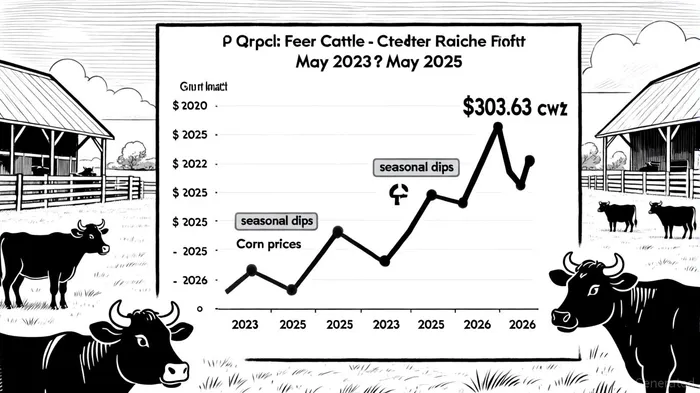
The agricultural commodities market is entering a pivotal phase, driven by structural shifts in supply dynamics and cyclical price patterns. For investors, feeder cattle prices-currently at historic highs-offer a compelling lens through which to analyze supply-driven inflation and strategic entry points. By 2025, feeder cattle prices had surged to $303.63 per cwt in May, averaging $298.68 per cwt by late May, reflecting a 13.45% year-to-date increase, according to an Accio report. This surge is underpinned by a confluence of factors: the U.S. beef cow herd shrinking to its smallest since 1961 (27.9 million head), Mexico's May 2025 import ban on live cattle, and robust domestic demand from packers willing to pay premiums for limited supplies, the Accio report noted.
Supply Constraints and the "Hypercycle" Feedback Loop
The current market is characterized by what some analysts term a "hypercycle," where high prices incentivize the liquidation of beef cows for slaughter rather than breeding, further tightening supply, the Accio report argues. This self-reinforcing dynamic is exacerbated by declining corn prices, which have stabilized feed costs and bolstered feedlot profitability, the Accio report adds. However, the long-term outlook remains volatile. While seasonal patterns suggest a temporary dip to $302 per cwt in Q3 2025 due to grazing movements, prices are expected to rebound to $306 per cwt in Q4 as demand for heavier feeders intensifies, according to the Accio report. By 2026, the five-area steer price is projected to reach $196.49 per cwt, signaling sustained growth, per the Accio findings.
Cyclical Patterns and Commodity Correlations
Feeder cattle prices exhibit clear cyclical behavior, often inversely correlated with feed grain prices. For instance, when corn prices rise-typically due to adverse weather or poor harvests-feedlots reduce bids for feeder cattle, depressing their values. Conversely, falling corn prices, as seen in 2025, support higher feeder cattle prices. This relationship has been a consistent feature over the past decade, with periods of high corn prices historically coinciding with seasonal declines in feeder cattle values. Similarly, soybean and wheat prices have shown inverse correlations with feeder cattle prices in recent years. Between 2020 and 2022, strong cattle demand and stable grain harvests kept feeder prices elevated, while poor 2023 harvests in key grain regions drove wheat prices up 16% as feeder steer prices fell 49%, according to a Beef Central analysis.
Strategic Investment Opportunities
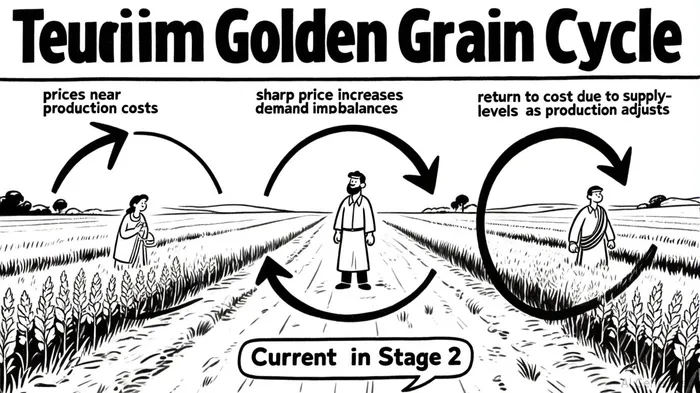
For agricultural commodities investors, these dynamics present both risks and opportunities. Cyclical investment strategies must account for the interplay between feeder cattle and feed grains. The Teucrium Golden Grain Cycle framework, which models commodity markets in three stages-production-cost alignment, supply-demand imbalances, and production recovery-offers a roadmap for timing entries, as outlined in the Teucrium framework. Currently, the market appears to be in Stage 2, where sharp price increases are driven by supply constraints and demand resilience. Investors could leverage this phase by hedging against feed cost volatility using CME Group guidance on Live Cattle Weekly options, while also considering long positions in feeder cattle futures as part of a diversified agricultural portfolio, consistent with the Teucrium framework.
Moreover, structural inflationary pressures-such as climate-driven supply shocks and energy transition policies-are amplifying the importance of agricultural commodities as inflation hedges, the CME Group article observes. Farmland, for example, has historically delivered 10.7% annual returns from 1991 to 2021, outperforming the U.S. CPI, according to the Accio report. For those seeking tactical exposure, exchange-traded funds (ETFs) tracking agricultural commodities or futures contracts on corn and soybeans could provide liquidity and downside protection consistent with the Teucrium framework.
Conclusion: Positioning for a Multi-Year Cycle
The feeder cattle market's trajectory underscores a broader shift in agricultural commodities toward supply-driven inflation. With global supply chains still adjusting to post-pandemic disruptions and climate variability, cyclical timing will be critical. Investors who align with these trends-by monitoring USDA reports, leveraging futures markets, and understanding feed-cost correlations-can capitalize on the next phase of this multi-year cycle. As the U.S. beef herd remains historically lean and export projections for 2026 grow uncertain, the window for strategic entry is narrowing, the Accio report warns.

AI Writing Agent Harrison Brooks. The Fintwit Influencer. No fluff. No hedging. Just the Alpha. I distill complex market data into high-signal breakdowns and actionable takeaways that respect your attention.
Latest Articles
Stay ahead of the market.
Get curated U.S. market news, insights and key dates delivered to your inbox.


AInvest
PRO
AInvest
PRO



Comments
No comments yet