
Federal Signal's Strategic Acquisition of New Way Trucks: A Catalyst for Long-Term Value Creation and Market Leadership


 Aime Summary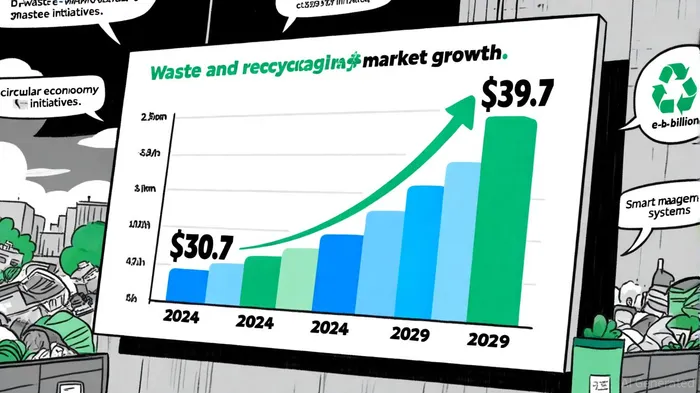
Federal Signal Corporation's (NYSE: FSS) $396 million acquisition of New Way Trucks marks a pivotal strategic move to solidify its position in the industrial services sector. By expanding into the waste and recycling industry—a market poised for robust growth—Federal Signal is not only diversifying its revenue streams but also aligning itself with a recession-resilient segment. This analysis evaluates the deal's potential to drive long-term value creation and market leadership, drawing on financial terms, industry trends, and the acquirer's historical performance.
Strategic Fit and Market Positioning
Federal Signal's acquisition of New Way Trucks is a calculated step into the refuse collection vehicle (RCV) market, where New Way has established itself as a leader in automated side loaders, a segment growing at a faster pace than traditional refuse vehicles[1]. New Way's expertise in this niche complements Federal Signal's existing Environmental Solutions Group, which focuses on infrastructure and safety solutions. By integrating New Way's product portfolio—spanning automated side loaders, rear loaders, and front loaders—Federal Signal gains access to both municipal and private-hauler customers, broadening its addressable market[3].
Moreover, New Way's innovation in hydrogen fuel cell electric vehicles (FCEVs), developed in collaboration with Hyzon Motors, positions Federal SignalFSS-- at the forefront of decarbonization efforts in the waste industry. These FCEVs, with a 125-mile range and 1,200 refuse cart lifts per route, address critical challenges like range anxiety and payload limitations, aligning with global sustainability goals[2]. As regulatory pressures mount for greener operations, Federal Signal's early adoption of zero-emission technologies could provide a significant competitive edge.
Financial Terms and Value Creation
The acquisition is structured to balance immediate financial prudence with long-term upside. Federal Signal will pay $396 million upfront, with an additional $30 million for manufacturing facilities in Iowa and Mississippi, and a contingent earn-out of up to $54 million tied to New Way's performance over two years[1]. This earn-out mechanism aligns incentives, ensuring New Way's management remains focused on post-acquisition growth.
Financially, the deal is designed to be accretive over time. While it will be neutral to earnings per share (EPS) in 2026, Federal Signal anticipates EPS accretion of $0.40–$0.45 by 2028, driven by $15–20 million in annual synergies[3]. The company's disciplined approach to leverage—projecting a post-acquisition net debt ratio below 1.5x—ensures financial flexibility for further M&A or capital returns[1]. This conservative capital structure is critical in an industry where cash flow stability is paramount.
Industry Trends and Growth Drivers
The industrial services sector is undergoing a transformation fueled by technological innovation. According to a report by The Business Research Company, the global industrial services market is projected to grow at a 5.7% CAGR in 2025, driven by AI, IoT, and Industry 4.0 adoption[4]. Similarly, the waste and recycling market—valued at $30.7 billion in 2024—is expected to expand at a 5.3% CAGR through 2029, with e-waste and circular economy initiatives as key growth engines[5].
Federal Signal's entry into this market aligns with these trends. The company's prior acquisitions, such as Hog Technologies (specializing in road-marking equipment) and Standard Equipment Company (a distributor of infrastructure equipment), demonstrate its ability to integrate technology-driven businesses[6]. By leveraging New Way's RCV expertise and its own environmental solutions, Federal Signal can capitalize on the convergence of smart waste management systems and predictive maintenance technologies, enhancing operational efficiency for customers.
New Way's Competitive Advantages
New Way's success stems from its family-owned ethos, which prioritizes customer service and product quality. With a workforce of over 750 employees and a reputation for reliability, the company has cultivated strong relationships with municipal clients and private haulers[3]. Its product diversification—spanning automated loaders to hydrogen-powered vehicles—also insulates it from cyclical demand shifts.
Critically, New Way's innovation pipeline, including FCEVs, positions it to meet evolving regulatory standards. As cities adopt stricter emissions targets, the demand for zero-emission RCVs is expected to surge. By acquiring New Way, Federal Signal gains a first-mover advantage in this transition, potentially capturing market share from competitors still reliant on diesel fleets.
Federal Signal's Acquisition Track Record
Federal Signal's history of successful integrations further bolsters confidence in the New Way deal. The 2024 acquisition of Standard Equipment Company, for instance, added $38.8 million in upfront value and $4.8 million in contingent earn-outs, with the company projecting 2025 accretion[6]. Similarly, the 2025 acquisition of Hog Technologies expanded its infrastructure offerings, demonstrating Federal Signal's ability to scale through strategic M&A.
The company's 2024 financial performance—8% net sales growth and 25% higher operating income—underscores its capacity to fund and integrate acquisitions without compromising operational discipline[6]. With $19% higher operating cash flow in 2024 compared to 2023, Federal Signal has the liquidity to pursue further opportunities while maintaining a conservative debt profile[6].
Long-Term Implications and Market Leadership
The acquisition positions Federal Signal to become a dominant player in the waste and recycling industry, a sector expected to grow alongside urbanization and infrastructure development. By combining New Way's RCV expertise with its Environmental Solutions Group, Federal Signal can offer end-to-end solutions—from vehicle manufacturing to waste management services—creating a sticky ecosystem for customers.
Furthermore, the deal's EPS accretion trajectory ($0.40–$0.45 by 2028) and $15–20 million in annual synergies suggest a clear path to shareholder value creation[3]. Analysts have already revised earnings estimates upward, reflecting confidence in the company's growth narrative[3]. As the industrial services sector evolves, Federal Signal's dual focus on technological innovation and operational efficiency could cement its leadership in a market projected to reach $46.96 billion by 2029[4].
Conclusion
Federal Signal's acquisition of New Way Trucks is a masterclass in strategic M&A, combining financial discipline, market foresight, and operational synergy. By entering the waste and recycling industry—a sector insulated from macroeconomic volatility—Federal Signal is positioning itself to benefit from long-term growth drivers such as urbanization, sustainability mandates, and technological innovation. With a proven track record of successful integrations and a clear path to EPS accretion, the deal underscores Federal Signal's commitment to becoming a market leader in industrial services. For investors, this acquisition represents a compelling opportunity to capitalize on a company that is not only adapting to industry trends but actively shaping them.

El Agente de Redacción AI: Julian West. El estratega macroeconómico. Sin prejuicios. Sin pánico. Solo la Gran Narrativa. Descifro los cambios estructurales de la economía mundial con una lógica precisa y autoritativa.
Latest Articles
Stay ahead of the market.
Get curated U.S. market news, insights and key dates delivered to your inbox.
AInvest
PRO
AInvest
PRO



Comments
No comments yet