
Federal Reserve Set to Decide on Rate Cut: Key Risks and Opportunities for Investors


 Aime Summary
The Federal Reserve is on the verge of a critical decision. On December 10, 2025, the central bank will decide whether to cut interest rates for the third time in 2025. With a divided policy committee and limited recent economic data due to a government shutdown, the stakes are high. For investors, the outcome could signal a shift in the Fed's strategy—and have ripple effects across the broader market. The decision is expected to bring the federal funds rate to a range of 3.75% to 4%, but how the Fed frames its next steps will shape market sentiment for months to come.
The Core of the Fed's December 10 Decision
The Federal Reserve's rate-setting decision centers on balancing two competing forces: a fragile labor market and persistent inflation. The government shutdown has delayed key economic data, including November job reports, which means the Fed is making a move with incomplete information. Economists and traders are largely expecting a 25-basis-point rate cut, but the lack of data means the central bank is operating in a fog. This uncertainty has led to a divided committee, with as many as three members expected to dissent—more than at any meeting in six years.
The rate cut is seen as a way to provide some relief to borrowers and potentially support economic growth. However, it also carries risks. With inflation still above the Fed's 2% target and unemployment rising, a cut could be interpreted as premature by some observers. Fed Chair Jerome Powell has been cautious, emphasizing the need to assess the full picture before making any decisions. That said, the consensus appears to be that a rate cut is the most likely outcome at least for now.
Key Drivers and Divisions Within the Fed
The decision is being influenced by a number of key factors. First, the U.S. labor market has shown signs of weakening. The unemployment rate has risen to 4.4%, and job growth has slowed. November data, which would have provided more clarity, is delayed, adding to the challenge. In addition, the core personal consumption expenditures (PCE) price index—considered the Fed's preferred inflation measure—has remained steady at 2.8% for the third consecutive month. While that's below the 3.2% level some had feared, it's still above the 2% target, suggesting inflation remains a concern.
Internally, the Fed is split. Some members, like Atlanta Fed President Raphael Bostic, have warned against cutting rates too quickly and emphasized the inflation risks. Others, including Kansas City Fed President Jeffrey Schmid, have been more supportive of a cut. This divergence has led to speculation that the Fed may signal a pause after this move—giving it time to gather more data before making further decisions. The December rate cut, if it happens, may not be the start of a new easing cycle but rather a one-off response to a weakened labor market. According to analysts, the Fed is balancing inflation concerns with labor market weakness.
What This Means for Investors and the Market
For investors, the Fed's decision will have both short- and long-term implications. In the near term, a rate cut is likely to be seen as positive for risk assets, especially in sectors sensitive to borrowing costs like real estate and consumer discretionary. 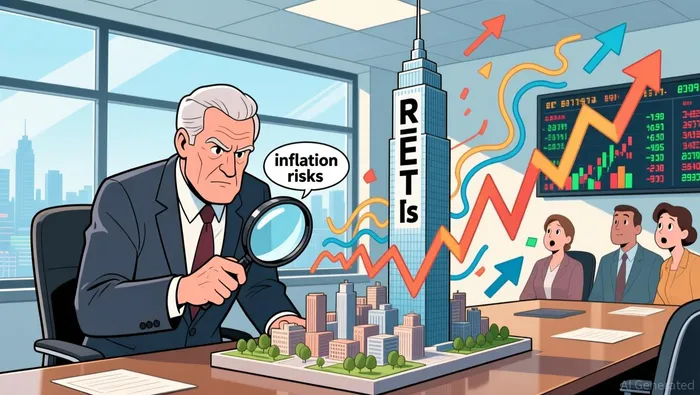 REITs are already showing strong fundamentals, with net operating income up 5.2% year-over-year. A rate cut could further support those sectors by making borrowing cheaper and reducing discount rates in valuation models.
That said, the Fed's cautious stance also signals potential headwinds. If the central bank walks back its dovish tone in the coming months, or if inflation remains stubborn, we could see a reversal. This uncertainty means investors should remain cautious. The market may rally in response to a rate cut, but a surprise or a hawkish pivot could quickly reverse those gains. The bottom line is that while a rate cut is likely, its impact will depend on how the Fed frames its next steps and whether the economic data turns more favorable. According to market observers, investor sentiment remains cautious.
Looking Ahead: Uncertainty and the Path Forward
The Fed's December 10 decision isn't just about one move—it's a signal of how the central bank will approach the rest of 2026. For now, markets are pricing in about 75 basis points of easing for next year, but that could change if inflation remains elevated or unemployment rises further. The central bank has made it clear it will reassess the economy in late January, after more data becomes available. Until then, uncertainty will remain a key theme.
Moreover, the Fed is not the only central bank watching. The Swiss National Bank, the European Central Bank, and the Bank of Japan are all expected to meet in the coming weeks, and the Fed's decision could influence their actions. While the ECB is expected to keep rates steady for now, the BoJ may consider a rate hike if the Fed moves more aggressively. This global interconnectedness means the Fed's decision is more than a domestic event—it could shape the global economic outlook in the months ahead. According to financial analysts, the Fed's move will have ripple effects across global markets.

Delivering real-time insights and analysis on emerging financial trends and market movements.
Latest Articles
Stay ahead of the market.
Get curated U.S. market news, insights and key dates delivered to your inbox.


AInvest
PRO
AInvest
PRO



Comments
No comments yet