
Federal Reserve Keeps Rates Steady at 4.25% to 4.5% Amid Economic Uncertainty
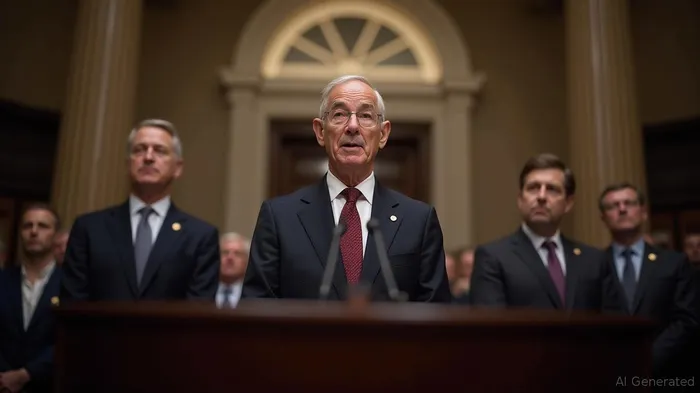
The Federal Reserve, under the leadership of Jerome Powell, has decided to maintain the federal funds rate at 4.25% to 4.5% in its June 2025 Monetary Policy Report. This decision reflects a cautious approach to economic conditions, aligning with previous policies that have adapted to economic developments. Powell, who has chaired the Federal Reserve since 2018, has overseen this steady stance, which aims to provide stability amidst economic uncertainty.
By keeping interest rates unchanged, the Federal Reserve aims to reduce volatility in various sectors, including crypto and equities. This consistency creates a predictable environment for investors and markets, maintaining liquidity without sudden financial shocks. The decision to not hike rates helps sustain current market dynamics, providing a framework for financial planning and long-term strategizing in various sectors.
The Federal Reserve's decision to maintain steady interest rates in early 2025 reflects previous patterns, avoiding turmoil from abrupt changes. Historically, pauses in rate changes often led to stable markets. Major cryptocurrencies, like BTC and ETH, tend to mirror risk assets. The crypto sector may see strategic benefits in factions expecting further stabilization.
The Federal Reserve's current stance on monetary policy leaves it well-positioned to wait for more clarity on the outlook for inflation and economic activity. The Committee will carefully assess incoming data, the evolving outlook, and the balance of risks. This cautious approach reflects the Fed's concern over the potential impacts of tariffs and rising inflation on the economy.
The Fed's median forecast now projects just two rate cuts in 2025, a significant downgrade from earlier projections. This shift reflects a more cautious stance, with more members of the FOMC leaning towards the possibility of no rate reductions at all. The central bank expects economic growth to slow from 1.7% to 1.4%, inflation to rise to 3.1% from 2.8%, and unemployment to increase to 4.5% from 4.4%. These projections underscore the Fed's concern over the potential impacts of tariffs and rising inflation on the economy.
The decision to hold rates steady was met with a modest response from bond markets. Yields on 10-year Treasury bonds increased slightly, continuing a volatile year characterized by concerns over inflation and rising federal deficits. Despite peaking in mid-January, yields remain high compared to 2024, contributing to increased interest rates for consumers. Rising bond yields have pushed up auto loan rates, further straining vehicle affordability. As of June, the average interest rate for new-vehicle loans had climbed to 9.52%, up 84 basis points year-to-date. The average used-vehicle rate increased to 14.18%, just below February’s 25-year high of 14.79%.
Tighter supply conditions and tariffs have also driven up vehicle prices, compounding the financial strain on consumers. Combined with high financing costs, these pressures have weighed on consumer demand. With the Fed in a wait-and-see mode and bond yields facing upside risk from elevated federal borrowing, relief appears unlikely in the near term. The result is a summer of uncertainty for consumers, dealers, and automakers alike. With rate cuts potentially off the table until late 2025, and key data on inflation and tariffs still to come, the auto industry may be in for a prolonged slowdown.

Stay ahead of the market.
Get curated U.S. market news, insights and key dates delivered to your inbox.


AInvest
PRO
AInvest
PRO



Comments
No comments yet