
Federal Reserve Rate Cuts and Strategic Asset Reallocation: Navigating Fixed-Income and Real Estate Markets in a Post-Easing Environment
 Aime Summary
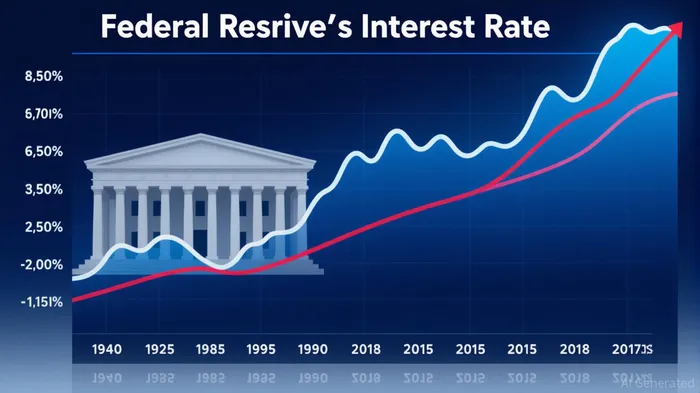
The Federal Reserve's December 2025 rate cut-marking the third consecutive reduction in the benchmark federal funds rate to a range of 3.5% to 3.75%-has ignited a recalibration of investment strategies across fixed-income and real estate markets. While the decision aimed to address a weakening labor market and persistent inflation, its uneven impact on long-term yields and mortgage rates has created a complex landscape for asset allocators. This analysis examines the implications of the Fed's easing cycle, drawing on recent data, historical precedents, and expert insights to outline strategic reallocation opportunities.
The Fed's Easing Cycle and Fixed-Income Dynamics
The Federal Reserve's shift toward a "neutral" policy stance, as articulated by Chair Jerome Powell, has not translated into the expected decline in long-term bond yields. Despite a cumulative 1.5 percentage point reduction in the federal funds rate since 2024,
the 10-year Treasury yield remains at 4.17%, and the 30-year yield hovers near 4.8% as of late 2025. This divergence reflects investor concerns over fiscal deficits, inflationary risks, and the broader economic uncertainty post-pandemic
according to financial analysis.
 For fixed-income investors, the key lies in duration management. As noted by BlackRockBLK--,
a strategic shift toward the "belly" of the yield curve (3- to 7-year maturities) offers a balance between yield preservation and risk mitigation. Shorter-duration bonds benefit from reduced sensitivity to inflation surprises, while the mid-section of the curve captures higher yields compared to cash equivalents. Active management is also critical, with opportunities in tax-loss harvesting and optimizing returns in a bond market characterized by compressed spreads
as Morgan Stanley reports.
Historical parallels, such as the 2020 rate cuts during the pandemic, underscore the importance of moving away from cash to longer-duration fixed-income assets. During that period,
investment-grade bonds outperformed cash, delivering higher annualized returns as yields fell. However, investors must remain cautious: prolonged low-interest environments risk eroding future returns as newly issued bonds carry diminished yields.
Real Estate Markets: Opportunities Amid Stagnation
The real estate sector presents a mixed picture. While the Fed's rate cuts were intended to lower borrowing costs, mortgage rates have remained stubbornly high.
The 30-year fixed mortgage rate, though down to 6.26% in mid-September 2025, remains above pre-2022 levels, constraining affordability and homebuyer demand. This disconnect between short-term policy rates and long-term mortgage rates-
tied more closely to the 10-year Treasury yield-has created a unique challenge for housing markets.
Commercial real estate (CRE), however, offers a counterpoint. With U.S. housing shortages and a valuation recovery in CRE,
investors are increasingly turning to refinancing opportunities and development projects in high-growth regions like the Sun Belt. Proactive positioning in CRE debt funds and cash-flowing properties is recommended, as lower borrowing costs enable developers to secure favorable financing terms. Additionally,
the surplus of unsold homes in the residential market may test demand in 2026, but CRE's resilience-driven by demographic trends and urbanization-positions it as a strategic asset class.
Historical case studies reinforce this outlook.
Post-2020 rate cuts, for instance, spurred a surge in CRE activity as property owners refinanced at lower rates, stabilizing portfolios and unlocking liquidity. Similarly, the 2008-2009 recovery period saw CRE markets rebound as rate cuts stimulated development and rental growth.
Strategic Reallocation: Balancing Yield and Risk
The Fed's easing cycle necessitates a dual focus on yield preservation and risk diversification. For fixed-income portfolios, the emphasis should be on tactical duration adjustments and active management. As BlackRock highlights, investors must "rethink diversification" by incorporating non-traditional assets like liquid alternatives and digital assets to hedge against macroeconomic shifts
as the firm notes.
In real estate, the priority is to capitalize on embedded optionality.
JPMorgan analysts recommend prioritizing CRE debt funds and cash-flowing properties over speculative development projects, given the current economic climate. Geographic diversification is also key, with Sun Belt regions offering stronger growth fundamentals compared to overvalued urban cores.
Conclusion
The Federal Reserve's 2025 rate cuts have created a nuanced environment for asset allocators. While fixed-income markets grapple with elevated long-term yields, real estate offers pockets of opportunity in CRE and refinancing. Strategic reallocation must balance duration management, geographic diversification, and active risk mitigation. As the Fed signals a "neutral" policy stance, investors who adapt to the evolving landscape-leveraging historical insights and forward-looking strategies-will be best positioned to navigate the challenges and opportunities ahead.

Stay ahead of the market.
Get curated U.S. market news, insights and key dates delivered to your inbox.
AInvest
PRO
AInvest
PRO



Comments
No comments yet