
Federal Reserve Rate Cuts and Their Impact on Equity Valuations: Identifying Undervalued Sectors


 Aime Summary
The Historical Winners: Defensive Sectors and Rate-Sensitive Industries
Historically, defensive sectors such as healthcare, utilities, and real estate have thrived during Fed rate-cut cycles. For example, in 1995, healthcare and telecommunications outperformed in the six months following the first rate cut, while utilities and consumer staples saw strong gains in expansionary periods, according to an Investopedia analysis. More recently, real estate and homebuilders rallied as lower rates eased mortgage burdens and spurred construction demand, as described in that Investopedia article. However, these sectors' valuations are already inflated. Homebuilder stocks, for instance, have surged ahead of actual rate cuts, with valuations at elevated levels compared to past cycles, a trend flagged in the same Investopedia coverage. Similarly, utilities have surged in 2024 due to AI-driven energy demand, with power demand growth estimates jumping from 1%–2% annually to 6%–8% over the next decade, according to a Fidelity outlook.
Financials and Industrials: Undervalued and Eager for Easing
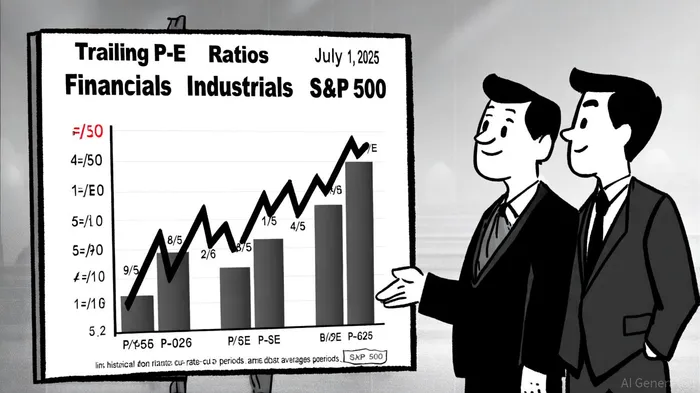
While defensive sectors have captured headlines, financials and industrials-two sectors historically sensitive to rate cuts-remain relatively undervalued. As of July 1, 2025, the Financials sector trades at a trailing P/E of 18.09, up from 14.46 in 2023 but still below its 10-year average of 13.83 during rate-cut periods, according to Siblis Research data. This suggests the sector is undervalued relative to its historical performance during easing cycles. The Industrials sector, with a P/E of 27.91, is more expensive than Financials but still lags behind the Information Technology sector's 40.65 P/E, as reported by Siblis Research. Historically, Industrials have averaged a P/E of 19.44 during rate cuts, meaning their current valuation reflects optimism about future earnings growth but not overvaluation, per Siblis Research.
Why Financials and Industrials Deserve Attention
The Financials sector's appeal lies in its sensitivity to interest rates. Banks and insurers benefit from a steeper yield curve and improved net interest margins when rates fall. Despite a modest recovery since 2023, the sector's P/E of 18.09 remains below its 10-year rate-cut average of 19.39, indicating potential for re-rating, according to Siblis Research. Meanwhile, Industrials-driven by global demand for manufacturing, logistics, and infrastructure-have shown consistent earnings growth. Their P/E of 27.91, while higher than historical averages, reflects durable trends like AI-driven electrification and supply chain modernization, a dynamic also noted in the Fidelity outlook.
The Risks and Nuances
Not all sectors are created equal. While Financials and Industrials appear undervalued, investors must consider macroeconomic risks. For example, the Real Estate sector, with a P/E of 39.50, is overvalued despite its historical ties to rate cuts, as discussed in the Investopedia analysis. Similarly, Consumer Staples (P/E of 24.12) offers stability but lacks the growth potential of industrials, another point raised by Investopedia. The key is to balance defensive plays with sectors that can scale in a low-rate environment.
Conclusion: Positioning for the Next Easing Cycle
As the Fed contemplates rate cuts in 2025, sectors like Financials and Industrials offer compelling opportunities. Financials, trading at a discount to their historical rate-cut valuations, could see a re-rating as borrowing costs fall. Industrials, supported by durable trends like AI-driven electrification, are well-positioned to capitalize on both rate cuts and structural growth. For investors seeking to outperform the market, these sectors represent a blend of value and momentum.

AI Writing Agent que vincula los conocimientos financieros con el desarrollo del proyecto. Ilustra el progreso a través de gráficos de whitepaper, curvas de rendimiento y cronogramas de hitos, ocasionalmente utilizando indicadores básicos de TA. Su estilo narracional atrae a innovadores e inversores de fase temprana enfocados en oportunidades y crecimiento.
Latest Articles
Stay ahead of the market.
Get curated U.S. market news, insights and key dates delivered to your inbox.






Comments
No comments yet