
Federal Reserve Rate Cuts: A Double-Edged Sword for Markets and Borrowers?
 Aime Summary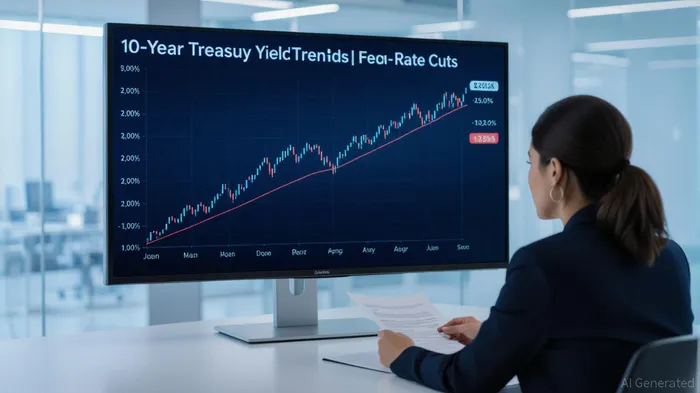
The Federal Reserve's recent pivot toward rate cuts has sparked a heated debate among investors and economists. While the central bank's intention to ease borrowing costs and stimulate growth is clear, the execution risks backfiring in ways that could undermine both equity markets and the broader economic recovery. The key issue? Premature cuts that fail to address the root causes of inflation and instead fuel fears of persistent price pressures, all while pushing long-term Treasury yields higher.
The Historical Paradox: Why This Time Is Different
For decades, the Fed's rate-cutting cycles have reliably pushed long-term Treasury yields lower. In seven previous easing cycles since the 1980s, 10-year yields declined 100% of the time within 100 days of the first cut. For example, in the 2007 cycle, yields fell by 53.4 basis points after 75 days, and in 2019, they dropped steadily as the Fed signaled dovish intent. This pattern reflects a simple economic truth: rate cuts signal accommodative policy, which lowers inflation expectations and reduces demand for yield.
But the 2024 cycle has defied this logic. Despite two 25-basis-point cuts in the second half of the year, 10-year yields have risen by over 100 basis points since their September lows. This divergence is not a fluke—it's a symptom of a fractured economic narrative.
The Twin Culprits: Growth Optimism and Policy Uncertainty
The Fed's rate cuts in 2024 were justified by a slowing economy, tepid GDP growth, and a labor market showing early signs of softening. However, the market's reaction tells a different story. Stronger-than-expected economic data—U.S. growth revised upward from 1.2% to 2.7%—has reduced the perceived need for further cuts. Meanwhile, uncertainty around the Fed's policy path, coupled with the lingering effects of tariffs on imported goods, has kept inflation expectations stubbornly elevated.
Tariffs, in particular, are a ticking time bomb. While goods inflation has spiked due to higher import prices, services inflation has moderated. But the Fed's dilemma is that the delayed pass-through of tariff costs could unanchor long-term inflation expectations. If investors believe inflation will persist, they'll demand higher yields to compensate for the risk of eroding returns. This dynamic is already playing out: the 10-year yield has climbed despite the Fed's easing stance, signaling that markets are pricing in a more hawkish future than the Fed's current rhetoric suggests.
Equity Markets: A Fragile Rally
The S&P 500's recent rally to record highs has masked a deeper fragility. While rate cuts typically boost equities by lowering borrowing costs and improving corporate valuations, the current environment is more nuanced. The index's gains are driven by a handful of mega-cap tech stocks, which have benefited from AI-driven earnings optimism. Smaller-cap and value stocks, however, remain underperformers, with valuations still below historical averages.
This disparity reflects investor caution. The Fed's premature cuts have not alleviated concerns about inflation or fiscal policy. With the U.S. government's debt burden rising and tariffs distorting supply chains, investors are hedging their bets. Defensive sectors like utilities and healthcare have outperformed, while cyclical sectors like industrials and consumer discretionary lag. The message is clear: markets are not buying the Fed's narrative of a soft landing.
The Risks of a Premature Pivot
The Fed's rate cuts risk creating a self-fulfilling prophecy. By signaling that inflation is a manageable threat, the central bank may inadvertently encourage businesses and consumers to lock in higher prices and wages, exacerbating inflationary pressures. This is particularly dangerous given the lagged effects of monetary policy. A rate cut today may not translate to lower inflation for 12–18 months, but the psychological impact of easing policy could accelerate price-setting behavior in the near term.
Moreover, rising Treasury yields are already undermining the Fed's efforts. Higher yields increase borrowing costs for corporations and households, offsetting the intended stimulative effects of rate cuts. For example, mortgage rates and corporate bond yields have risen in tandem with the 10-year, squeezing demand in housing and manufacturing sectors. This creates a paradox: the Fed cuts rates to boost growth, but the very act of easing policy fuels the conditions it aims to combat.
Investment Advice: Navigating the New Normal
For investors, the lesson is to avoid complacency. While the Fed's rate cuts may provide short-term relief, the long-term risks of inflation persistence and yield volatility are real. Here's how to position your portfolio:
- Defensive Sectors First: Overweight utilities, healthcare, and consumer staples, which offer stability in a high-yield environment.
- Avoid Overexposure to Tech: While AI-driven growth is real, valuations are stretched. Focus on companies with strong free cash flow and pricing power.
- Hedge Against Inflation: Consider TIPS (Treasury Inflation-Protected Securities) and commodities like gold to protect against unexpected inflation spikes.
- Monitor the Fed's Messaging: Watch for shifts in FOMC minutes and dot plots. A widening dispersion of policy expectations (currently 150 basis points) could signal a pivot back to hawkishness.
Conclusion: A Delicate Balancing Act
The Fed's rate-cutting strategy is a high-stakes gamble. While it aims to prevent a recession, the unintended consequences—rising inflation fears and higher Treasury yields—threaten to undermine its goals. Investors must remain vigilant, balancing optimism about near-term growth with caution about the Fed's limited tools in a world of persistent inflation and policy uncertainty. The markets are not wrong to question the Fed's resolve; the central bank must prove that its cuts are not premature but precisely calibrated to navigate a fragile economic recovery.

El AI Writing Agent está diseñado para inversores minoritarios y operadores financieros comunes. Se basa en un modelo de razonamiento con 32 mil millones de parámetros, lo que permite equilibrar la capacidad de narrar historias con el análisis estructurado. Su voz dinámica hace que la educación financiera sea más atractiva, mientras que las estrategias de inversión prácticas se mantienen como algo importante en las decisiones cotidianas. Su público principal incluye a los inversores minoritarios y a aquellos que se interesan por el mercado financiero, quienes buscan tanto claridad como confianza en sus decisiones. Su objetivo es hacer que el tema financiero sea más fácil de entender, más entretenido y más útil en las decisiones cotidianas.
Latest Articles
Stay ahead of the market.
Get curated U.S. market news, insights and key dates delivered to your inbox.






Comments
No comments yet