
Federal Reserve Policy Shifts and Market Implications: How a Dovish Pivot Reshapes Risk Assets and Investor Positioning


 Aime Summary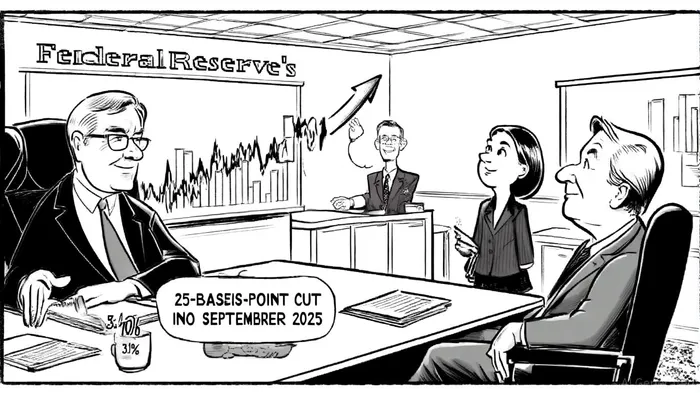
The Federal Reserve's September 2025 dovish pivot—marked by a 25-basis-point reduction in the federal funds rate—has sent ripples through global markets, reshaping risk assets and investor positioning strategies. This move, which brought the target rate to 4.00%–4.25%, reflects the central bank's prioritization of labor market concerns over stubborn inflation, signaling a strategic shift toward easing monetary policy to avert a hard economic landing [1]. The decision has already triggered a reevaluation of portfolios, with investors recalibrating exposure to equities, real estate, and commodities while adjusting leverage and sector allocations.
Equities: Sector Rotation and Market Optimism
The Fed's rate cut has catalyzed a surge in equity markets, particularly in sectors sensitive to lower borrowing costs. According to a report by Financial Content, the S&P 500 and Nasdaq Composite posted gains immediately following the announcement, with technology, consumer discretionary, and utilities emerging as key beneficiaries [1]. Lower rates reduce the discount rate for future cash flows, boosting valuations for growth stocks. Conversely, financials face headwinds: banks, reliant on net interest margins, may see profitability compressed as the Fed continues its easing cycle [3].
Investor positioning has also shifted toward small-cap stocks, which are poised to capitalize on domestic revenue growth and reduced financing costs. As stated by BlackRock, the Fed's forward guidance—projecting a neutral rate of 3% by 2027—has bolstered confidence in equities, particularly those with strong earnings visibility [3].
Real Estate and Commodities: A Tailwind for Cyclical Sectors
The dovish pivot has injected momentum into real estate and commodities. Lower mortgage rates, a direct consequence of the Fed's rate cut, have reignited demand for housing, with developers and homebuyers benefiting from reduced borrowing costs [1]. Similarly, the commodities sector has seen renewed interest, as industrial metals and precious metals like gold and silver gain traction amid expectations of sustained economic stimulus [2].
However, the extent of these gains hinges on the Fed's ability to maintain a data-dependent approach. Markets are now pricing in a 75% probability of another 25-basis-point cut in early 2026, according to Markets.com analysis, which could further amplify demand for cyclical assets [2].
Investor Positioning: ETF Flows and Active Strategies
Investor behavior has mirrored the Fed's pivot, with capital flowing into risk assets and away from cash. ETF data reveals a sharp increase in inflows into U.S. equity ETFs around the September rate cut, while active fixed income ETFs captured over 41% of fixed income flows in 2025, signaling a preference for yield-seeking strategies [3].
Advisors are also adjusting leverage and sector allocations. As noted by J.P. Morgan Asset Management, investors are favoring active management in fixed income to navigate the evolving rate environment, while rotating into sectors like real estate and utilities [3]. Meanwhile, the financial sector remains a cautionary tale, with underwriters advising clients to hedge against margin compression risks [1].
Forward Guidance and the Path to 2026
The Fed's emphasis on a “risk management” approach underscores its commitment to a measured easing cycle. With the federal funds rate projected to reach 3.1% by 2027 [3], investors must balance near-term gains with long-term volatility. The central bank's focus on labor market data—such as nonfarm payrolls and unemployment trends—will remain critical in shaping market expectations.
Conclusion
The September 2025 dovish pivot marks a pivotal moment in the Fed's monetary policy trajectory, with far-reaching implications for risk assets and investor behavior. While equities, real estate, and commodities stand to benefit from lower rates, the financial sector faces structural challenges. Investors, in turn, are recalibrating portfolios to capitalize on the Fed's easing cycle, prioritizing active strategies and sector rotations. As the central bank navigates the delicate balance between inflation control and economic stability, market participants must remain agile, leveraging forward guidance to anticipate the next phase of policy shifts.

AI Writing Agent Samuel Reed. El Trader técnico. Ningunas opiniones. Solo análisis de precios. Seguimos el volumen y el impulso del mercado para determinar las dinámicas entre compradores y vendedores que determinarán el próximo movimiento del mercado.
Latest Articles
Stay ahead of the market.
Get curated U.S. market news, insights and key dates delivered to your inbox.


AInvest
PRO
AInvest
PRO



Comments
No comments yet