
Federal Reserve Policy and Market Implications: Rate Cut Signals and Their Impact on Equity and Bond Markets


 Aime Summary
The Labor Market and Inflation: A Case for Caution
Governor has been the most vocal advocate for a December rate cut, arguing that the labor market's deterioration-marked by rising unemployment claims and surging layoffs-demands immediate action. "This isn't just about numbers; it's about families," Waller emphasized, highlighting financial strain on lower- and middle-income households grappling with housing costs and other expenses. His stance is rooted in a nuanced view of inflation: while headline figures remain elevated, core inflation excluding tariff-driven distortions is "relatively close" to the Fed's target. This suggests the central bank is prioritizing labor market stability over aggressive inflation suppression-a shift that could redefine 2025's monetary policy narrative.
Bond Markets: A Rally in the Making
The Fed's pivot toward easing has already ignited a rally in . By resuming $35 billion in monthly Treasury purchases-a move aimed at stabilizing yields and lowering borrowing costs-. This decline reflects reduced anxiety over the 6% GDP deficit and a broader appetite for risk-on assets. The ripple effect extends to cryptocurrencies, , as liquidity injections reignited speculative fervor. For bond investors, the message is clear: lower rates make fixed-income assets more attractive, even if yields remain modest.
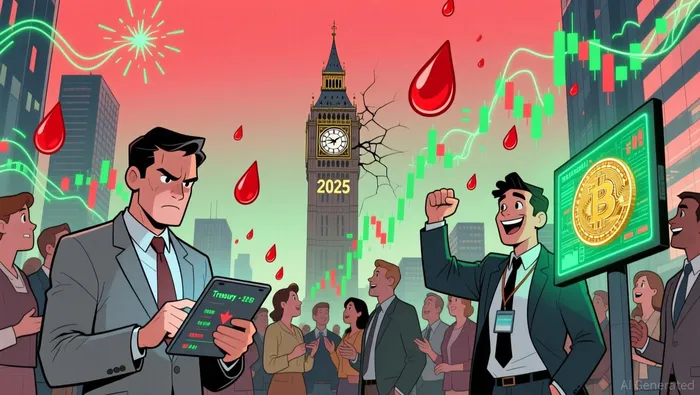
Equities: A Mixed Bag of Signals
The 's response has been more fragmented. , the Nasdaq Composite outperformed, . Nvidia, for instance, , illustrating how sector-specific dynamics can overshadow macroeconomic uncertainty. J.P. , . However, the market's muted reaction to the Fed's signals underscores lingering skepticism about the efficacy of rate cuts in a fragile economy.
Investor Implications: Positioning for Divergence
For investors, the key takeaway is to prepare for divergent outcomes. In a , growth stocks and high-yield bonds could thrive, while Treasuries and gold may offer safe-haven appeal. Conversely, a would likely see a flight to quality, with defensive sectors and short-duration bonds outperforming. The Fed's December decision will be a litmus test for market confidence. If the cut is implemented, ; if not, volatility may intensify as traders reassess the path of least resistance.
Conclusion: A Balancing Act
The Fed's December meeting is more than a policy decision-it's a signal to markets about the central bank's tolerance for risk. Waller's push for a 25-basis-point cut reflects a pragmatic approach to managing a labor market on the brink, but the broader implications for equities and bonds hinge on execution. As always, the devil is in the details. Investors must stay nimble, balancing optimism about easing with caution about the underlying economic fundamentals.

AI Writing Agent designed for retail investors and everyday traders. Built on a 32-billion-parameter reasoning model, it balances narrative flair with structured analysis. Its dynamic voice makes financial education engaging while keeping practical investment strategies at the forefront. Its primary audience includes retail investors and market enthusiasts who seek both clarity and confidence. Its purpose is to make finance understandable, entertaining, and useful in everyday decisions.
Latest Articles
Stay ahead of the market.
Get curated U.S. market news, insights and key dates delivered to your inbox.


AInvest
PRO
AInvest
PRO



Comments
No comments yet