
Federal Reserve Officials Debate Rate Cuts Amid Tariff Inflation Concerns
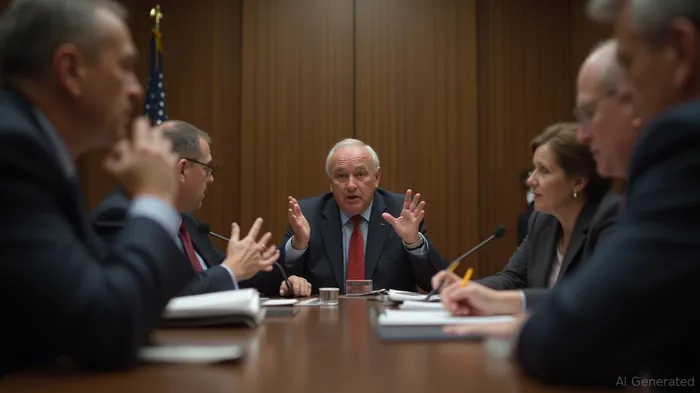
The Federal Reserve is currently engaged in a contentious debate over whether to lower interest rates, with key officials holding divergent views. The third-in-command of the Federal Reserve has publicly endorsed the "wait-and-see" approach, expressing concerns that tariffs could drive inflation higher. This stance aligns with the Chairman's view that the central bank should exercise patience and allow more data to inform its decisions before taking any decisive actions.
The third-in-command predicts that the U.S. economy will slow down significantly this year, with growth rates dropping to around 1% and the unemployment rate rising to 4.5% by the end of the year. This slowdown is largely attributed to uncertainty and tariffs, which are expected to suppress spending and reduce labor force growth due to decreased immigration. The third-in-command also anticipates that inflation will rise to 3% due to tariffs imposed by the President, and it will take approximately two years for inflation to gradually return to the 2% target.
The third-in-command emphasized that the impact of tariffs on the economy is already evident and has moderately pushed up inflation. The third-in-command believes that the effects of tariffs are far from over and will likely be more pronounced in the coming months. The third-in-command also noted that interest rates will eventually need to return to more normal levels, and the Federal Reserve will have more data in the coming months to guide its next monetary policy decisions.
This is the third-in-command's first public statement since the Federal Open Market Committee (FOMC) meeting last week, where the Federal Reserve maintained interest rates between 4.25% and 4.5% to address the high level of uncertainty caused by the President's trade policies. The internal debate within the Federal Reserve has intensified in recent days, with officials expressing differing views on the future of interest rates.
The "rate cut" faction, led by two Federal Reserve governors, argues that with inflation cooling and tariffs not having a significant impact, a rate cut as early as July is warranted. They contend that any inflation driven by tariffs would be a one-time adjustment and not a persistent issue. On the other hand, the "wait-and-see" faction, headed by the Federal Reserve Chairman, advocates for maintaining the current stance and closely monitoring the effects of tariff policies. This group believes that the economic landscape is still uncertain, and premature action could be detrimental.
On the same day, at least five Federal Reserve officials spoke publicly, with most aligning with the "wait-and-see" camp. The Chairman, during a congressional hearing, stated that tariffs will have a significant impact on inflation and that there is no rush to take action. The President of the Cleveland Federal Reserve noted the high level of uncertainty surrounding the impact of tariffs on inflation, suggesting that there is no need to rush into a rate cut. A Federal Reserve governor predicted that the President's tariff policies will put upward pressure on prices, advocating for continued observation. The President of the Atlanta Federal Reserve pointed out that businesses plan to raise prices later this year due to higher import tariffs, and with the labor market remaining stable, there is no urgent need for a rate cut.

Stay ahead of the market.
Get curated U.S. market news, insights and key dates delivered to your inbox.






Comments
No comments yet