
Federal Reserve Holds Interest Rates Amid Political Pressure and Economic Uncertainty
 Aime Summary
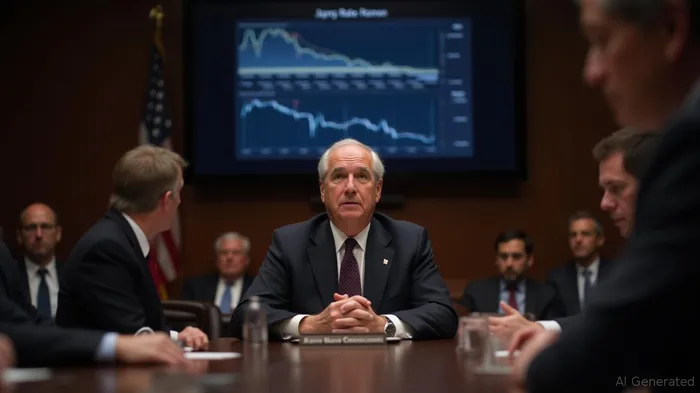
The Federal Reserve maintained its key interest rate at 4.25% to 4.5% for the fifth consecutive meeting, amidst significant pressure from President Donald Trump to initiate a rate cut. This decision underlines a complex interplay between economic conditions and political influence, marking an unprecedented moment as two Board members—Christopher Waller and Michelle Bowman—dissented, opting instead for a quarter-point reduction in rates.
Chairman Jerome Powell emphasized the solid standing of the U.S. economy, despite uncertainties stemming from trade policies and tariff impacts. Powell acknowledged the potential risks to the labor market, noting that while the GDP reported robust growth of 3% in the second quarter, underlying economic progression appears to be shifting to a slower pace. Analysts predict economic growth might decelerate towards the end of the year, highlighting a nuanced contrast between headline figures and deeper economic indicators. Despite the economic growth figures celebrated by Trump, Powell's remarks reflected cautious observations about inflation pressures potentially resulting from recent tariff implementations, which remain uncertain in their long-term inflationary impact.
The dissent by Waller and Bowman marks the first instance since 1993 where multiple governors have diverged from the majority on a rate decision, showcasing a rare breach in the Federal Reserve’s historically unified outlook. Powell downplayed these divisions, asserting that clarity in explanation by dissenters was present, emphasizing that the views were well articulated. Moreover, he reiterated the Fed's commitment to its dual mandate of maximum employment and stable prices, and its view remains that uncertainties necessitate monitoring before any rate adjustment.
Trump's continuous criticism of Powell for holding rates has intensified, accentuated by a rare presidential visit to the Federal Reserve's headquarters. The administration’s critique of a $2.5 billion refurbishment project has added a layer of political pressure on Powell, once nominated by Trump himself. Despite such pressures, Powell underscored the importance of the Federal Reserve's independence in making impartial decisions based on data rather than political influence.
Within the financial sector, responses to the Fed's decision reflected investor uncertainty, as markets recalibrated expectations for rate changes later this year. Many traders have adjusted their predictions, with fewer anticipating a rate cut by the next meeting in September. Analysts expressed that the forthcoming cycles of labor market and inflation data will be pivotal in determining future monetary policy adjustments.
Powell further noted the limited effect of tariffs on the broader price level and consumer goods, suggesting that while import taxes are perceived by U.S. retailers, the translation into consumer prices remains another aspect to monitor. He articulated that this dynamic necessitates empirical assessment rather than premature conclusions based on anticipated outcomes.
Despite political rhetoric and substantial external pressures, Powell reinforced the Fed's steadfast approach towards economic evaluation centered on long-term objectives, clarifying that interest rates should remain insulated from immediate electoral or fiscal policies.
As the Fed prepares for its September meeting, the interplay between fiscal maneuvers and economic indicators will pose challenges in balancing immediate economic stability with strategic long-term growth, a dynamic underscored by the complex political and economic influences currently at play.

Stay ahead of the market.
Get curated U.S. market news, insights and key dates delivered to your inbox.


AInvest
PRO
AInvest
PRO



Comments
No comments yet