
Federal Reserve Governor Warns of Potential Economic Turning Point as Non-Farm Payrolls Revised Downward by 260,000
 Aime Summary
Federal Reserve Governor Lisa Cook has expressed concern over the recent revisions to the U.S. non-farm payroll data, suggesting that these adjustments might signal a turning point in the American economy. Speaking at a discussion organized by the Federal Reserve Bank of Boston, the governor highlighted that the modifications to the employment figures are characteristic of a potential inflection point.
The latest data released by the U.S. Bureau of Labor Statistics indicated a significant cooling in the labor market over the past few months. The report showed that non-farm employment increased by 73,000 in July, with the previous two months' data being revised downward by nearly 260,000. The unemployment rate also saw a slight increase from 4.1% in June to 4.2%.
Prior to the release of these figures, Federal Reserve policymakers had decided to keep interest rates unchanged, citing concerns over the impact of tariffs on inflation. The Federal Reserve Chair had previously mentioned that the stability in the labor market provided the central bank with more time to gather additional information before making any adjustments to interest rates.
Cook's comments come at a time when the U.S. economy is facing a mix of challenges and opportunities. The revisions to the non-farm payroll data suggest that the labor market, which has been a pillar of economic strength, may be showing signs of weakness. This could have broader implications for the economy, as a slowing labor market could lead to reduced consumer spending and overall economic growth.
However, it is important to note that the revisions to the employment data do not necessarily indicate a recession. The labor market remains robust, with unemployment rates still relatively low. The Federal Reserve will continue to monitor the situation closely and adjust its policies as needed to support economic growth and stability.
In conclusion, the recent revisions to the non-farm payroll data have raised concerns about a potential turning point in the U.S. economy. While the labor market remains strong, the downward revisions to employment figures suggest that there may be challenges ahead. The Federal Reserve will continue to monitor the situation closely and adjust its policies as needed to support economic growth and stability. 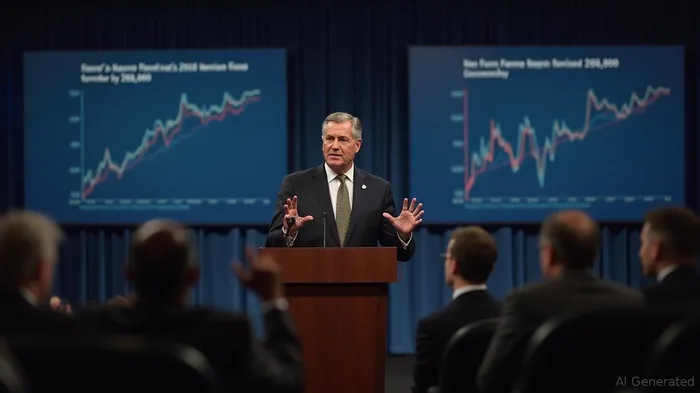

Stay ahead of the market.
Get curated U.S. market news, insights and key dates delivered to your inbox.


AInvest
PRO
AInvest
PRO



Comments
No comments yet