
Federal Reserve Drops Reputational Risk for Crypto Firms
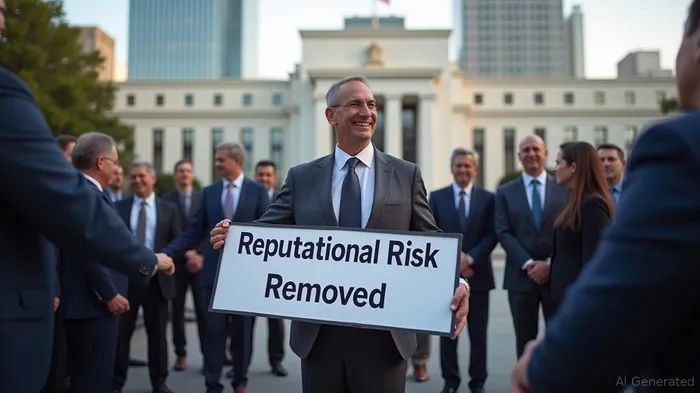
The Federal Reserve Board has taken a significant step in its approach to crypto firms by removing reputational risk from its bank supervision program. On June 23, the Fed ordered its staff to eliminate the term from examination manuals and focus on measurable financial exposures. This move aligns the central bank with the Federal Deposit Insurance Corporation (FDIC) and the Office of the Comptroller of the Currency, which made similar changes earlier this year. Together, these three regulators oversee every federally insured depository institution, and their coordinated revisions eliminate a subjective standard that previously allowed examiners to block banking services to crypto firms.
Under the new guidance, Fed examiners will undergo training to implement the change uniformly across all Board-supervised banks. The memo emphasizes the importance of maintaining robust risk management frameworks to safeguard the safety and soundness of banks. However, it clarifies that exam teams should address reputational effects only through specific legal, liquidity, or credit channels. This shift signals a more open stance towards regulated crypto activity, as Chair Jerome Powell had previously indicated in an April 16 speech at the Economic Club of Chicago. Powell urged Congress to establish a stablecoin framework and stated that the Fed does not intend to limit lawful relationships between banks and crypto firms.
Powell's remarks reflect a broader acknowledgment that regulators adopted a conservative stance after the 2022 market failures. He suggested that some guidance may be relaxed to accommodate responsible innovation. Powell pointed to crypto custody services already operating inside Fed-supervised banks and pledged to preserve safety while allowing institutions to engage with digital assets in a way that is understood. This directive completes a three-month effort by federal regulators to remove reputational risk from bank supervision policy, leaving operational, legal, and financial criteria as the sole grounds for examiner action.
This development is significant as it paves the way for banks to offer crypto-related services, including buying and selling Bitcoin (BTC). The removal of reputational risk as a factor in bank supervision eliminates a barrier that previously prevented banks from engaging with crypto firms. This change is expected to foster a more inclusive environment for crypto-related activities within the banking sector, promoting innovation and growth in the digital assetDAAQ-- space.

Stay ahead of the market.
Get curated U.S. market news, insights and key dates delivered to your inbox.






Comments
No comments yet