
Federal Reserve Cuts Rates in 2025: What Recent Moves Mean for Investors


 Aime Summary
The Federal Reserve has taken a significant step in 2025 by cutting its key interest rate for the third time this year. This move has sparked widespread attention from investors and market watchers, as it signals a shift in monetary policy amid slowing economic growth and persistent inflation. For now, the rate cut appears to be a bid to support the labor market and keep the broader economy on track. But the Fed's messaging also suggests future cuts could be more cautious — if they happen at all. Here's what you need to know about the decision and what it could mean for your portfolio.
## The Fed's latest rate cut and what it entails
On December 10, 2025, the Federal Reserve's (FOMC) lowered its target interest rate by 0.25 percentage points, bringing the federal funds rate to a range of 3.5% to 3.75% — the lowest level in nearly three years. This cut was the third of the year, following earlier reductions in September and July. The decision was widely anticipated, with markets already pricing in an ahead of the meeting.
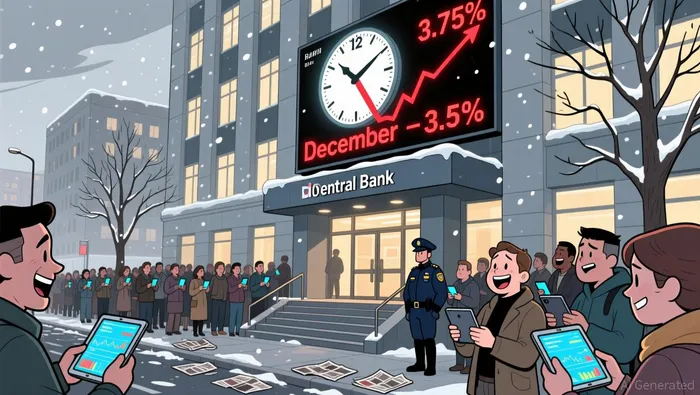
Despite the rate reduction, the Fed signaled a more cautious approach for 2026. While it still expects one more cut in the coming year, the bar for future reductions has been raised. That means the Fed is likely to wait for stronger evidence of economic slowdown or further disinflation before making further moves. Three of the Fed's 12 voting members dissented from the decision — two preferred no cut at all, while one, Stephen Miran, wanted a larger 0.5-point reduction.
## What's driving the Fed's decision
The Fed's action is driven by a combination of factors. The labor market, once a bright spot, has cooled, with . While the economy has continued to expand at a moderate pace, job gains have slowed, and recent data shows mixed signals. Inflation, meanwhile, , though the Fed has seen some signs of stabilization.
The central bank's dual mandate of maximum employment and price stability is clearly in tension. The Fed is trying to balance the need to support the labor market against the risk of inflation staying elevated. The latest rate cut is a clear signal of its focus on employment, but it also highlights the difficulty of navigating a complex economic environment.
## Market and economic implications
The rate cut has already been reflected in market movements. In response to the news, major U.S. indexes rose, . Smaller companies also outperformed, . This suggests that investors are generally optimistic about the Fed's move and the implications for corporate earnings according to market analysts.
On a broader level, the rate cut is expected to lower borrowing costs for households and businesses. This should help to support consumer spending and investment, which are key pillars of the U.S. economy. For homebuyers, mortgage rates may see some relief, though the extent will depend on market forces and how the Fed's policy is interpreted by mortgage lenders according to financial experts.
## What to expect next from the Fed
The Fed's next major policy decision is scheduled for late January 2026. While the central bank is expected to remain data-dependent, it's clear that the path forward is uncertain. The Fed's updated economic projections now show , , .
Meanwhile, political factors could also play a role. , who has long advocated for more aggressive rate cuts, is expected to appoint a new Fed chair in the coming months. This could shift the central bank's tone and strategy, adding another layer of uncertainty for markets according to business analysts.
At the end of the day, the Fed's actions reflect the delicate balancing act of managing a slowing labor market and still-elevated inflation. For now, the message is one of support for the economy, but future decisions will hinge on how the data evolves. Investors should watch closely for signs of further economic weakness or cooling inflation, which could influence the next round of rate decisions.

Delivering real-time insights and analysis on emerging financial trends and market movements.
Latest Articles
Stay ahead of the market.
Get curated U.S. market news, insights and key dates delivered to your inbox.


AInvest
PRO
AInvest
PRO



Comments
No comments yet