
Federal Reserve Chairman Powell Defends Independence Amid Trump Criticism
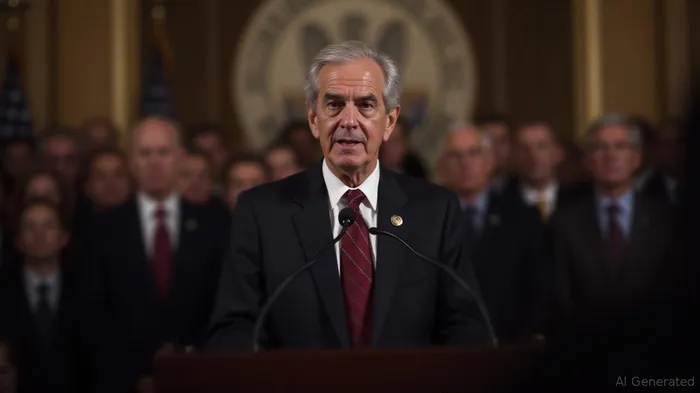
In the realm of global finance, the words and actions of central bankers carry significant weight, especially those of the Federal Reserve, the world’s most influential central bank. Recently, Jerome Powell, the Chairman of the Federal Reserve, faced direct criticism from former U.S. President Donald Trump. Powell’s response was a clear and powerful affirmation: “I’m very focused on doing my job.” This statement underscores the importance of the Federal Reserve’s independence, the stability of the U.S. economy, and the broader financial landscape that indirectly influences crypto valuations.
The tension between Powell and Trump is not new. During his presidency, Trump frequently criticized Powell and the Federal Reserve’s interest rate policies, arguing that these rate hikes were hindering economic growth and strengthening the dollar too much. Powell, however, consistently maintained a stance of non-partisanship and commitment to the Fed’s dual mandate: achieving maximum employment and maintaining price stability. His recent statement serves as a reminder of this unwavering dedication, signaling that the institution’s decisions will be guided by economic data and its statutory objectives, rather than political expediency or short-term electoral cycles.
The concept of an independent central bank is crucial for modern economic governance. An independent Fed can make tough, unpopular decisions necessary for long-term economic health without fear of immediate political backlash. This autonomy enhances the credibility of monetary policy, helping businesses and consumers plan for the future and fostering investment and stability. Historically, political pressure on central banks to print money or keep interest rates artificially low has often led to rampant inflation, eroding purchasing power and destabilizing the economy. An independent Fed can act decisively during financial crises, implementing measures to stabilize markets and prevent systemic collapse, even if those measures are politically unpopular in the short term.
The Federal Reserve’s responsibilities include monetary policy, which involves actions to influence the availability and cost of money and credit to promote national economic goals. The Fed has several key tools at its disposal, including the Federal Funds Rate, Quantitative Easing (QE) and Quantitative Tightening (QT), Reserve Requirements, and the Discount Rate. Powell’s commitment to using these tools to navigate complex economic conditions—balancing the fight against inflation with the goal of sustaining maximum employment—is a delicate act requiring careful analysis of economic data, foresightFRSX--, and a willingness to make difficult choices.
The stability and direction of the U.S. economy are profoundly influenced by the Federal Reserve’s actions. When interest rates are low, borrowing becomes cheaper, encouraging investment, spending, and job creation. Conversely, when rates are high, borrowing becomes more expensive, which can cool down an overheated economy and combat inflation. The ripple effects of these decisions are global, given the U.S. dollar’s role as the world’s primary reserve currency. For the cryptocurrency market, the connection is often indirect but significant. Higher interest rates in the traditional financial system can make less risky assets, like government bonds, more attractive, potentially drawing capital away from more speculative assets like cryptocurrencies. Conversely, a looser monetary policy can make riskier assets more appealing, as investors seek higher returns.
Consider the recent period of high inflation. The Federal Reserve aggressively raised interest rates to bring prices under control. While this led to concerns about a potential recession, it demonstrated Powell’s commitment to price stability, even in the face of political and public pressure to ease up. This commitment is what gives the Fed its credibility and allows it to effectively steer the economy through turbulent watersWAT--.
The challenges facing the Federal Reserve are multifaceted. Beyond political critiques, they include managing persistent inflation, navigating geopolitical uncertainties, responding to rapid technological changes, and addressing issues like financial stability in an increasingly interconnected global economy. Powell’s unwavering focus on his job signifies a dedication to evidence-based decision-making, rather than succumbing to external pressures. This steadfast approach suggests several key implications for the future: data-driven decisions, reinforced independence, market confidence, and potential for volatility. Ultimately, Powell’s statement is a testament to the principles that underpin effective central banking. It’s a declaration that the institution’s primary allegiance is to its dual mandate and the economic well-being of the nation, not to any political agenda.
The ongoing narrative of Trump’s criticisms against Powell and the Federal Reserve highlights the critical balance between democratic accountability and institutional independence. Powell’s calm and resolute response underscores the vital importance of an autonomous central bank for a stable and predictable financial environment. In a world where economic certainty is increasingly prized, the Fed’s ability to make decisions free from political coercion is not just an academic ideal but a practical necessity for the health of the U.S. economy and its ripple effects across global markets, including the burgeoning cryptocurrency space. His commitment ensures that the pursuit of maximum employment and price stability remains the guiding star for U.S. monetary policy, providing a crucial anchor in often turbulent economic seas.

Stay ahead of the market.
Get curated U.S. market news, insights and key dates delivered to your inbox.


AInvest
PRO
AInvest
PRO



Comments
No comments yet