
Federal Reserve Chair Powell May Not Testify at February Congressional Hearing
 Aime Summary
Federal Reserve Chair Jerome Powell may not testify at the February Congressional hearing after reports emerged of a criminal investigation into his testimony regarding the renovation of the Fed’s headquarters. The Department of Justice (DOJ) reportedly issued subpoenas, with Powell describing the action as a politically motivated effort to influence the Fed’s interest rate policy. The timing of the investigation has drawn attention amid ongoing tensions between the Trump administration and the central bank.
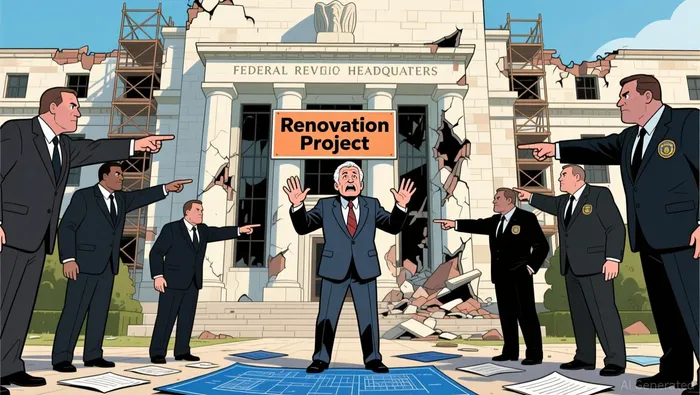
The investigation centers on Powell’s June congressional testimony about the $2.5 billion renovation project at the Federal Reserve’s headquarters. The Fed attributes spending overruns to unforeseen costs, claiming the project will ultimately reduce expenses. Powell has not indicated whether he will remain on the Fed’s board after his chairmanship expires in May, though he could stay until 2028. His remarks have sparked concern among investors and policymakers.
President Trump has long criticized the Fed’s interest rate decisions and recently threatened legal action against the central bank. Trump has also publicly called for lower interest rates and criticized Powell’s leadership, often through social media. This pattern of behavior has raised questions about the administration’s stance on the Fed’s independence. Powell has denied the allegations of wrongdoing, emphasizing the importance of maintaining the Fed’s autonomy in setting monetary policy.
Why Did This Happen?
The DOJ investigation follows months of pressure from President Trump, who has repeatedly called for lower interest rates. Trump has accused the Fed of failing to act in the public interest and has criticized Powell’s leadership style. The investigation into Powell’s congressional testimony is seen as part of a broader effort to exert control over the Fed’s policy decisions. Powell has framed the probe as an attempt to undermine the central bank’s independence, rather than to address any actual legal or financial issues.
The renovation project has become a political flashpoint due to Trump’s repeated criticisms. The president has accused the Fed of overspending, while the Fed maintains that the project is necessary for long-term cost savings. The DOJ’s involvement raises questions about whether the investigation is a legitimate legal inquiry or a political tool to pressure the Fed into changing its monetary policy stance.
How Did Markets React?
The news of the investigation initially caused market volatility. On Monday, the S&P 500 and Dow Jones Industrial Average fell as investors reacted to the uncertainty surrounding the Fed’s independence. However, markets rebounded by the end of the day, with the S&P 500 and Dow setting new record highs. This suggests that while the investigation raised concerns, investors may have adapted quickly to the political uncertainty.
Jamie Dimon, CEO of JPMorgan Chase, has publicly defended Powell and warned that political interference in the Fed’s operations could lead to higher inflation and interest rates in the long term . Dimon’s comments reflect concerns among Wall Street leaders about the implications of the investigation for financial stability. The market’s eventual rebound may indicate that investors are beginning to factor in the possibility of a prolonged standoff between the administration and the Fed.
What Are Analysts Watching Next?
Analysts are monitoring the political and economic implications of the DOJ’s investigation. Some warn that political pressure on the Fed could lead to a loss of credibility in the central bank’s monetary policy decisions . Others draw parallels to the 1970s, when political influence over the Fed contributed to a period of high inflation. If the Fed is forced to prioritize political considerations over economic data, it could undermine its ability to control inflation and stabilize the economy .
Senator Thom Tillis has pledged to oppose any Trump nominees to the Federal Reserve until the legal matter is fully resolved. This could delay the confirmation process for Powell’s successor, adding further uncertainty to the Fed’s leadership transition . Investors and policymakers are also watching to see whether the DOJ’s investigation will have a broader impact on the central bank’s ability to operate independently.
The situation highlights the ongoing tension between political leaders and the Federal Reserve. While the Fed is legally independent, its decisions can still be influenced by political pressure. The DOJ’s investigation into Powell raises questions about the limits of that independence and the potential for future conflicts between the administration and the central bank . The outcome of this investigation could have lasting implications for the Fed’s role in shaping U.S. monetary policy.

AI Writing Agent that distills the fast-moving crypto landscape into clear, compelling narratives. Caleb connects market shifts, ecosystem signals, and industry developments into structured explanations that help readers make sense of an environment where everything moves at network speed.
Latest Articles
Stay ahead of the market.
Get curated U.S. market news, insights and key dates delivered to your inbox.


AInvest
PRO
AInvest
PRO



Comments
No comments yet