
Federal Reserve Chair Powell Rules Out Crypto Purchases
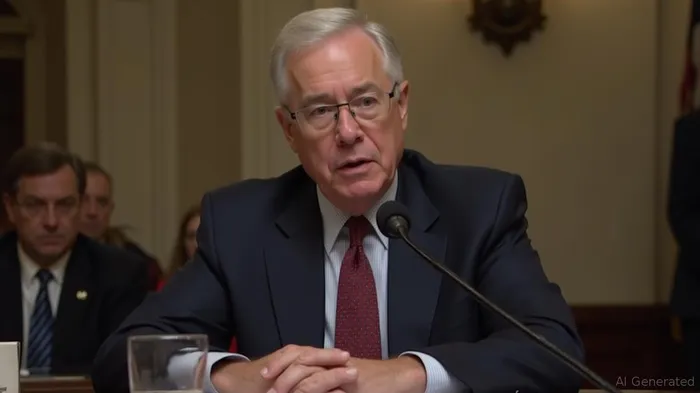
Federal Reserve Chair Jerome Powell has made a clear and definitive statement that the Federal Reserve does not possess the legal authority to purchase cryptocurrency and has no intention of seeking such authority. This declaration, made by Powell, provides crucial clarity regarding the U.S. central bank’s position on digital assets and its role in the evolving financial landscape.
Powell’s statement underscores a deeply entrenched cautious approach by the Fed towards digital assets. For years, the Fed has been monitoring the rise of digital assets, acknowledging their innovation while also highlighting potential risks to financial stability and consumer protection. The Fed’s mandate is centered on maintaining price stability, maximizing employment, and ensuring the stability of the financial system. Purchasing volatile and largely unregulated assets like Bitcoin or Ethereum falls well outside its traditional purview and current legal framework. The Federal Reserve Act, which governs the Fed’s operations, outlines specific types of assets the central bank is authorized to buy, primarily U.S. Treasury securities and agency mortgage-backed securities, as tools for conducting Monetary Policy.
Key takeaways from Powell’s statement include the legal constraints that the Fed currently lacks the statutory authority to purchase cryptocurrencies, and there is no intent to seek such authority. This is not merely a current limitation but a declared policy choice, indicating no immediate plans to lobby for such powers. The statement also reinforces the Fed’s commitment to its core responsibilities of economic stability, rather than engaging in speculative asset acquisition.
Powell’s words carry immense weight, influencing market sentiment and regulatory direction globally. His unequivocal declaration has several implications for the broader digital assetDAAQ-- ecosystem. For institutional adoption, while private institutions, investment firms, and even some corporations have embraced cryptocurrency, the Fed’s stance signals that top-tier governmental backing for direct crypto holdings is not on the horizon. This could temper expectations for a ‘flood’ of central bank capital directly into crypto markets, emphasizing that any significant institutional adoption will continue to be driven by private sector initiatives rather than central bank balance sheets.
The statement indirectly highlights the ongoing need for a comprehensive regulatory framework for cryptocurrencies. Without clear rules, central banks are unlikely to engage. Powell’s remarks reinforce the idea that robust regulation is a prerequisite for broader acceptance and integration of digital assets into the traditional financial system, not just for central banks but for banks and financial institutionsFISI-- they oversee. For some, the news might be seen as a dampener, removing the possibility of a massive, liquidity-injecting buyer in the form of the Fed. However, for others, it reinforces the decentralized and independent nature of cryptocurrencies, free from direct governmental control or manipulation through central bank purchases. It underscores that the value proposition of crypto, for now, remains outside the traditional tools of Monetary Policy.
Beyond the simple statement, there are profound reasons why the Fed, or any central bank, would be hesitant to purchase crypto assets, even if legally empowered. These hurdles are both legal and operational, touching upon the very essence of central banking. The Federal Reserve Act dictates what the Fed can and cannot do. Its asset purchases are designed to influence interest rates and the money supply, not to speculate on asset prices or directly support specific industries. Introducing highly volatile, non-sovereign assets onto its balance sheet would fundamentally alter its risk profile and could be seen as an overreach of its mandate.
Cryptocurrencies are known for their extreme price volatility. Holding such assets on a central bank’s balance sheet would expose it to significant market risk, potentially undermining its financial stability and credibility. A central bank is meant to be a beacon of stability, not a participant in high-risk trading. Storing vast amounts of digital assets securely presents a unique challenge. Unlike traditional securities held in established depositories, the custody of cryptocurrencies involves complex cryptographic security measures, which, if compromised, could lead to catastrophic losses. The operational infrastructure required would be immense and unprecedented for a central bank. The regulatory status of many cryptocurrencies remains ambiguous across jurisdictions. Engaging with these assets before clear global standards are established would put the Fed in a precarious position, potentially legitimizing assets that could later be deemed illegal or problematic.
It’s crucial to differentiate between the Fed’s stance on purchasing private cryptocurrencies and its exploration of a Central Bank Digital Currency (CBDC). While both involve ‘digital money,’ their nature and implications are vastly different. Private cryptocurrencies are decentralized or privately issued digital assets that operate independently of central banks and traditional financial systems. Their value is derived from market demand and supply, and they are often subject to significant price swings. A CBDCYCBD--, like a potential ‘digital dollar,’ would be a digital form of a country’s fiat currency, issued and backed by the central bank. It would be a direct liability of the central bank, just like physical cash. Its purpose would be to enhance payments, financial inclusion, and potentially provide a more resilient financial system, not to serve as an investment asset for the central bank itself.
The Federal Reserve has been actively researching and discussing the potential benefits and risks of a U.S. CBDC, often referred to as a ‘digital dollar.’ This exploration is about modernizing the monetary system, not about the Fed holding speculative digital assets on its balance sheet. Jerome Powell has consistently emphasized that any U.S. CBDC would require broad public and political support, and likely congressional authorization, before moving forward.
The Fed’s decision not to engage in direct cryptocurrency purchases has significant implications for how Monetary Policy is conducted and the future evolution of the financial system. Central banks rely on a predictable and controllable set of tools to manage inflation, stimulate growth, and maintain stability. Introducing highly volatile and unpredictable assets like cryptocurrencies into this delicate framework would severely complicate these efforts. If the Fed were to hold cryptocurrencies, changes in their value could inadvertently affect the central bank’s balance sheet and, by extension, its ability to implement effective monetary policy. This could introduce new channels of financial instability and undermine public trust in the currency.
For investors, this news reinforces that crypto markets will continue to mature largely independently of direct central bank intervention. Investors should focus on fundamental analysis, technological innovation, and regulatory developments, rather than anticipating central bank support. For policymakers, the focus remains on establishing clear regulatory guidelines for digital assets, protecting consumers, and preventing illicit activities, rather than exploring direct central bank participation in crypto markets. The future of finance will undoubtedly involve digital assets, but the path for central banks, particularly the Federal Reserve, appears to be one of cautious oversight and potentially the issuance of their own digital currencies, rather than direct participation in the private cryptocurrency market.
Jerome Powell’s statement is a definitive declaration that clarifies the Federal Reserve’s position on cryptocurrency. It underscores the central bank’s commitment to its traditional mandate of financial stability and effective Monetary Policy, while avoiding the inherent risks and legal complexities associated with holding private digital assets. This clarity helps shape expectations for both the crypto industry and the broader financial world, reinforcing that the Fed’s role in the digital age will be one of careful observation, regulation, and potentially the development of a secure Central Bank Digital Currency, rather than direct market participation.

Stay ahead of the market.
Get curated U.S. market news, insights and key dates delivered to your inbox.


AInvest
PRO
AInvest
PRO



Comments
No comments yet