
Federal Reserve Chair Faces Political Pressure Over Renovation Project
 Aime Summary
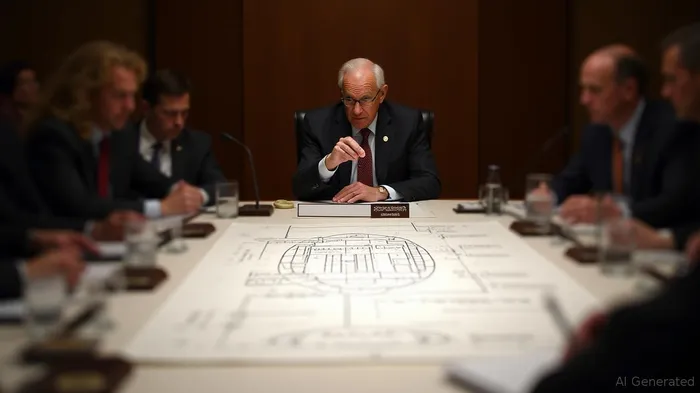
The recent controversy surrounding the Federal Reserve's renovation project has shifted the focus from policy debates to public opinion, with the administration attempting to erode the public's trust in the Federal Reserve Chair. The administration is using the 2.5 billion dollar renovation project as a political weapon to pressure the Chair into either resigning or lowering interest rates. The Chair has made it clear that protecting the Federal Reserve's ability to set interest rates without political interference is a key goal for the remaining 10 months of their term.
The administration's pressure campaign has escalated in recent days, with high-level advisors using social media to mock the renovation project as wasteful. The White House budget director has also sent a letter to the Chair questioning the cost of the project, suggesting that they may have misled Congress. The President has publicly stated that they believe the possibility of firing the Chair is "very low," but added that "unless they have to leave due to fraud."
The administration's strategy appears to be more focused on political destruction than legal action. Legal experts generally doubt that the government could gain support in court to remove the Chair based solely on the cost overrun of the building project. A recent Supreme Court order also suggested that the President's power to fire certain federal officials does not apply to the Federal Reserve.
The renovation project, which has been ongoing for several years, involves two main buildings: the Marriner S. Eccles Building, completed in 1937, and the William McChesney Martin Building, built in the 1970s. The Federal Reserve is a self-funded institution and was given explicit authorization by Congress in 2000 to expand or renovate its buildings. The cost overrun is partly due to unforeseen construction conditions, such as higher-than-expected levels of asbestos, toxic pollutants in the soil, and higher-than-expected groundwater levels. Additionally, design changes were made to meet local planning department requirements for building facade protection, including adding underground space to compensate for lost above-ground space, all of which increased the project's total cost.
In a recent congressional hearing, the Chair refuted claims that the project's use of high-gloss finishes drove up costs, pointing out that these designs had already been removed from the plan. However, the administration has not accepted this explanation, as evidenced by the budget director's letter and the appointment of three Trump aides to the relevant planning committee, indicating that the government plans to keep the project in the public eye.
Despite the unprecedented political pressure, the Chair has publicly and privately stated that defending the Federal Reserve's independence from political interference in setting interest rate policy is a key goal for the remaining 10 months of their term. They believe that resigning or stepping down without a fight would make them complicit in weakening the institution's independence, which is not just about personal ambition but about preserving institutional authority for future Federal Reserve Chairs.
For the Chair, maintaining independence is the foundation of the Federal Reserve's credibility. Historically, central banks that have lost their independence have struggled to maintain market trust and effectively control inflation, ultimately leading to higher long-term interest rates. The current standoff could potentially escalate into an institutional stalemate. The Federal Reserve controls its own buildings, finances, and security systems, meaning that even if the President announces their dismissal, the Chair could theoretically continue to work in the Federal Reserve building until the court approves their removal or the Senate confirms a successor.
The administration's current strategy of pressuring the Federal Reserve is reminiscent of historical precedents. In 1972, President Richard Nixon applied pressure to the then-Chair to maintain low interest rates ahead of the election. The Nixon administration leaked false information to the media, claiming that the Chair was seeking a pay raise while proposing nationwide wage and price controls. This strategy of attacking personal conduct and management issues to achieve policy goals appears to be repeating itself with the current Chair.

Stay ahead of the market.
Get curated U.S. market news, insights and key dates delivered to your inbox.


AInvest
PRO
AInvest
PRO



Comments
No comments yet