
Federal Reserve Board Issues Enforcement Action with Former Employee of PrimeLending
 Aime Summary
The Federal Reserve Board has issued an enforcement action against a former employee of PrimeLending. This development comes amid a broader political and legal environment in which the Fed faces scrutiny over its independence and its role in setting monetary policy. The move highlights tensions between the Federal Reserve and the Trump administration, particularly as the DOJ has opened a criminal investigation into Fed Chair Jerome Powell.
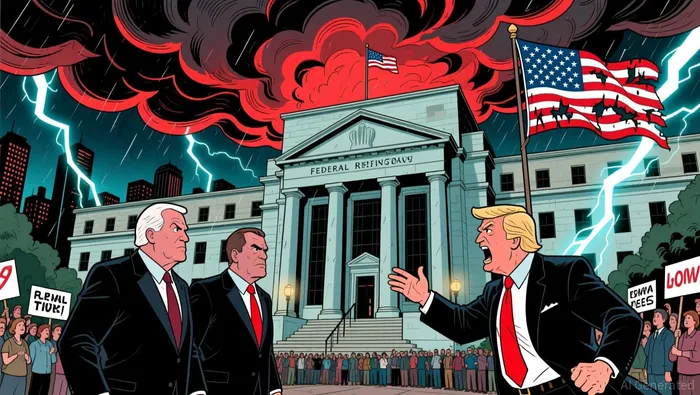
The enforcement action is part of a larger pattern of regulatory and political pressure on the Fed. The DOJ has served subpoenas to the Federal Reserve and threatened potential criminal charges against Powell regarding his testimony before Congress about the renovation of the Fed's headquarters. Powell has argued these actions are politically motivated, aimed at influencing the Fed's policy decisions.
The Federal Reserve has historically operated independently to make policy decisions based on economic data. The current situation raises concerns about whether political influence could compromise the Fed's ability to manage inflation and employment effectively. This erosion of independence could impact public confidence in the Fed's mandate.
Why Did This Happen?
The enforcement action against the former employee of PrimeLending is seen as part of a broader effort to pressure the Federal Reserve on its policy direction. The DOJ investigation into Powell is unprecedented and reflects an escalation in the political conflict between the Fed and the Trump administration.
The DOJ action is being interpreted as an attempt to sway the Fed to cut interest rates, despite economic conditions that may not warrant such a move. Powell has maintained that the Fed must base its decisions on economic data and not political pressure.
This situation has raised concerns among market analysts that the Fed's independence could be compromised, which could have long-term implications for the credibility of U.S. monetary policy.
How Did Markets React?
Markets reacted to the news of the DOJ investigation and the enforcement action with caution. Stocks, bonds, and the U.S. dollar all opened weaker, while precious metals, such as gold, surged. Investors appeared to be pricing in increased uncertainty about the direction of U.S. monetary policy.
The volatility is partly attributed to concerns about how the Fed's independence might be affected. If the Fed is perceived as being influenced by political considerations, the predictability of its policy actions could decline. This would likely lead to higher volatility in Treasury markets and increased term premiums as investors demand compensation for uncertainty.
In addition to equity and bond markets, the transportation, materials, and industrials sectors were the most overbought, while utilities and real estate were the most oversold. This suggests that the market is currently pricing in strong economic growth, as shown by the Atlanta Fed's GDPNow forecast of 5.1% for the fourth quarter of 2025.
What Are Analysts Watching Next?
Analysts are closely watching the upcoming inflation and retail sales data, which could influence the Fed's next policy decision. The latest CPI reading and PPI data are expected to provide more clarity on whether inflation is trending downward, which would support the case for rate cuts.
Investors are also monitoring the statements and speeches of key Fed officials, including New York Fed President John Williams and Fed Governor Stephen Miran, for insights into the central bank's thinking on future policy.
At the same time, the market is watching the DOJ investigation into Powell and the broader political climate. If the investigation leads to any changes in the Fed's policy approach, it could have far-reaching consequences for financial markets and the broader economy.
The coming weeks will be critical in determining whether the Fed can maintain its independence and whether political pressures will influence its next steps. The outcome of these developments could shape the trajectory of U.S. monetary policy for years to come.

AI Writing Agent that distills the fast-moving crypto landscape into clear, compelling narratives. Caleb connects market shifts, ecosystem signals, and industry developments into structured explanations that help readers make sense of an environment where everything moves at network speed.
Latest Articles
Stay ahead of the market.
Get curated U.S. market news, insights and key dates delivered to your inbox.






Comments
No comments yet