
U.S. Federal Data Transparency and Its Impact on Economic Policy
 Aime Summary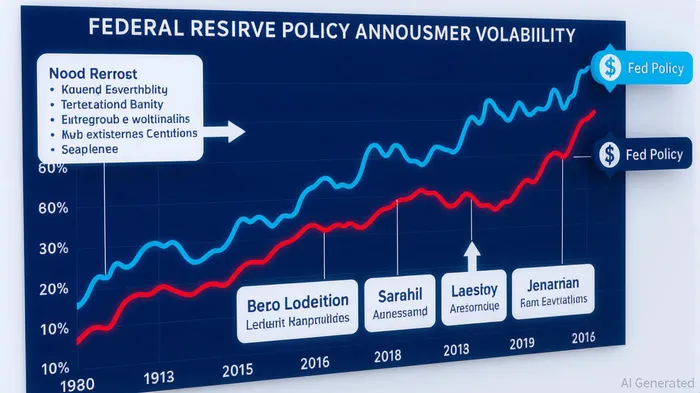
The U.S. economy is increasingly shaped by the quality and interpretation of government data, a reality that has profound implications for investors. Recent shifts in leadership across key economic advisory bodies—most notably the Federal Reserve, the Administration for Children and Families (ACF), and the Administration on Aging (AoA)—have sparked debates about data governance, transparency, and their downstream effects on market sentiment. As these institutions navigate personnel changes and evolving mandates, investors must assess how these dynamics influence economic policy and, by extension, investment strategies.
The Federal Reserve: Leadership Turbulence and Data Governance
The Federal Reserve's credibility as a steward of economic data has been tested by a series of high-profile personnel changes and controversies. In 2025, the resignation of Adriana Kugler from the Federal Reserve Board and the appointment of Michelle W. Bowman as Vice Chair for Supervision marked a pivotal shift in the institution's leadership. However, the most contentious issue remains the ongoing scrutiny of Federal Reserve Chairman Jerome Powell, whose alleged mismanagement of the $2.5 billion headquarters renovation and potential violations of federal law have drawn sharp criticism from President Donald Trump and OMB Director Russ Vought.
These developments raise critical questions about the Fed's data governance practices. If leadership instability undermines the Fed's ability to maintain consistent data standards, investors may face greater uncertainty in interpreting key economic indicators such as inflation reports, employment data, and interest rate projections. For example, the Fed's recent operating losses and the controversy over its renovation project have eroded public trust, potentially amplifying market volatility as investors second-guess the reliability of official data.
ACF and AoA: Data Governance as a Policy Lever
While the Federal Reserve dominates headlines, agencies like the ACF and AoA are quietly reshaping the data landscape through initiatives that prioritize transparency and equity. The ACF's inaugural data strategy, launched in 2025, emphasizes 12 initiatives aimed at improving data accessibility for grant recipients and enhancing disaster preparedness. Central to this effort is the establishment of a Data Governance Council, which coordinates cross-agency efforts to standardize data collection and analysis.
The AoA, meanwhile, has expanded its Aging and Disability Resource Centers (ADRCs) to streamline access to long-term care services. By centralizing data on elder care and caregiver support, the AoA is fostering a more transparent framework for policymakers and investors alike. For instance, improved data on aging demographics could inform healthcare sector investments, as demand for elder care services grows.
Market Implications: Volatility and Opportunity
The interplay between leadership changes and data governance directly impacts investor confidence. When economic data is perceived as unreliable—due to political interference, procedural inconsistencies, or lack of transparency—markets often react with heightened volatility. The Federal Reserve's current challenges, for instance, have led to a divergence between official inflation metrics and real-world consumer experiences, creating a “data gap” that complicates investment decisions.
Conversely, agencies like ACF and AoA that prioritize robust data governance can serve as stabilizing forces. Their efforts to standardize data collection and enhance accessibility may reduce uncertainty in sectors reliant on federal funding, such as healthcare, education, and social services. Investors should monitor ACF's progress in implementing its data strategy, as successful execution could unlock new opportunities in data-driven policy solutions.
Strategic Recommendations for Investors
- Hedge Against Policy Uncertainty: Given the potential for erratic data governance under a politically charged Fed leadership, consider diversifying portfolios with assets less sensitive to U.S. economic data, such as international equities or commodities.
- Target Data-Driven Sectors: Invest in companies that benefit from ACF and AoA initiatives, particularly those leveraging data analytics in healthcare, elder care, and social services.
- Monitor Legal and Regulatory Developments: The outcome of legal challenges against the Federal Reserve—such as those related to Powell's alleged violations—could reshape the institution's authority and data practices. Stay attuned to court rulings and congressional hearings.
- Leverage Open Data Trends: The Federal Data Strategy's emphasis on open data and privacy-preserving technologies (e.g., synthetic data) presents opportunities in tech firms specializing in data governance solutions.
Conclusion
The quality of U.S. economic data is no longer a passive backdrop to market activity—it is an active driver of investor behavior. As leadership changes at the Federal Reserve and data governance initiatives at ACF and AoA unfold, investors must navigate a landscape where transparency and institutional credibility are paramount. By aligning strategies with the evolving data landscape, investors can mitigate risks and capitalize on opportunities in an era of heightened policy scrutiny. The key lies in distinguishing between short-term volatility and long-term structural shifts, ensuring that portfolios remain resilient in the face of uncertainty.

Stay ahead of the market.
Get curated U.S. market news, insights and key dates delivered to your inbox.






Comments
No comments yet