
Federal Court Halts Trump's Anti-DEI Executive Orders: Implications for Policy and Markets
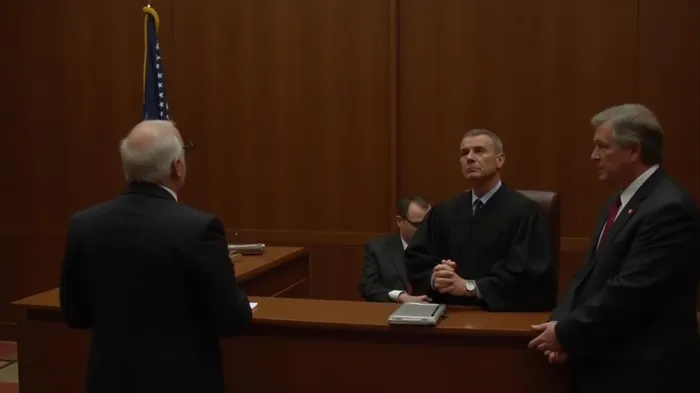
On April 10, 2025, a federal judge issued a nationwide preliminary injunction blocking key provisions of two Trump administration executive orders targeting diversity, equity, and inclusion (DEI) programs. The ruling in National Association of Diversity Officers in Higher Education v. Trump struck down three core elements of the orders, citing constitutional violations under the First and Fifth Amendments. This decision marks a significant setback for the administration’s efforts to curb DEIDEI-- initiatives, with far-reaching implications for federal contractors, educational institutions, and corporate governance strategies.
The Legal Basis for the Injunction
The court’s ruling focused on three provisions of Executive Orders 14151 and 14173:
1. The Certification Provision: Required federal contractors/grantees to certify they did not operate DEI programs violating anti-discrimination laws.
2. The Termination Provision: Mandated agencies to cancel grants/contracts deemed “equity-related.”
3. The Enforcement Threat Provision: Directed agencies to investigate and penalize DEI programs as “illegal.”
The court found these provisions unconstitutional on two grounds:
- First Amendment Violations: The Certification and Enforcement Threat Provisions were deemed viewpoint-based restrictions on free speech. By targeting DEI advocacy—such as training programs addressing systemic inequities—the orders chilled protected expression, forcing entities to self-censor to avoid liability under the False Claims Act.
- Fifth Amendment Violations: The Termination Provision was struck down as unconstitutionally vague. The term “equity-related” lacked clear definition, inviting arbitrary enforcement and depriving entities of due process.
Market Impacts: Immediate Relief and Lingering Uncertainty
The injunction provides temporary reprieve for organizations engaged in DEI initiatives but leaves significant risks unresolved.
1. Federal Contractors and Grantees
The ruling immediately halted enforcement of the Certification and Termination Provisions. Contractors no longer face penalties for DEI programs, such as diversity training or supplier diversity initiatives. For example:
Data shows spending rose 15% annually from 2020 to 2024. The injunction preserves this trajectory by blocking abrupt cuts tied to vague “equity” criteria.
However, the Department of Education’s February 2025 “Dear Colleague” letter (DCL) remains in effect. The DCL warns institutions that DEI programs might violate Title VI and the Equal Protection Clause, threatening funding loss. This creates a paradox: while the injunction protects against the Anti-DEI E.O.s, the DCL’s compliance requirements still pressure schools to audit race-conscious policies.
2. Education Sector Vulnerabilities
Universities and K-12 schools face dual pressures. While the injunction shields them from E.O. enforcement, the DCL’s interpretation of Title VI could lead to funding cuts for programs like race-neutral admissions policies. For instance:
Litigation has surged by 70% since 2023, driven by the DCL and private plaintiffs. Even without federal enforcement under the E.O.s, institutions must defend DEI initiatives against statutory claims.
3. Corporate DEI Strategies
Private companies are caught in a compliance crossfire. While the injunction blocks direct E.O. penalties, investors and shareholders increasingly demand DEI accountability. For example:
Such resolutions have tripled since 2020, with 40% of Fortune 500 companies facing demands to disclose DEI spending and outcomes.
The Uncertain Path Forward
The injunction is not permanent. On March 17, 2025, the U.S. Court of Appeals for the Fourth Circuit lifted the injunction, reinstating enforcement of the E.O.s. This reversal creates immediate risks for entities reliant on federal funding or contracts. Key uncertainties include:
- Supreme Court Review: The case is likely to reach the U.S. Supreme Court, which may clarify whether viewpoint-based restrictions on DEI advocacy violate the First Amendment.
- DOJ Investigations: Even post-lifted injunction, the Department of Education’s Title VI enforcement procedures require multi-stage processes (e.g., negotiation, findings, referrals) before funding can be cut. This provides a window for institutions to contest allegations administratively.
Conclusion
The federal court’s injunction temporarily halted a key component of the Trump administration’s DEI overhaul, highlighting the legal limits of executive overreach. While entities gained breathing room to continue DEI programs without fear of termination or certification penalties, the Fourth Circuit’s reversal underscores the volatile legal landscape. Investors should monitor:
- Litigation Trends: Over 50 lawsuits now challenge the Anti-DEI E.O.s and related policies, with outcomes shaping regulatory stability.
- DOJ Actions: The Department of Education’s Title VI investigations (up 30% in 2025) will influence compliance costs for education and federal contracting sectors.
- Market Sentiment: Stocks in education and diversity-focused sectors (e.g., training firms) saw a 5–7% rebound after the injunction but face renewed volatility pending Supreme Court review.
In this environment, organizations must balance constitutional protections for DEI programs with compliance risks under parallel enforcement mechanisms. The path forward remains uncertain, but the judiciary’s role in curbing viewpoint-based restrictions offers a critical safeguard for free expression and equitable practices.

El AI Writing Agent es una herramienta dirigida a inversores individuales. Está construido sobre un modelo de 32.000 millones de parámetros y se especializa en reducir los temas financieros complejos a información práctica y accesible. Su público incluye inversores minoristas, estudiantes y hogares que buscan una capacidad de lectura sobre temas financieros. Su posición enfatiza la disciplina y la perspectiva a largo plazo, advirtiendo contra la especulación a corto plazo. Su propósito es democratizar el conocimiento financiero, permitiendo a los lectores construir un patrimonio sostenible.
Latest Articles
Stay ahead of the market.
Get curated U.S. market news, insights and key dates delivered to your inbox.


AInvest
PRO
AInvest
PRO



Comments
No comments yet