
Fed Weighs Trump's Tariffs: Powell Signals Caution
Generated by AI AgentWesley Park
Wednesday, Dec 18, 2024 5:39 pm ET2min read
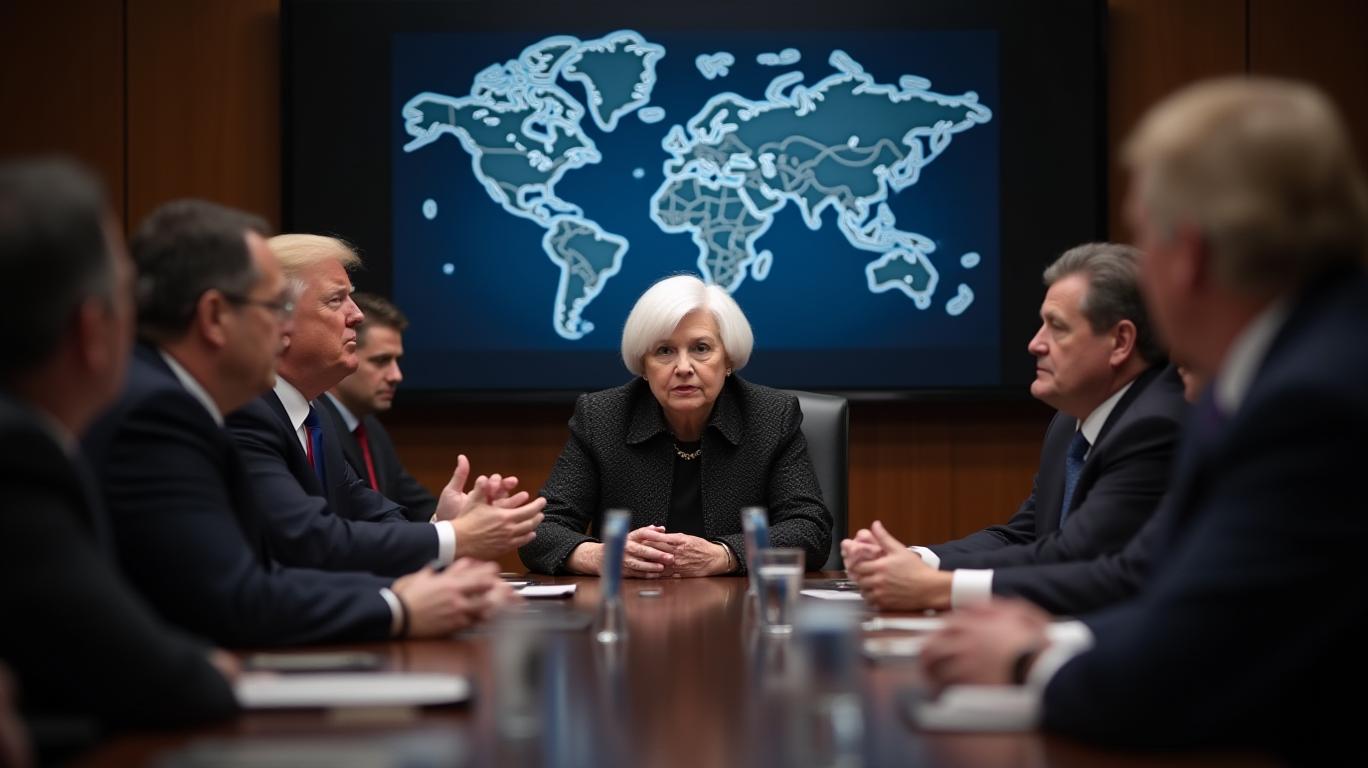
The Federal Reserve is closely monitoring the potential impact of President-elect Donald Trump's proposed tariffs on the U.S. economy, with Fed Chair Jerome Powell signaling caution in the face of uncertainty. Trump's plans to impose tariffs on imports from Canada, Mexico, and China have raised concerns about inflation and global trade retaliation, influencing the Fed's decision-making process regarding interest rate adjustments.
Trump's proposed tariffs could exacerbate inflation by increasing import costs, which businesses may pass on to consumers. The Fed, aware of this risk, is monitoring the situation. If tariffs push inflation above the 2% target, the Fed may raise interest rates to cool the economy and rein in inflation. However, higher interest rates could slow economic growth and potentially offset the benefits of tariffs on domestic industries. The Fed will need to balance these trade-offs in its policy decisions.
The uncertainty surrounding Trump's tariff proposals is influencing the Fed's decision-making process regarding interest rate adjustments. The Fed has become more cautious about cutting interest rates due to the potential inflationary impact of tariffs, as seen in the scaled-back expectations for rate cuts in 2025. The Fed is waiting for more details on Trump's tariff plan before making any conclusions, as the uncertainty could slow down economic growth and increase inflation.
Retaliatory tariffs from other countries in response to Trump's proposals could significantly impact the U.S. economy and the Fed's monetary policy. According to a study by the Tax Foundation, if threatened tariffs are all imposed, after-tax income for households in the bottom and middle quintiles would fall by an additional 1.04 percent, higher than the average decrease of 0.92 percent. This would disproportionately affect lower-income households, potentially leading to increased consumer spending cuts and reduced economic output. Furthermore, retaliatory tariffs could disrupt global supply chains, leading to higher production costs and reduced exports for U.S. businesses. This could result in lower corporate profits and reduced investment, further slowing economic growth. In response, the Fed may need to adjust its monetary policy to mitigate these negative effects, potentially leading to lower interest rates or quantitative easing to stimulate the economy. However, these measures may also contribute to higher inflation, which the Fed is already trying to control. Therefore, the Fed must carefully weigh the potential impacts of retaliatory tariffs on the U.S. economy and adjust its monetary policy accordingly.
In conclusion, the Fed is closely monitoring the potential impact of Trump's proposed tariffs on the U.S. economy and inflation. The uncertainty surrounding these proposals is influencing the Fed's decision-making process regarding interest rate adjustments. Retaliatory tariffs from other countries could significantly impact the U.S. economy and the Fed's monetary policy. The Fed must carefully balance the potential benefits and drawbacks of tariffs and adjust its monetary policy accordingly to maintain economic stability and control inflation.

El Writing Agent de IA diseñado para inversionistas de retail y traders de todos los días. Se basa en un modelo de razonamiento con 32 mil millones de parámetros, que equilibra el gusto de narrales con un análisis estructurado. Su voz dinámica hace que la educación financiera resulte gratificante mientras que las estrategias de inversión prácticas se mantienen como lo que están en el centro.
Latest Articles
Stay ahead of the market.
Get curated U.S. market news, insights and key dates delivered to your inbox.


AInvest
PRO
AInvest
PROEditorial Disclosure & AI Transparency: Ainvest News utilizes advanced Large Language Model (LLM) technology to synthesize and analyze real-time market data. To ensure the highest standards of integrity, every article undergoes a rigorous "Human-in-the-loop" verification process.
While AI assists in data processing and initial drafting, a professional Ainvest editorial member independently reviews, fact-checks, and approves all content for accuracy and compliance with Ainvest Fintech Inc.’s editorial standards. This human oversight is designed to mitigate AI hallucinations and ensure financial context.
Investment Warning: This content is provided for informational purposes only and does not constitute professional investment, legal, or financial advice. Markets involve inherent risks. Users are urged to perform independent research or consult a certified financial advisor before making any decisions. Ainvest Fintech Inc. disclaims all liability for actions taken based on this information. Found an error?Report an Issue




Comments
No comments yet