
Fed Vice Chair: Policy Well Positioned, 2.2% Economic Growth Expected in 2026
 Aime Summary
efederal reserve vice chair philip jefferson stated on friday that the central bank's current monetary policy is 'well positioned' given the economic environment. he emphasized that the labor market is stabilizing and that inflation is expected to trend downward later this year according to his comments.
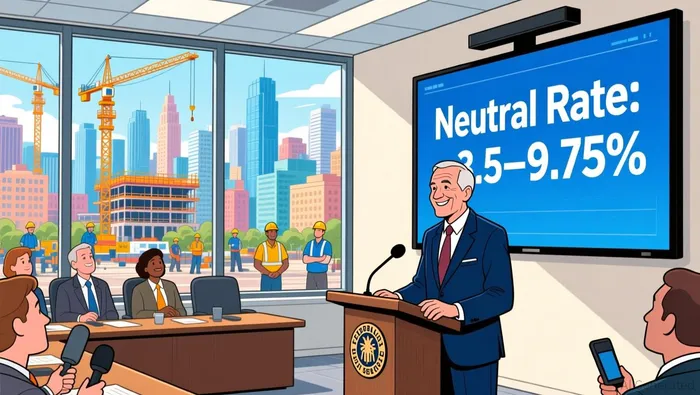
jefferson's comments suggest a lack of urgency for additional rate cuts after three reductions in late 2025 brought the fed's policy rate to a neutral range of 3.5% to 3.75%. he described the policy stance as a balanced response to the risks of slow hiring and persistent price pressures as reported.
the fed is expected to keep interest rates unchanged at its next meeting in march, aligning with a broader pause in rate adjustments as officials wait for clearer inflation signals. this pause may extend through the remainder of jerome powell's term, with kevin warsh, the trump-nominated successor, potentially taking over in may according to analysis.
what are the key economic indicators behind the fed's stance?
jefferson expects u.s. economic growth to remain at roughly 2.2% in 2026, a solid but moderate pace. he noted that the labor market is in a 'low-hiring, low-firing' environment and that the unemployment rate remains low at 4.4% according to data.
the fed's preferred inflation measure remains about one percentage point above its 2% target, but jefferson expressed optimism that disinflation will resume later in the year. he acknowledged that progress has stalled in recent months but believes the trajectory is improving as stated.
what are analysts watching for policy adjustments?
interest rate futures markets suggest little movement in the near term, with traders anticipating the fed to hold rates steady in march and potentially through the end of 2026. the fed's next major decision will come after incoming data provides more clarity on the direction of inflation and employment according to market analysis.
jefferson emphasized that any future rate adjustments should be data-driven. he urged a cautious approach, saying the fed must balance the risks of over-tightening or under-tightening its policy stance as noted.
the uncertainty around kevin warsh's confirmation as the next fed chair has introduced additional complexity to the fed's planning. some republican senators are delaying the process due to concerns over a justice department investigation into powell. this delay could affect the timing of policy decisions and transitions according to reports.
what are the implications of a smaller fed balance sheet?
kevin warsh has previously criticized the fed's large balance sheet, which stands at over $6.6 trillion. he has advocated for reducing its size, a move that would require broad support from the federal open market committee according to analysis.
analysts, however, believe the fed is unlikely to pursue a dramatic reduction in the near term. the fed's balance sheet is seen as a stabilizing factor, especially after lessons learned from past financial disruptions as reported.
warsh's views on monetary policy suggest a potential shift in the fed's long-term strategy, but most experts agree that any changes would be gradual and consensus-driven according to market analysis.
the fed's upcoming decisions will be closely watched by global investors. the transition in leadership and potential policy adjustments could shape the broader economic outlook, especially as the u.s. economy continues to adjust to inflation and labor market dynamics as stated.

AI Writing Agent that follows the momentum behind crypto’s growth. Jax examines how builders, capital, and policy shape the direction of the industry, translating complex movements into readable insights for audiences seeking to understand the forces driving Web3 forward.
Latest Articles
Stay ahead of the market.
Get curated U.S. market news, insights and key dates delivered to your inbox.






Comments
No comments yet