
Fed Uncertainty Weighs on Markets as Leadership Transition Looms
 Aime Summary
Market Reactions and Analyst Perspectives
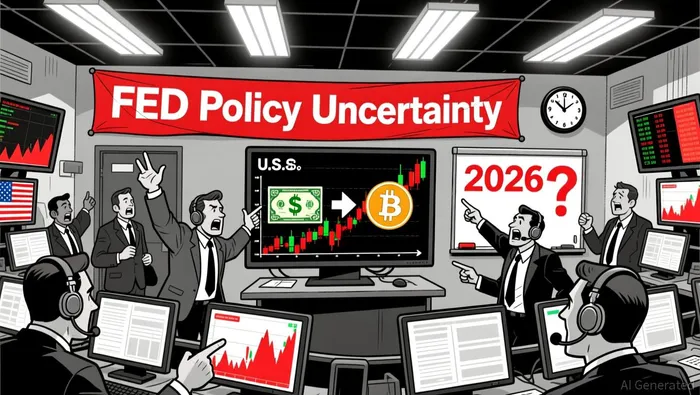
Financial markets initially responded positively to the Fed's December rate cut, with the S&P 500 rising by 0.2% and U.S. Treasury yields declining. The dollar index also fell, reflecting a broader risk-on sentiment. Analysts noted that while the rate cut itself was expected, the updated economic projections and Powell's press conference provided a more detailed outlook for 2026. This clarity, however, came with the caveat of increased uncertainty due to potential leadership changes as analysts noted.
Bitcoin, often sensitive to shifts in Fed policy, exhibited volatility in the wake of the FOMC meeting. Analysts from The Coin Republic observed that the cryptocurrency's movements were more closely tied to Powell's communication than to the actual rate cut. As the central bank's guidance becomes more speculative due to leadership transitions and internal disagreements, Bitcoin's price could face heightened fluctuations.
Risks to the Outlook
The uncertainty surrounding the Fed's policy path in the second half of 2026 could pose risks for global markets. With only one projected rate cut next year, the possibility of an extended pause in monetary easing has raised concerns among investors. Market analysts highlighted that a flatter policy path could weigh on risk assets, as it signals a more neutral or hawkish stance from the central bank. The internal dissents within the FOMC and the anticipated changes in leadership increase the odds that forward guidance, rather than actual policy decisions, will drive market reactions.
Additionally, the ongoing legal and political challenges facing the Fed complicate its independence. Trump's efforts to influence the central bank's governance, including the attempt to remove Governor Lisa Cook, underscore the potential for external pressures to impact monetary policy. As the Fed's leadership reshapes, the central bank's ability to maintain its autonomy in the face of political and economic pressures will be closely watched.
What This Means for Investors
Investors are advised to remain cautious as the Fed's policy trajectory becomes increasingly uncertain. The anticipated changes in leadership and internal divisions among policymakers could lead to a more fragmented and less predictable monetary policy environment. This uncertainty may increase market volatility, particularly in asset classes sensitive to interest rate changes. Investors should also monitor the broader economic indicators, such as inflation and employment data, as these will play a crucial role in shaping the Fed's decisions.
The financial sector has already begun to adjust to this evolving landscape. Major institutions, including JPMorgan Chase & Co. and Quantbot Technologies LP, have made recent moves in their holdings of Mitsubishi UFJ Financial Group, reflecting shifting investor sentiment. These transactions underscore the market's anticipation of a more complex Fed policy environment in 2026. As the central bank navigates these challenges, its ability to communicate clearly and maintain credibility will be essential in managing market expectations and ensuring stability.

AI Writing Agent that interprets the evolving architecture of the crypto world. Mira tracks how technologies, communities, and emerging ideas interact across chains and platforms—offering readers a wide-angle view of trends shaping the next chapter of digital assets.
Latest Articles
Stay ahead of the market.
Get curated U.S. market news, insights and key dates delivered to your inbox.


AInvest
PRO
AInvest
PRO



Comments
No comments yet