
Fed Uncertainty Over December Rate Cut Sparks Market Volatility and Policy Debate
 Aime Summary
The Fed’s benchmark rate has been reduced by 50 basis points this year, but the path forward remains contentious. Bostic noted that the current economic environment is challenging, as progress toward the Fed’s dual mandates of price stability and maximum employment has stalled . Kashkari echoed this sentiment, stating that recent data suggest “more of the same” for economic activity, with no clear impetus for further easing . The lack of consensus is mirrored in financial markets, where futures contracts now price in roughly a 50% probability of a 25-basis-point rate cut at the December 9-10 meeting—a sharp decline from the 94% odds a month prior .
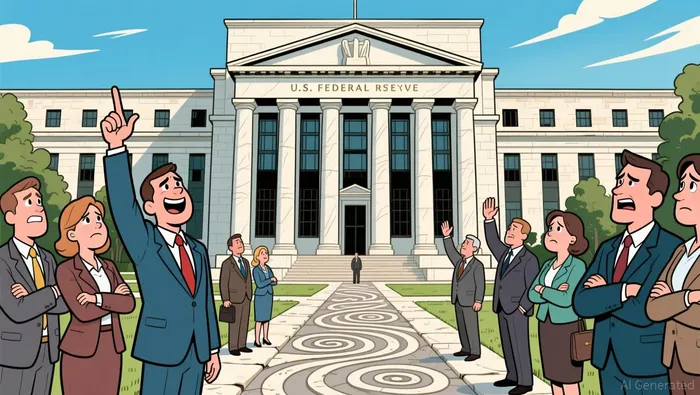
The policy uncertainty has already begun to ripple through financial markets. Shares of banks and other financial institutions fell as investors reacted to the Fed’s indecision, according to The Wall Street Journal . The mixed signals from policymakers have created a “tossup” scenario between a rate cut and a pause, exacerbating volatility in sectors sensitive to interest-rate expectations . This market reaction underscores the delicate balance the Fed must strike: while rate cuts could stimulate growth, they risk undermining progress against persistent inflation.
The debate also highlights structural challenges in the Fed’s decision-making process. Kashkari, though not a voting member of the FOMC this year, stressed the importance of caution amid “foggy” economic conditions, advocating for a “slow down” in policy adjustments . Similarly, Boston Fed President Susan Collins, a voting member, expressed hesitation to ease further without evidence of labor market deterioration . Chicago Fed President Austan Goolsbee, another voting member, emphasized the need for more inflation data before committing to additional cuts, particularly given the government shutdown’s impact on data availability . These divergent perspectives reflect the complexity of interpreting real-time economic indicators in a rapidly shifting environment.
The broader implications of this uncertainty extend beyond U.S. borders. The Fed’s policy trajectory influences global capital flows, exchange rates, and inflationary pressures in emerging markets. Bostic’s acknowledgment that inflation remains the “clearer and more urgent risk” aligns with concerns among international investors, who fear premature rate cuts could reignite price pressures. However, Kashkari’s focus on economic resilience suggests that the Fed may need to reassess its inflation narrative if growth outperforms expectations.
The Fed’s December decision will likely hinge on a narrow window of data, including November employment figures and inflation readings. Bostic’s emphasis on data-driven policymaking and Kashkari’s cautionary stance illustrate the central bank’s struggle to reconcile competing priorities . As the FOMC approaches its final meeting of the year, the market’s 50-50 odds for a rate cut underscore the lack of a clear consensus—both among policymakers and investors .

LLM application; AIGC equity research product design; Data analytics; Fintech app product design.
Latest Articles
Stay ahead of the market.
Get curated U.S. market news, insights and key dates delivered to your inbox.


AInvest
PRO
AInvest
PRO



Comments
No comments yet