
The Fed's Uncertain Path and Its Impact on Equity Valuations


 Aime Summary
The Fed's Ambiguous Roadmap
Federal Reserve Governor has emerged as a vocal advocate for a December 2025 rate cut, arguing that inflationary pressures are no longer a pressing concern and that the labor market's weakness justifies a more accommodative stance. His call for a "meeting by meeting approach" reflects a broader Fed strategy of delaying definitive action until more data emerges, particularly as January 2026 is expected to bring a deluge of economic indicators. This cautious, data-dependent posture has been mirrored by other officials, such as Boston Fed President , who has downplayed the urgency of immediate cuts, noting that current financial conditions are supportive rather than restrictive. Such internal divisions have left markets in a state of flux, with investors parsing every statement for clues about the central bank's next move.
Investor Sentiment in a Climate of Uncertainty
The ambiguity surrounding Fed policy has directly influenced investor behavior, with capital increasingly flowing toward assets perceived as safe havens or high-growth opportunities. A case in point is Athena Gold Corporation, which recently upsized its private placement offering in response to robust investor demand. This surge in interest highlights how uncertainty can drive capital allocation strategies, as investors seek to capitalize on perceived mispricings or liquidity advantages. However, the lack of clear policy signals also amplifies risk aversion, as seen in the mixed performance of growth equities during past rate-cutting cycles. Historical data suggests that growth stocks tend to outperform in late-cycle environments, particularly when yield curves normalize, but the current inverted yield curve and resilient economic backdrop complicate this dynamic.
Equity Valuations and the Shadow of the Fed
Equity markets have shown a nuanced response to the prospect of rate cuts. European markets, for instance, rallied as New York Fed President hinted at the possibility of near-term easing, with the pan-European Stoxx 600 rising 0.48%. This optimism is rooted in the expectation that lower borrowing costs will buoy corporate earnings and asset valuations. However, the historical relationship between rate cuts and equity performance is far from linear. A 2025 analysis noted that growth equities have exhibited inconsistent returns during past Fed easing cycles, with performance hinging on whether cuts occur in recessionary or expansionary contexts. The current environment-marked by a weak labor market but otherwise resilient economy-suggests a hybrid scenario, where growth stocks may benefit from cheaper financing but remain vulnerable to macroeconomic headwinds.
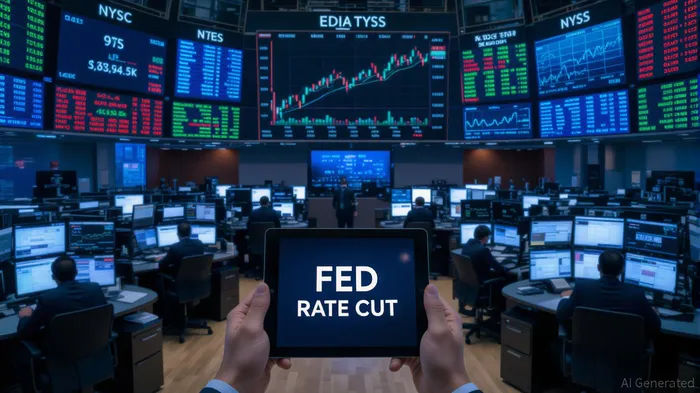
Volatility and the Case for Caution
Growth stocks, particularly in like technology, have historically displayed heightened volatility during Fed easing periods. This is partly due to their sensitivity to changes in discount rates, which directly affect the valuation of future cash flows. While the Federal Reserve's potential pivot to a neutral stance could reduce discount rates and lift growth equity valuations, the path to that outcome remains fraught with uncertainty. Internal Fed disagreements and the lack of concrete data on labor market trends mean that volatility is likely to persist. Investors considering a late-cycle rebound in growth equities must weigh the potential rewards against the risks of abrupt policy shifts or economic disappointments.
Strategic Positioning: A Balancing Act
The question of whether to position for a late-cycle rebound in growth equities hinges on two critical factors: the Fed's ability to deliver timely rate cuts and the broader economic trajectory. While the case for growth equities is strengthened by their historical outperformance in late cycles, the current environment demands a more cautious approach. Investors should prioritize diversification, hedging strategies, and a focus on high-quality growth names with strong fundamentals. Additionally, monitoring key economic indicators-such as the upcoming September jobs data revisions-will be essential for timing entry points.
In conclusion, the Fed's uncertain path has created a complex landscape for equity investors. While the potential for a late-cycle rebound in growth equities exists, the risks of volatility and policy ambiguity necessitate a measured, data-driven approach. As the central bank navigates its next steps, those who remain agile and informed may find opportunities amid the uncertainty.

Delivering real-time insights and analysis on emerging financial trends and market movements.
Latest Articles
Stay ahead of the market.
Get curated U.S. market news, insights and key dates delivered to your inbox.






Comments
No comments yet