
The Fed's Tightrope Walk: Why Rates Will Stay Put Amid Modest Inflation and a Strong Labor Market
The Federal Reserve's next move has been the subject of intense speculation, but recent data on inflation and labor markets suggests the central bank will remain on hold for the foreseeable future. Despite a cooling in price pressures—CPI inflation dipped to 2.3% annually in April 2025, its lowest since early 2021—and a labor market that continues to defy recession fears, the Fed is likely to prioritize stability over cuts. Here's why investors should prepare for a prolonged period of status quo monetary policy.
Inflation: Moderation, Not Defeat
The latest Consumer Price Index (CPI) data reveals a nuanced picture of disinflation. While the annual rate of 2.3% reflects meaningful progress from the 2022 peak of over 9%, underlying trends suggest no immediate urgency for rate reductions. Shelter costs, which account for about a third of the CPI basket, rose 4.0% annually in April, driven by persistent rent hikes and owner's equivalent rent. Meanwhile, energy prices, though down 3.7% over the past year, saw a 0.7% monthly increase in April due to rising natural gas and electricity costs.
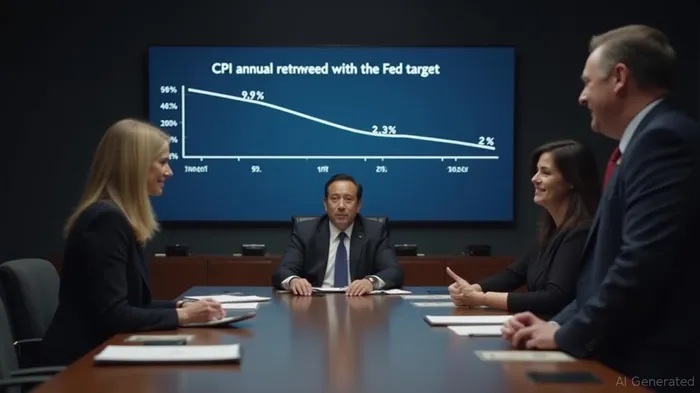
The Fed's challenge lies in balancing these mixed signals. As Chair Powell noted in recent testimony, “The goal isn't to eliminate inflation but to stabilize it around 2%.” The central bank is wary of cutting rates prematurely, fearing it could reignite price pressures in an economy where wage growth (up 3.9% annually in May) and resilient consumer spending remain risks.
Labor Markets: Resilience Amid Uncertainty
The labor market's staying power is another key factor keeping the Fed on hold. The unemployment rate has held steady at 4.2% for 14 consecutive months, and job gains in May—139,000—were driven by sectors like healthcare (+62,000) and leisure/hospitality (+48,000). Even as layoffs rise (up 80% year-over-year due to federal budget cuts), the labor force participation rate remains stubbornly low at 62.4%, suggesting slack in the economy isn't sufficient to justify easing.
Wall Street strategists agree: “The Fed won't cut rates until it's certain inflation is entrenched below 2%, and labor markets are signaling no immediate downturn,” says Morgan Stanley's Ellen Zentgraaff. With job openings still exceeding unemployed workers (a job-seeker-to-opening ratio of 0.97 in April), employers remain confident, limiting downward pressure on wages.
The Fed's Data-Dependent Playbook
The Fed's mantra of “data dependency” is more than rhetoric. Recent minutes from policy meetings emphasize the need for “persistent evidence” of disinflation before considering cuts. Even dovish officials, like Boston Fed President Susan Collins, acknowledge the risks of premature easing: “A premature cut could undermine progress in taming inflation.”
The central bank's dilemma is clear:
- Inflation is moderating but not collapsing. The core CPI (excluding food/energy) remains at 2.8%, above target.
- Labor markets are strong but uneven. While job gains are solid, manufacturing and retail sectors are softening, and participation rates suggest some workers are still on the sidelines.
Investment Implications: Positioning for Patience
Investors should expect the Fed to maintain rates through 2025, with cuts likely only in late 2026 if inflation stays subdued. This environment favors sectors that thrive in stable-rate environments:
- Equities with stable cash flows: Utilities and consumer staples (e.g., Procter & Gamble) may outperform as rate volatility diminishes.
- Short-duration bonds: Stick to short-term Treasuries or high-quality corporate bonds to avoid duration risk in a flat yield curve.
- Avoid overleveraged firms: Companies with heavy debt loads (e.g., in energy or real estate) face pressure if the Fed delays cuts, keeping borrowing costs elevated.
Conclusion: The Fed's Tightrope is Investors' Stepping Stone
The Fed's decision to stay patient is a reflection of its dual mandate: price stability and maximum employment. With inflation still above target and labor markets defying recession, the central bank has little incentive to gamble on cuts. Investors who recognize this reality can position portfolios for a prolonged period of low volatility and gradual growth. The Fed's tightrope walk isn't just about economics—it's a strategic bet that markets will reward caution over haste.
Stay steady, stay diversified, and keep an eye on the data. The Fed's next move hinges on it, and so does your portfolio.

Stay ahead of the market.
Get curated U.S. market news, insights and key dates delivered to your inbox.
AInvest
PRO
AInvest
PRO



Comments
No comments yet