
The Fed's Tightrope Walk: Navigating Inflation and Growth in 2025
 Aime Summary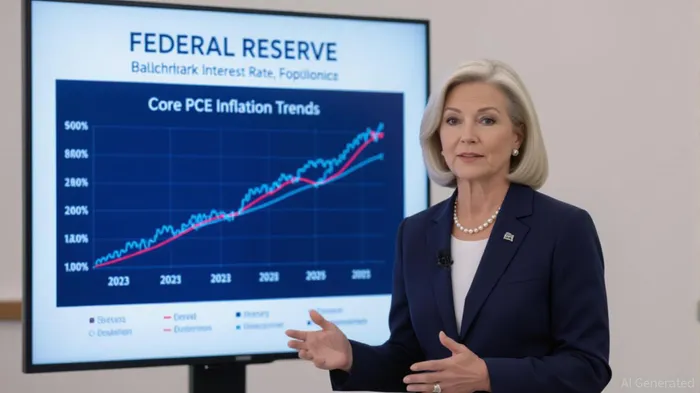
The Federal Reserve faces a classic policy dilemma in 2025: How to reconcile stubborn inflation with a resilient economy poised for a slowdown. With core inflation lingering at 2.9%—well above the 2% target—and the U.S. economy expanding at a 3% annual rate in Q2, the Fed must tread carefully. Its July 2025 decision to hold rates steady at 4.25–4.5% underscores this tension, as markets now price in a 60% chance of a September cut. For investors, the stakes are high: Cyclical sectors like industrials, consumer discretionary, and financials are acutely sensitive to rate shifts, while equity valuations face a tug-of-war between inflationary pressures and growth expectations.
The Fed's Calculus: Inflation vs. Growth
The Fed's caution is rooted in the dual risks posed by President Trump's tariff policies. While these tariffs initially spurred a Q2 growth spurt by reducing imports, they risk reigniting inflation through higher input costs for manufacturers and consumers. For example, a 50% tariff on copper imports threatens to compress margins in construction and renewable energy sectors, which rely heavily on this commodity. Meanwhile, the labor market remains robust, with unemployment at 4.1% and job gains concentrated in healthcare and hospitality. This resilience supports demand for cyclical goods and services but complicates the Fed's inflation-fighting mission, as tight labor markets can fuel wage-price spirals.
Cyclical Sectors in the Crosshairs
Industrials and consumer discretionary sectors are prime examples of the Fed's balancing act. The industrial sector, though buoyed by strong job growth and stable demand, faces margin pressures from rising material costs and global supply chain bottlenecks. For instance, steel and aluminum producers are seeing domestic prices outpace global benchmarks, eroding their competitiveness. Consumer discretionary firms, meanwhile, benefit from a 3% Q2 GDP boost driven by tariff-induced import declines but face headwinds as tariffs push durable goods prices higher. The University of Michigan's inflation expectations survey—surging to 5.1% in June—signals that households may curb spending on nonessentials, further weighing on these sectors.
Equity Valuations: A Tale of Two Markets
Equity valuations in 2025 reflect a fractured landscape. U.S. tech stocks, insulated by strong cash flows and AI-driven growth, have reached historic valuations despite high rates. Companies like NVIDIANVDA-- have thrived, leveraging low debt and recurring revenue models to weather rate uncertainty. However, smaller tech firms and highly leveraged cyclical players—such as those in construction or automotive manufacturing—remain vulnerable. Defensive sectors, including healthcare and utilities, have gained favor as investors seek stability, with companies like Procter & Gamble leveraging pricing power to maintain margins amid inflation.
The Fed's prolonged hold on rates has also reshaped asset allocations. Bonds, now offering yields of 5.10% (Bloomberg Aggregate Index), have outperformed equities in five-year forward returns, according to historical trends. This shift reflects a broader flight to quality, with corporate credit spreads tightening but remaining skewed toward wider outcomes amid global risks.
Investment Implications and Strategic Recommendations
For investors, the Fed's tightrope walk demands a tactical approach:
1. Sector Rotation: Prioritize defensive plays (healthcare, utilities) in a high-rate environment while maintaining exposure to cyclical sectors poised to benefit from a September rate cut.
2. Duration Management: Extend bond duration cautiously, favoring high-quality corporate and government debt to capitalize on attractive yields.
3. Global Diversification: Allocate to emerging market local debt and U.K./Australian bonds, which offer better risk-adjusted returns compared to U.S. equities.
4. Currency Carry Strategies: Use EM FX carry trades to generate income, hedging against U.S. dollar volatility while avoiding overexposure to correlated assets.
Conclusion
The Fed's July 2025 decision to hold rates reflects its commitment to a data-dependent approach, but the path forward remains fraught. Cyclical sectors will face divergent pressures as tariffs reshape trade dynamics and inflation expectations shift. For investors, the key lies in balancing growth optimism with inflation vigilance, leveraging sector-specific insights and asset-class diversification to navigate the Fed's tightrope. As markets await the September meeting, the interplay between policy, inflation, and growth will remain the defining theme of 2025.

Delivering real-time insights and analysis on emerging financial trends and market movements.
Latest Articles
Stay ahead of the market.
Get curated U.S. market news, insights and key dates delivered to your inbox.






Comments
No comments yet