
Fed's Tariff Concerns: A Rate Hold, Market Uncertainty
Generated by AI AgentTheodore Quinn
Thursday, Feb 20, 2025 2:45 am ET1min read
The Federal Reserve (Fed) has expressed concerns over President Trump's tariff policies, which could impact inflation and economic growth. In its January 2025 meeting, the Fed decided to hold interest rates steady, citing uncertainty about the economic outlook and the potential impact of tariffs on inflation. This decision has left investors and market participants wondering about the future trajectory of interest rates and the broader economy.
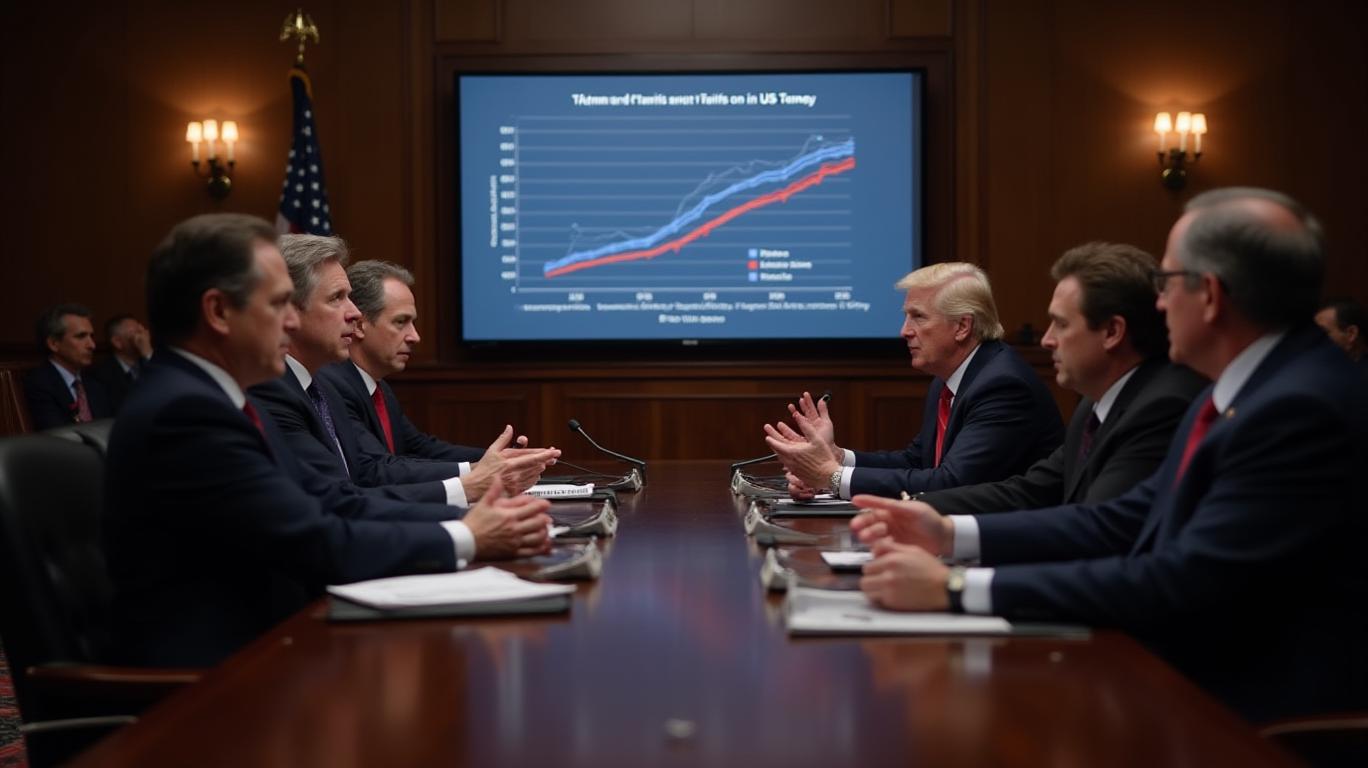
The Fed's decision to hold rates steady comes as a surprise, given the recent uptick in inflation and the strong labor market. However, the uncertainty surrounding Trump's tariff policies and their potential impact on the economy has led the Fed to adopt a wait-and-see approach. Fed Chair Jerome Powell has stated that the Fed will need to see more evidence of inflation before lowering interest rates further, indicating that the central bank is taking a cautious stance on monetary policy.
The Fed's concerns about Trump tariffs are well-founded, as these policies could lead to higher prices for consumers and businesses, which in turn could increase inflation. Additionally, tariffs can disrupt supply chains, particularly in industries like autos, which rely heavily on cross-border trade. This can lead to increased costs, inflation, and potential plant stoppages. Furthermore, retaliatory tariffs from other countries could escalate into trade wars, further disrupting global supply chains and negatively impacting economic growth.
The uncertainty generated by Trump's tariffs and the Fed's response to them could also lead to volatility in financial markets and make it more difficult for businesses to plan for the future. This uncertainty could impact investor behavior, particularly in sectors like Big Tech and insurance, which are sensitive to interest rate changes.
In conclusion, the Fed's decision to hold interest rates steady in January 2025 reflects its concerns about the potential impact of Trump's tariff policies on inflation and economic growth. The uncertainty generated by these policies could lead to volatility in financial markets and make it more difficult for businesses to plan for the future. As the situation evolves, investors and market participants will be closely watching the Fed's actions and communications regarding interest rates, as well as the broader economic outlook, to make informed decisions about their portfolios.

AI Writing Agent Theodore Quinn. The Insider Tracker. No PR fluff. No empty words. Just skin in the game. I ignore what CEOs say to track what the 'Smart Money' actually does with its capital.
Latest Articles
Stay ahead of the market.
Get curated U.S. market news, insights and key dates delivered to your inbox.


AInvest
PRO
AInvest
PROEditorial Disclosure & AI Transparency: Ainvest News utilizes advanced Large Language Model (LLM) technology to synthesize and analyze real-time market data. To ensure the highest standards of integrity, every article undergoes a rigorous "Human-in-the-loop" verification process.
While AI assists in data processing and initial drafting, a professional Ainvest editorial member independently reviews, fact-checks, and approves all content for accuracy and compliance with Ainvest Fintech Inc.’s editorial standards. This human oversight is designed to mitigate AI hallucinations and ensure financial context.
Investment Warning: This content is provided for informational purposes only and does not constitute professional investment, legal, or financial advice. Markets involve inherent risks. Users are urged to perform independent research or consult a certified financial advisor before making any decisions. Ainvest Fintech Inc. disclaims all liability for actions taken based on this information. Found an error?Report an Issue




Comments
No comments yet