
The Fed's Sudden Rate Cut and Its Implications for 2026


 Aime Summary
The Federal Reserve's December 2025 decision to cut interest rates by 25 basis points-marking the third consecutive reduction-has sent ripples through global markets. This move,
" by analysts, reflects a delicate balancing act: addressing signs of weakness while guarding against inflationary risks. With the now targeting a range of 3.5%-3.75%,
the Fed has signaled its intent to remain cautious, emphasizing that further easing will depend on evolving economic data. For investors, this shift in demands a strategic reassessment of asset allocations in 2026.
Equities: A Tailwind for Risk-On Assets
The Fed's has historically bolstered equities, particularly in a mid-cycle, non-recessionary environment. Lower borrowing costs reduce for future earnings, making more attractive.
J.P. Morgan analysts note that the S&P 500 and U.S. high-yield bonds are likely to benefit from the Fed's , as strengthens. However, investors must remain selective. such as industrials and consumer discretionary may outperform, while defensive sectors could lag if resurface.
Bonds: Short-Duration Dominance
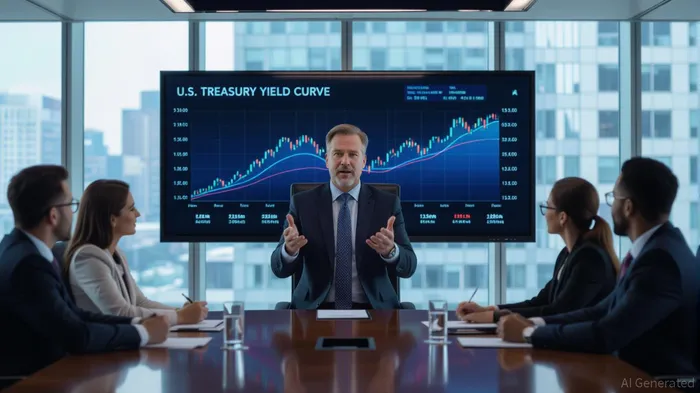
The 's response to the Fed's pivot has been nuanced. While long-term have dipped, shorter-duration bonds and selective credit positions are expected to outperform.
BlackRock highlights that a benign and declining cash yields make shorter maturities more appealing, as they mitigate in a potentially volatile rate environment. Additionally, the Fed's concurrent $40 billion suggests a preference for stabilizing intermediate-term yields,
further tilting the in favor of .
Commodities: Gold's Structural Bull Cycle
Gold has emerged as a standout beneficiary of the Fed's . A weaker U.S. dollar and lower reduce the opportunity cost of holding non-yielding assets like gold, positioning it for sustained gains.
According to a report by SSGA, the structural for gold is likely to continue into 2026, driven by strategic reallocation from money market funds and . Investors seeking inflation hedging and may find gold's inverse correlation with the dollar increasingly compelling.
Strategic Reallocation for 2026
The Fed's necessitate a proactive approach to asset allocation. Key considerations include:
1. Reducing Cash Holdings: With projected to decline further,
investors should rebalance toward such as high-quality corporate bonds and .
2. Embracing Alternatives: Gold, real estate, and offer diversification benefits in a low-yield world.
3. :
A weaker U.S. dollar could amplify returns for dollar-denominated assets held by foreign investors, while also boosting .
Conclusion
The Fed's December 2025 underscores a pivotal shift in monetary policy, with far-reaching implications for in 2026. While equities and commodities appear well-positioned to capitalize on lower rates, bond investors must navigate a fragmented yield curve. -prioritizing flexibility, , and -will be critical for navigating the uncertainties ahead. As the Fed remains divided on the path forward, investors must stay attuned to evolving and adjust their portfolios accordingly.

Stay ahead of the market.
Get curated U.S. market news, insights and key dates delivered to your inbox.






Comments
No comments yet