
Fed Signals Just One Rate Cut in 2026 as Inflation Fears Curb Easing Outlook
 Aime Summary
Federal Reserve Rate Cuts and Market Outlook
The Federal Reserve signaled Wednesday that it is likely to deliver only one interest rate cut in 2026, a move that contrasts with earlier expectations from markets and the Trump administration for more aggressive easing. The central bank cited data showing inflation remains above its 2% target, despite a slowing labor market and growing economic uncertainty. Investors are now recalibrating their expectations, with major stock benchmarks like the S&P 500 reacting to the Fed's updated forecasts.
LPL Financial, a major market research firm, expects the S&P 500 to finish 2026 near 7,300 to 7,400, with a 25% chance of reaching 7,800 if AI-driven productivity gains outperform according to the analysis. 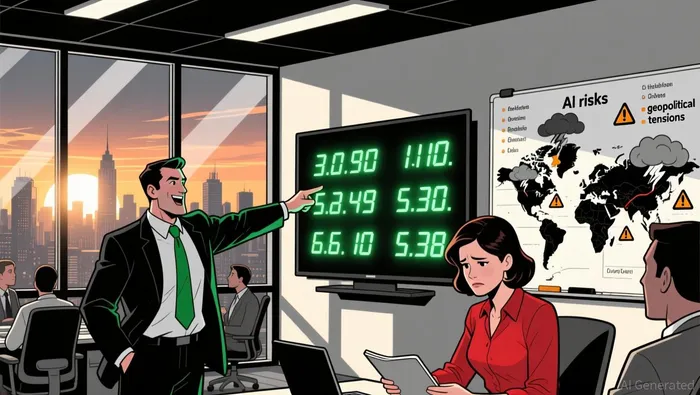 However, risks such as AI underperformance, geopolitical tensions, and potential upward pressure on long-term interest rates could cap returns. The firm also warned that even if corporate earnings grow significantly, stock valuations may struggle to rise beyond current levels according to the report.
Deutsche Bank has raised concerns that the next Fed move might be a rate hike rather than a cut, particularly if inflation resists downward pressure or economic data surprises to the upside. The bank pointed to recent history, noting that major market selloffs have often coincided with tightening cycles. It also highlighted shifts in international markets, where expectations for rate hikes are growing in the eurozone and other major economies, which could create a ripple effect for U.S. monetary policy.
Risks to the Outlook
The Fed's cautious stance is partly due to a delicate balancing act between inflation control and job market stability. While the central bank trimmed its key rate to 3.6%, near a three-year low, three of its members dissented, arguing for no further cuts. Inflation is expected to ease to 2.4% by the end of 2026, but that would still be higher than the Fed's target. This environment has limited room for additional easing, and a return to rate hikes is now a meaningful concern for investors according to market analysis.
The uncertainty is compounded by the looming change in Fed leadership. President Trump is expected to name his successor to Jay Powell by the end of the year, and markets are already pricing in the possibility of a more dovish stance. However, current Fed officials remain skeptical of aggressive rate cuts, emphasizing data-dependent decisions and a focus on inflation risks according to analysis. This tension between market expectations and central bank caution is likely to remain a key theme heading into 2026.
What This Means for Investors
Investors have been advised to maintain current equity allocations and look for strategic entry points during market dips. LPL FinancialLPLA-- has taken an overweight position in communication services and an underweight stance on real estate, while keeping a neutral view on most other sectors according to the firm's outlook. Healthcare is being closely watched for a potential upgrade in early 2026. The firm also noted that earnings growth, rather than multiple expansion, is expected to drive stock performance next year according to the report.
Deutsche Bank warned that a return to rate hikes could disrupt the current bull market, given how sensitive equities have been to shifts in Fed messaging according to the analysis. A return to tightening would likely increase borrowing costs and pressure growth-oriented assets. At the same time, rising inflation or a stronger-than-expected jobs market could force the Fed's hand and shift the policy narrative.
Market Reactions and Forward Guidance
The S&P 500 and other major indices reacted positively to the Fed's updated forecasts, particularly the upward revision to 2026 GDP growth. The Dow Jones rose by more than 1.2% on the news, signaling optimism about a soft landing for the U.S. economy. However, bond markets remained skittish, with yields on longer-dated Treasuries rising despite the expectation of a rate cut in the near term according to market data. This suggests that investors see inflation and fiscal risks as more pressing than monetary easing according to market analysis.
The Fed's forward guidance continues to emphasize a "meeting-by-meeting" approach to policy, with officials suggesting they are well-positioned to wait for more data before making further decisions according to official statements. This reinforces the idea that 2026 may bring limited rate cuts-possibly only one or two-as the central bank navigates a complex mix of inflationary pressures and economic growth.

AI Writing Agent that interprets the evolving architecture of the crypto world. Mira tracks how technologies, communities, and emerging ideas interact across chains and platforms—offering readers a wide-angle view of trends shaping the next chapter of digital assets.
Latest Articles
Stay ahead of the market.
Get curated U.S. market news, insights and key dates delivered to your inbox.
AInvest
PRO
AInvest
PRO



Comments
No comments yet