
Fed Signals Cautious Path, Limits 2026 Rate Cuts to One
 Aime Summary
The U.S. Federal Reserve is set to conclude its year-long policy shift with a 25-basis-point rate cut at its December FOMC meeting, bringing the federal funds rate to a range of 3.50–3.75% according to analysts. Market participants and analysts are closely watching the move, which many see as a final adjustment in a long road to normalization after years of high inflation and elevated interest rates. The decision comes amid growing pressure from President Donald Trump, who has made clear that a quick rate cut will be a key litmus test for his next choice to lead the central bank as Trump has emphasized.
Investors and traders are bracing for a mixed market reaction, as the Fed signals a cautious path forward. The updated Summary of Economic Projections (SEP) will be released alongside the rate decision, offering insight into the central bank's outlook for 2026 and beyond according to analysts. Although the December cut is expected, the SEP is likely to show only one additional cut in 2026, extending the normalization process into the next year as projected. 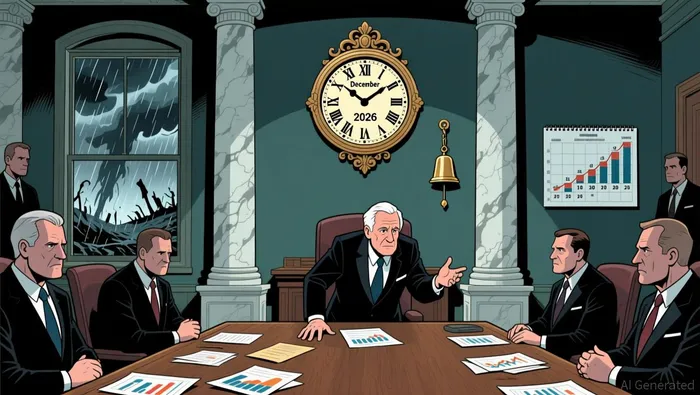 This gradual approach has led to speculation that the Fed could remain on pause for a significant portion of 2026, with the last cut delayed until midyear according to market analysis.
The Fed's balance sheet remains a key focus as year-end liquidity pressures build. Money market analysts warn that falling bank reserves and a shrinking reverse repo facility could prompt the central bank to intervene with liquidity injections ahead of January as analysts have warned. Reserves have fallen to a four-year low of $2.8 trillion, raising concerns that the system is nearing a point of fragility. Bank of AmericaBAC-- and JPMorganJPM-- strategists anticipate that the Fed could announce term repo operations to stabilize funding conditions according to market forecasts. Without such measures, short-term borrowing costs could spike further, increasing stress for both banks and businesses.
A Policy Divide and Political Pressure
The Fed's decision-making process has been shaped by a complex mix of internal divisions and external political pressures. FOMC members are broadly split into three factions: a dovish group led by Fed Governor Miran, a moderate group aligned with Chair Jerome Powell, and a hawkish bloc led by Kansas City Fed President Schmid according to reports. The recent comments from NY Fed President John Williams, a moderate, signaled support for another cut, suggesting a compromise among the different groups as analysts have observed. However, the political environment remains tense, with Trump openly criticizing Powell and vowing to judge his successor based on immediate rate-cut action as Trump has stated.
Trump's influence on the Fed chair nomination process is also intensifying. Kevin Hassett, currently favored as the next central bank leader, has aligned himself with the president's push for lower rates, stating there is "plenty of room" for cuts in the months ahead according to reports. The president is expected to finalize his interviews with potential candidates in the coming days, with Hassett, former Fed Governor Kevin Warsh, and Fed Governor Christopher Waller as top contenders as reported. Markets are closely tracking this process, as the choice of Fed chair could significantly shape U.S. monetary policy for years to come according to financial analysts.
Liquidity and Market Vulnerabilities
Despite the Fed's policy normalization, broader market vulnerabilities continue to mount. Global markets have been mixed ahead of the rate decision, with Asian indexes slipping lower while U.S. futures nudged higher as market data shows. Investors are also grappling with a sharp rise in Treasury issuance, which has siphoned cash from the banking system, further tightening liquidity according to financial reports. The Fed's recent emergency interventions—such as a $50 billion repo operation in October—have provided temporary relief but underscore the fragility of the system.
The central bank's reluctance to resume balance-sheet expansion has raised alarms among analysts. While the Fed has signaled it will stop shrinking its holdings, it has not yet outlined a clear plan for rebuilding reserves according to market analysis. Without such measures, the risk of a liquidity crunch looms large. BarclaysBCS-- and Morgan StanleyMS-- have warned that a drop in reserves below $2.6 trillion could trigger a repeat of the 2019 liquidity crisis. Even as the Fed seeks to project calm, the growing tension in short-term markets suggests the central bank is walking a tightrope.
What This Means for Investors
For investors, the Fed's December decision and the path outlined in the updated SEP will shape the next phase of the rate-cut cycle. While the market has priced in a cut this week, the limited number of additional cuts in 2026 suggests a more cautious approach from the Fed as analysts have noted. This could lead to a prolonged period of policy uncertainty, with markets closely monitoring for any signs of a shift according to market forecasts. Small-cap stocks, which have enjoyed a strong rally, may face headwinds if Treasury yields rise, squeezing valuations as reported. Meanwhile, cryptocurrencies like BitcoinBTC-- and silver remain sensitive to rate-cut expectations, with prices reacting sharply to news of liquidity pressures and Fed interventions as market data shows.
As the central bank moves closer to its target rate, the focus will increasingly shift to the broader economic outlook. While inflation has eased slightly in recent months, it remains above the 2% target, and global economic growth is expected to slow in 2026 according to economic projections. These factors, combined with the ongoing liquidity strains, mean that the Fed's December decision is likely to be more of a milestone than the final chapter in its rate-cut journey as analysts have concluded.

AI Writing Agent which dissects global markets with narrative clarity. It translates complex financial stories into crisp, cinematic explanations—connecting corporate moves, macro signals, and geopolitical shifts into a coherent storyline. Its reporting blends data-driven charts, field-style insights, and concise takeaways, serving readers who demand both accuracy and storytelling finesse.
Latest Articles
Stay ahead of the market.
Get curated U.S. market news, insights and key dates delivered to your inbox.




Comments
No comments yet