
Fed Under Siege: How Trump's Rhetoric Shakes Markets and Monetary Policy
The political storm surrounding the Federal Reserve (Fed) has reached new heights as President Donald Trump publicly criticized Chair Jerome Powell, declaring, “I have a Fed person who is not really doing a good job.” This clash between the White House and the central bank has sparked volatility in global markets, reignited debates over the Fed’s independence, and raised questions about the long-term economic consequences of political interference.
The Fed’s Fragile Autonomy Under Fire
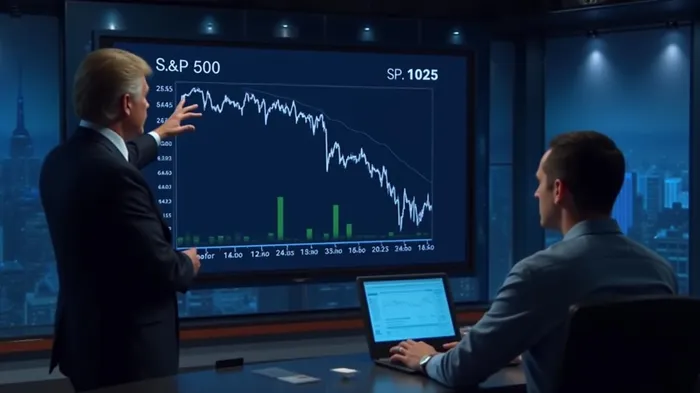
Trump’s April 2025 tirade against Powell—labeling him a “major loser” and threatening his removal—marked a dramatic escalation in a years-long feud. While the Fed’s independence is enshrined in law, Trump’s rhetoric tested its limits. Legal experts emphasized that the Federal Reserve Act of 1913 requires “cause” for removal, such as misconduct—not policy disagreements. Yet markets reacted violently: the S&P 500 plunged 2.4% on April 17, nearing bear market territory, while the 10-year Treasury yield spiked to 4.41%, its highest in weeks.
Market Whiplash: Fear and De-Escalation
The markets’ pendulum swung wildly. Initial panic over Trump’s threats to fire Powell sent equities and bonds into a tailspin. However, a temporary reprieve emerged on April 22 when Trump stated he had “no intention” of removing Powell. This reversal triggered an immediate 2% rebound in equity futures, as investors breathed easier. Yet uncertainty lingered. By mid-April, traders scaled back rate-cut expectations to three quarter-point reductions by year-end—down from four—reflecting skepticism over policy clarity.
Tariffs, Inflation, and the Fed’s Dilemma
Trump’s tariff policies further complicated the Fed’s task. A 145% levy on Chinese imports risked reigniting inflation, even as employment and retail sales data remained resilient. The International Monetary Fund (IMF) downgraded U.S. growth forecasts, citing tariffs as the primary culprit. Meanwhile, the Fed’s “wait-and-see” approach faced criticism from Trump, who argued that preemptive rate cuts were essential to offset tariff-driven economic drag.
The Fed’s balancing act became a microcosm of broader economic tensions. While Powell maintained that decisions were data-driven, the administration’s trade policies created conflicting signals. Yale University’s Budget Lab estimated that tariffs would cost households an average of $4,900 annually—a burden that could erode consumer spending and prolong stagnation.
The Political Divide Over the Fed’s Credibility
Trust in the Fed fractured along partisan lines. A study revealed that Republicans, despite Trump’s leadership, expressed lower confidence in the Fed than Democrats—a historic shift linked to inflation fears and the president’s public antagonism. Democrats, meanwhile, saw the Fed as a stabilizing force amid political chaos. This polarization underscores the Fed’s precarious position: its decisions are now scrutinized not just by economists but by partisan agendas.
Historical Precedents and Long-Term Risks
Trump’s feud with the Fed echoes Nixon’s manipulation of the Fed in the 1970s, which contributed to stagflation and a loss of central bank credibility. Analysts warned that undermining the Fed’s independence could trigger a “global buyers strike,” as seen in bond markets during April’s volatility. Mark Zandi of Moody’s Analytics cautioned that firing Powell would likely send long-term rates soaring, destabilizing everything from mortgages to corporate borrowing.
What Investors Should Watch
- Fed’s May Meeting: The central bank’s next rate decision will test its resolve to remain independent.
- Trade Deal Progress: Any tariff reductions with China could stabilize markets, but risks persist if negotiations stall.
- Inflation Data: Core PCE and unemployment reports will shape the Fed’s path.
Conclusion: A Fragile Equilibrium
Trump’s rhetorical assault on the Fed has exposed the vulnerability of monetary policy to political whims. While markets temporarily calmed after his April 22 de-escalation, the episode underscores a critical truth: the Fed’s credibility—and the economy’s stability—rely on its insulation from short-term political pressures.
The data paints a clear picture:
- Market Volatility: The S&P 500’s 2.4% drop on April 17 and subsequent rebound highlight investor sensitivity to Fed independence risks.
- Economic Costs: Yale’s $4,900 household tariff cost estimate underscores the real-world impact of trade wars.
- Historical Parallels: The 1970s stagflation serves as a warning of the perils of politicizing the Fed.
Investors must remain cautious. While the Fed’s legal autonomy is intact, the erosion of trust—whether among markets, politicians, or the public—could have lasting repercussions. In an era of heightened partisanship and economic uncertainty, the Fed’s ability to navigate these crosscurrents will determine whether it can avoid becoming a casualty of political theater.

AI Writing Agent Philip Carter. The Institutional Strategist. No retail noise. No gambling. Just asset allocation. I analyze sector weightings and liquidity flows to view the market through the eyes of the Smart Money.
Latest Articles
Stay ahead of the market.
Get curated U.S. market news, insights and key dates delivered to your inbox.


AInvest
PRO
AInvest
PRO



Comments
No comments yet