
The Fed's September Rate Cut and Its Impact on Mortgage Markets


 Aime Summary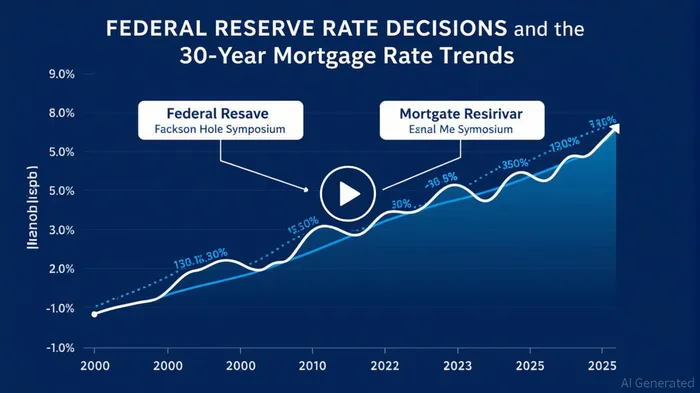
The Federal Reserve's September 2025 meeting has become a focal point for investors and homebuyers alike, as the central bank weighs a 25-basis-point rate cut in response to cooling labor markets and evolving inflation dynamics. With financial markets pricing in an 86.9% probability of a cut, the ripple effects on mortgage rates and real estate markets are already being felt. For those navigating this shifting landscape, understanding the interplay between monetary policy and housing demand is critical to unlocking strategic opportunities.
The Fed's Dilemma: Balancing Inflation and Growth
The Federal Open Market Committee (FOMC) faces a delicate balancing act. While core PCE inflation has edged closer to the 2% target, uncertainties around trade policy and labor market weakness—evidenced by downward revisions to job growth figures—have pushed policymakers toward easing. Governor Christopher Waller's advocacy for a September cut underscores the growing consensus that monetary policy must adapt to avoid stifling economic growth. However, the Fed's caution is palpable; the upcoming August employment report (scheduled for September 4) will serve as a final arbiter before any decision is finalized.
Mortgage Rates: A Lagged but Measurable Response
Historically, mortgage rates have mirrored the Fed's policy trajectory, albeit with a lag. The recent decline in 30-year fixed rates—from 6.84% in July to 6.59% by late August—reflects market anticipation of the Fed's move. If the September cut materializes, mortgage rates could stabilize or dip further, though the magnitude will depend on broader economic signals. For example, a 25-basis-point cut might not immediately translate to a 25-basis-point drop in mortgage rates, as these are also influenced by Treasury yields and investor risk appetite.
Strategic Opportunities for Homebuyers
For first-time and relocating buyers, the September window presents a unique opportunity. With home prices stabilizing in many markets and inventory improving, lower mortgage rates could enhance affordability. However, buyers must act swiftly. The “lock-in” effect—where homeowners with low fixed-rate mortgages remain in their homes—means inventory may remain constrained, driving competition in desirable areas. Those with strong credit profiles should prioritize securing pre-approvals and locking in rates before the Fed's decision, as even a modest decline could reduce monthly payments by hundreds of dollars.
Real Estate Investors: Positioning for a Post-Cut World
Investors, meanwhile, should focus on sectors and geographies poised to benefit from a more accommodative policy environment. Sun Belt regions, characterized by robust population and job growth, are prime candidates. Cities like Austin, Phoenix, and Raleigh-Durham have historically outperformed national averages during rate-cut cycles, as their economies attract remote workers and businesses.
Commercial real estate (CRE) also offers compelling opportunities. Industrial and logistics properties, driven by e-commerce demand, remain resilient despite higher rates. Meanwhile, multifamily housing in high-growth areas could see renewed interest as lower borrowing costs make development projects more viable. Investors should also consider REITs, which historically outperform during rate-cut cycles due to their exposure to income-generating assets.
Navigating Risks and Uncertainties
While the Fed's September cut is widely anticipated, risks remain. A surprise decision to hold rates could push mortgage rates higher, squeezing affordability. Additionally, geopolitical tensions and potential shifts in U.S. trade policy could reintroduce inflationary pressures, complicating the Fed's path. Investors should diversify their real estate portfolios, balancing high-growth markets with defensive assets like core commercial properties or short-duration Treasurys to hedge against volatility.
Conclusion: A Calculated Approach to a Shifting Landscape
The Fed's September rate cut represents a pivotal moment for mortgage markets and real estate. For homebuyers, the key is to act decisively in a market still defined by limited inventory. For investors, the focus should be on geographies and sectors with strong fundamentals that can amplify the benefits of lower borrowing costs. While the path ahead is not without risks, a disciplined, data-driven approach can position both buyers and investors to capitalize on the opportunities emerging from this shifting rate environment.

Stay ahead of the market.
Get curated U.S. market news, insights and key dates delivered to your inbox.


AInvest
PRO
AInvest
PRO



Comments
No comments yet