
The Fed's September Policy Uncertainty and Its Impact on Equity Valuations
 Aime Summary
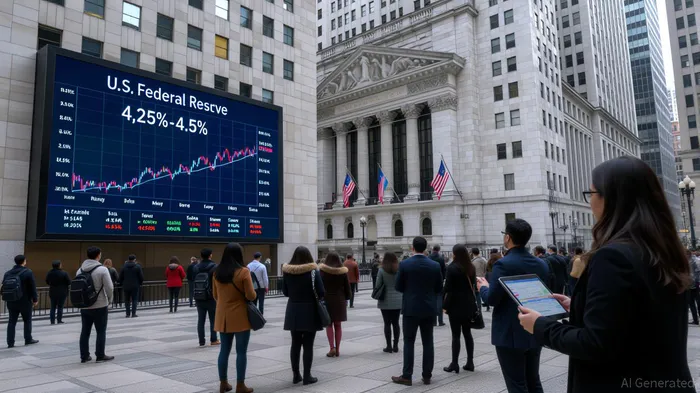
The Federal Reserve's September 2025 policy decision looms as a pivotal moment for global markets, with its potential to either catalyze a rate-cut cycle or prolong uncertainty. As the central bank adopts a “wait-and-see” stance amid Trump-era tariffs and inflationary pressures, investors face a complex calculus. This article explores how to position portfolios for a range of outcomes, emphasizing strategic sector rotations, volatility hedging, and the evolving dynamics between growth and value stocks in a data-dependent environment.
Strategic Sector Rotations: Defending Against Policy Uncertainty
Historical data reveals a consistent pattern: defensive sectors like healthcare and utilities outperform during rate-cut cycles, while cyclical sectors like materials see mixed results. The Health Care Select Sector SPDR Fund (XLV) and Utilities Select Sector SPDR Fund (XLU) have surged by 19% and 30%, respectively, in the 12 months leading up to the first 2024 rate cut. These gains reflect demand resilience (e.g., AI-driven energy needs) and the declining cost of capital as rates ease.
In a September rate-cut scenario, investors should overweight healthcare and utilities while cautiously allocating to materials, which historically benefit from stimulative policy. Conversely, if the Fed delays cuts, energy and industrials may face headwinds due to tariff-related inflation and weaker demand. A tactical shift toward sectors with strong cash flow generation and low sensitivity to interest rates—such as healthcare—can mitigate downside risk.
Volatility Hedging: Navigating the Fed's “Wait-and-See” Strategy
The Fed's emphasis on data-driven decisions has created a volatile environment, where equity markets react sharply to incremental economic updates. Futures markets now price a 40% probability of a September rate cut, down from earlier projections, reflecting growing skepticism about the efficacy of monetary easing in the face of tariffs.
To hedge against this uncertainty, investors should consider options strategies that short gamma (jump risk) while remaining long vega (implied volatility). For example, a portfolio could use out-of-the-money put options on the S&P 500 to cap downside risk while selling volatility in the form of near-term call options. This approach aligns with historical evidence that investors assign positive risk premiums to uncertainty (vega) but negative returns to realized volatility (gamma).
Emerging markets, particularly those reliant on dollar financing, face additional risks. Central banks in these regions must balance inflation control with the need to cushion external shocks. Investors should avoid concentrated exposure to EM equities and instead use currency hedges or EM-focused ETFs with built-in diversification.
Growth vs. Value: The Fed's Dilemma and Its Market Implications
The Fed's delay in cutting rates has amplified the tug-of-war between growth and value stocks. Historically, value stocks outperform during tightening cycles (e.g., 2004–2006) when investors prioritize income and earnings stability. Growth stocks, meanwhile, thrive in low-rate environments where discounted future cash flows drive valuations.
The current environment mirrors the 2001 cycle, where value stocks led as the Fed cut rates to combat recession fears. However, the absence of a recession in 2025 complicates this dynamic. If the Fed cuts rates in September, growth stocks—particularly in AI and semiconductors—could rebound. If it waits until December, value sectors like industrials and energy may hold their ground.
A key consideration is the Fed's dual mandate. While inflation remains above 2%, a soft labor market (4.1% unemployment) suggests the central bank may prioritize growth over price stability. This scenario favors value stocks with tangible assets and strong balance sheets.
The Cost of Delayed Clarity
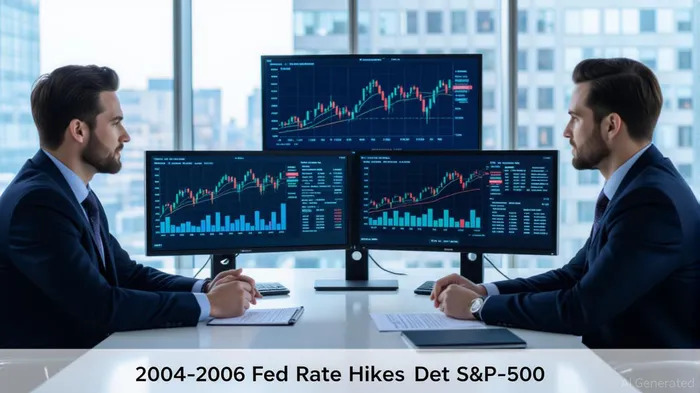
The Fed's prolonged hesitation to cut rates—its first since 1993—has created a “policy vacuum” that amplifies market volatility. If the September meeting fails to provide clarity, equities could face renewed selling pressure as investors price in a “no-cut” outcome. Historical examples, such as the 2004–2006 tightening cycle, show that prolonged uncertainty often favors value stocks, as growth investors retreat to safer assets.
For investors, this means maintaining a balanced portfolio that can pivot quickly. A 60-40 split between defensive sectors (healthcare, utilities) and high-quality value stocks (industrials, semiconductors) provides a foundation. Growth exposure should remain selective, focusing on companies with strong moats and cash flow visibility.
Conclusion: Positioning for a Range of Outcomes
The Fed's September decision will shape equity valuations for months to come. By rotating into defensive sectors, hedging against volatility, and maintaining a flexible growth-value mix, investors can navigate a data-dependent policy environment. While the path forward remains uncertain, history suggests that adaptability—rather than rigid predictions—will be the key to outperforming in 2025.
As the Fed's “wait-and-see” strategy unfolds, the markets will demand agility. For those who act decisively, the September meeting may present opportunities rather than risks.

Stay ahead of the market.
Get curated U.S. market news, insights and key dates delivered to your inbox.






Comments
No comments yet