
Fed's September PCE Data Signals Moderate Inflation, Market Reacts Positively


 Aime Summary
PCE Data: A Mixed Picture of Inflationary Pressures
According to the U.S. Bureau of Economic Analysis, the PCE price index rose by 0.3% in September 2025, matching the previous month's gain, while the annual rate stood at 2.8%-the fastest pace in nearly 1.5 years. Core PCE, which excludes volatile food and energy components, advanced 0.2% monthly and 2.8% annually, underscoring persistent inflation in services and goods according to BEA data. These figures align with the Fed's own projections, which had maintained a 3.1% core PCE forecast for 2025 as reported by the Federal Reserve.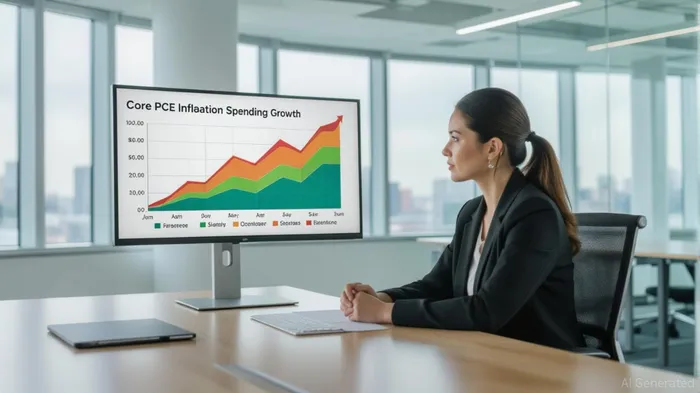 However, the data also hinted at a softening trend, as consumer spending grew by only 0.3% in September, down from a revised 0.5% in August as noted in the FOMC statement.
Fed's Policy Response: Rate Cuts and Revised Outlook
The Federal Open Market Committee (FOMC) responded to the data by cutting the federal funds rate by 25 basis points in September, bringing the target range to 4.00%–4.25%. The decision reflected a shift in risk assessment, as the Fed acknowledged "downside risks to employment" and a slower-than-expected pass-through of tariffs into inflation as stated in the FOMC's September 2025 statement. FOMC participants now project an additional 50 bps of cuts in the remaining 2025 meetings, with the policy rate expected to stabilize at 3.125% through 2028 as projected by the Fed. For inflation, the central bank forecasts a gradual decline to 2.0% by 2028, with core PCE projected to fall to 2.6% in 2026 and 2.1% in 2027 according to FOMC projections.
Market Reactions: Equities Rally, Bonds Remain Uncertain
The Fed's dovish pivot was met with optimism in equity markets. Following the PCE data release, the S&P 500 rose 0.19%, the Nasdaq Composite gained 0.3%, and the Dow Jones Industrial Average climbed 0.2%. Investors interpreted the inflation moderation as a green light for further rate cuts, which typically boost stock valuations by lowering discount rates for future earnings. Meanwhile, Treasury yields exhibited mixed signals. The 10-year yield dipped slightly initially but remained anchored as markets priced in a prolonged period of low inflation and accommodative policy as reported by Bloomberg. This duality highlights the tension between short-term rate expectations and long-term inflation forecasts.
### Implications for Equity and Bond Markets
For equities, the post-peak inflation environment presents a favorable backdrop. Historically, equity markets have outperformed during periods of monetary easing, particularly in sectors sensitive to interest rates, such as technology and consumer discretionary as noted in market analysis. However, investors must remain cautious about the Fed's lagged response to economic slowdowns. The FOMC's revised growth projections-1.6% for 2025 and 1.8% for 2026-suggest a moderation in expansion, which could temper corporate earnings growth according to Federal Reserve projections.
In the bond market, the path forward is less clear. While the Fed's rate cuts should eventually push long-term yields lower, the immediate outlook for Treasury yields depends on the interplay between inflation expectations and real growth. The 2.8% annual core PCE rate, though below the 3.1% median projection, remains above the Fed's 2.0% target, limiting the extent of yield declines as reported by BEA. Additionally, the FOMC's emphasis on labor market softening may delay aggressive bond market rallies, as investors weigh the risk of a "soft landing" scenario against potential recessionary signals.
Conclusion: Balancing Optimism and Caution
The September PCE data and subsequent Fed action underscore a pivotal moment in the post-peak inflation narrative. While the central bank's easing cycle has provided a tailwind for equities, the persistence of inflation and uneven economic data suggest that investors should adopt a balanced approach. For bonds, the key will be monitoring the pace of inflation deceleration and the Fed's willingness to over-deliver on rate cuts. As the 2025 policy cycle unfolds, markets will likely remain anchored by the Fed's dual mandate: taming inflation while avoiding undue harm to employment and growth.

Delivering real-time insights and analysis on emerging financial trends and market movements.
Latest Articles
Stay ahead of the market.
Get curated U.S. market news, insights and key dates delivered to your inbox.


AInvest
PRO
AInvest
PRO



Comments
No comments yet