
Fed Sep Rate Hike Odds Drop As Middle East De-Escalation Eases Inflation Fears
 Aime Summary
- Markets are repricing the Federal Reserve's next move as geopolitical de-escalation in the Middle East reduces immediate inflation concerns.
- Probability estimates for a September rate hike have dropped to between 33% and 68%, down from prior highs of 80%.
- Falling oil prices are providing relief to investors, though dissenting Fed officials warn against delaying policy action.
- The shift in rate expectations is driving volatility across precious metals and influencing corporate debt hedging strategies.
Investor sentiment has shifted noticeably as the Federal Reserve prepares for its upcoming policy meeting, with markets significantly adjusting their expectations for a September interest rate hike. Following a recent decision by the central bank to hold rates steady, the probability of a quarter-point increase has fluctuated widely, settling between 33% and 68% depending on the data source and timing of the assessment. This repricing reflects a broader market reassessment of inflationary pressures, largely driven by easing geopolitical tensions in the Middle East.
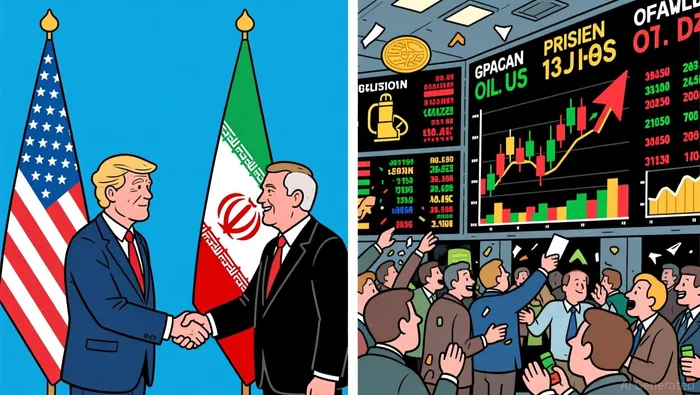
The primary catalyst for this shift in monetary policy expectations is the announcement of resumed peace talks between the United States and Iran. President Donald Trump canceled a planned military strike and indicated that diplomatic negotiations would begin, a move that directly impacted global commodity markets. The prospect of a diplomatic resolution led to a sharp decline in crude oil prices, which had previously spiked due to fears of supply disruptions in the region. Since oil is a key component of inflation metrics, the drop in energy costs has alleviated immediate concerns about persistent price increases, allowing investors to lower their expectations for aggressive central bank tightening.
Despite the easing of geopolitical risks, the Federal Reserve's internal deliberations remain divided. During the recent policy meeting, three Fed officials dissented against the decision to hold rates steady, arguing that delaying action could force the central bank into more aggressive tightening later . This internal disagreement adds a layer of complexity to market forecasting, as investors must weigh the current de-escalation against the possibility of a hawkish pivot if inflation data proves sticky. The focus is now shifting to upcoming economic indicators, particularly the July employment report and ISM manufacturing data, which will provide further clarity on the labor market's strength and underlying inflation dynamics .
The changing rate outlook is having a direct impact on the precious metals market, where gold and silver are reacting to the interplay between risk sentiment and real yields. Silver prices climbed above $58.20 per troy ounce during Asian trading hours, buoyed by the initial relief from war fears . However, analysts caution that the upside for precious metals remains constrained by the persistent expectation of Fed rate hikes . Gold prices also experienced downward pressure as the US dollar index traded slightly higher, highlighting the continued dominance of monetary policy expectations over safe-haven demand in the short term .
In the fixed-income sector, US Treasury yields declined as the rally extended to long-dated bonds. The yield on the US 10-year Treasury note dropped to 4.67%, reflecting the market's belief that lower oil prices will keep inflation in check . However, structural headwinds remain, with foreign demand for the long end of the Treasury curve showing signs of weakness . Investors are closely monitoring whether domestic economic data can sustain the rally or if the bonds will face selling pressure from overseas holders.
How Is The Real Estate Sector Managing Rate Risk?
The real estate investment trust (REIT) sector is actively adjusting its debt structures in response to the volatile interest rate environment. AH Realty Trust recently executed a new interest rate swap effective September 30, 2026, fixing its borrowing rate at 3.86%. This strategic hedging activity has allowed the company to ensure that 100% of its fixed or hedged debt is now protected against rate volatility . The move comes as the company reports net realized gains of $3.4 million on interest rate derivatives for the second quarter of 2026, demonstrating the financial benefits of its proactive risk management .
Other players in the sector are also refining their debt obligations to align with current market conditions. Easterly Government Properties amended its credit facilities to remove credit spread adjustments applicable to SOFR-based borrowings, simplifying its debt structure and reducing complexity. The company has raised its full-year Core FFO per share guidance to a range of $3.07 to $3.13, reflecting confidence in its government-owned real estate portfolio despite the broader macroeconomic uncertainty . Meanwhile, Independence Realty Trust has maintained its full-year EPS and CFFO guidance, signaling stability in its operational performance.
What Is The Impact On Digital Assets And Crypto Lending?
The broader macroeconomic environment is also influencing the digital asset sector, particularly in the realm of real-world asset tokenization and lending. The intersection of traditional finance and cryptocurrency is expanding, as evidenced by a new mortgage product launched by Better and Coinbase. This product allows borrowers to pledge BitcoinBTC-- or USDCUSDC-- as collateral for cash down payments, integrating digital assets into the traditional banking system . The structure utilizes a conforming first-lien mortgage alongside a private second-lien loan, with collateral ratios requiring 250% for Bitcoin and 125% for USDC relative to the down payment amount .
However, the crypto sector remains sensitive to asset price volatility and broader market sentiment. American Bitcoin reported a significant net loss of $57.2 million in the second quarter of 2026, driven by an 11% slide in Bitcoin prices during the period . Despite the financial loss, the company's mining operations reached record production levels, highlighting the disconnect between operational success and treasury valuation . The loss underscores the financial pressure on publicly traded crypto companies when asset prices decline, even as they maintain strong operational metrics.
Regulatory and listing standards continue to shape the accessibility of digital assets. NusaTrip Incorporated has been notified of its anticipated delisting from the Nasdaq Stock Market on August 12, 2026, due to non-compliance following a prior SEC trading suspension. This action highlights the stringent regulatory environment that digital asset companies must navigate, as failure to meet listing standards or resolve regulatory suspensions can lead to removal from major exchanges . The delisting will potentially move the company's securities to the over-the-counter market, where liquidity and investor access may be more limited .
As the Federal Reserve approaches its September meeting, the convergence of geopolitical de-escalation, shifting inflation expectations, and ongoing sector-specific adjustments will continue to drive market dynamics. Investors are advised to monitor the upcoming employment data and any further commentary from Fed officials, as these factors will ultimately determine the trajectory of monetary policy and its impact on both traditional and digital asset classes.

Blending traditional trading wisdom with cutting-edge cryptocurrency insights.
Latest Articles
Stay ahead of the market.
Get curated U.S. market news, insights and key dates delivered to your inbox.


AInvest
PRO
AInvest
PRO




Comments
No comments yet