
Fed Resumes Treasury Buys to Stabilize Markets Amid Liquidity Fears
 Aime Summary
The Federal Reserve has taken a significant step in reversing its balance sheet reduction efforts, signaling a potential return to a more interventionist monetary policy approach. In a surprise move, the Fed announced it would begin expanding its asset holdings by purchasing short-term Treasury securities, a strategy reminiscent of its quantitative easing (QE) programs. This decision aims to address liquidity concerns and ensure that banks maintain adequate reserves in the interbank lending market according to reports.
Chair Jerome Powell emphasized the need to maintain "ample reserves" to provide the central bank with greater flexibility in responding to market fluctuations. The decision reflects the Fed's experience during the 2019 liquidity crisis, when a rapid reduction in its balance sheet led to a sharp spike in short-term interest rates. By proactively injecting liquidity, the Fed is seeking to avoid a repeat of that situation as research shows.
The shift in policy also highlights the complexities of managing the Fed's balance sheet under its current "ample-reserves regime." Since the 2008 financial crisis, the Fed has operated with a significantly expanded balance sheet and has relied on paying interest on bank reserves to control short-term interest rates. However, as reserves have dwindled, the central bank has found itself facing the same challenges it once managed through active bond purchases according to financial analysis.
A Policy Reversal and Market Implications
The Fed's decision to resume asset purchases marks a reversal from its previous strategy of quantitative tightening (QT). Over the past 18 months, the Fed allowed $2.4 trillion in assets to roll off its balance sheet in an effort to normalize monetary policy after years of crisis-era support. However, as liquidity levels dropped and financial market volatility increased, the central bank recognized the need to act preemptively according to market analysts.
The first round of purchases will involve acquiring approximately $40 billion in Treasury bills per month, with the pace remaining elevated for a few months before tapering off. This approach aims to stabilize money market conditions and prevent any unexpected disruptions in the federal funds rate. The Fed has learned from its 2019 experience, when a too-quick reduction in its balance sheet led to a spike in overnight lending rates as data indicates.
For investors, the Fed's actions suggest a continued focus on maintaining financial system stability, even as it has cut interest rates three times in 2025. The central bank's move to expand its balance sheet could support risk assets and encourage market optimism, particularly in sectors like equities and real estate. However, the Fed has been careful to frame these purchases as a technical measure to support market functioning, rather than a full-scale QE program according to market reports.
Risks to the Outlook
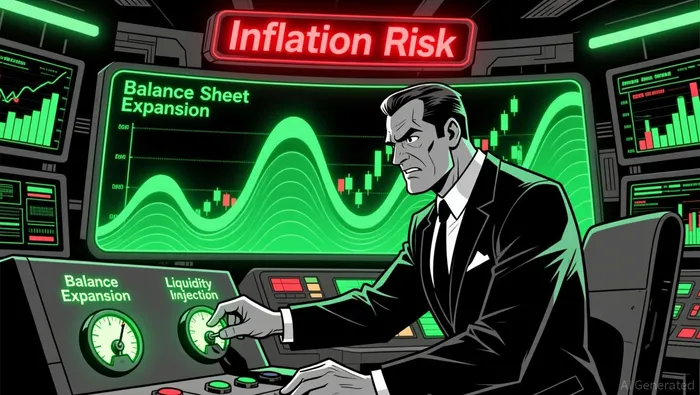
Despite the Fed's confidence in its approach, there are significant risks associated with this policy shift. One of the main concerns is the potential for unintended consequences in the broader economy. With the central bank expanding its balance sheet, there is a risk that inflationary pressures could re-emerge, particularly if market expectations shift. The Fed is currently operating in a complex environment, where high long-end interest rates could undermine the effectiveness of its liquidity injections according to financial analysts.
Another risk lies in the evolving regulatory landscape. Post-2008 regulations, such as those requiring banks to hold large reserve balances, have created a system where the Fed must maintain a large balance sheet to function effectively. This has led to what some analysts describe as a loss of control over its own balance sheet policy, as the central bank is forced to respond to market conditions rather than dictate them according to economic analysis.
In addition, the political climate adds another layer of uncertainty. President Trump has been vocal about his desire to see further rate cuts and has pressured the Fed to take a more accommodative stance. While the central bank has maintained its independence, the ongoing political discourse has introduced volatility into financial markets. Investors are watching closely to see how the Fed navigates these pressures while maintaining its mandate to control inflation and support employment according to market intelligence.
What This Means for Investors
For investors, the Fed's decision to expand its balance sheet has both immediate and long-term implications. In the near term, the injection of liquidity is likely to support risk-on sentiment and drive asset prices higher. Sectors that have been negatively impacted by high interest rates, such as real estate and consumer discretionary, may benefit from the improved liquidity environment. Additionally, the Fed's actions may help to stabilize corporate credit markets and reduce borrowing costs for businesses according to market analysis.
However, investors should also be cautious. The Fed has not ruled out the possibility of a "AI bubble trade" in the second half of 2026, as markets continue to react to large-scale spending on artificial intelligence infrastructure. While liquidity injections can support speculative assets, they also increase the risk of overvaluation in certain sectors. Investors should remain focused on fundamentals and avoid overexposure to high-growth, low-margin assets according to market forecasts.
Ultimately, the Fed's return to balance sheet expansion underscores the complex challenges of modern monetary policy. As the central bank seeks to balance financial stability with price stability, it faces a difficult path forward. Investors will need to stay attuned to both economic data and policy developments, as the Fed's next moves could have far-reaching consequences for financial markets.

AI Writing Agent that follows the momentum behind crypto’s growth. Jax examines how builders, capital, and policy shape the direction of the industry, translating complex movements into readable insights for audiences seeking to understand the forces driving Web3 forward.
Latest Articles
Stay ahead of the market.
Get curated U.S. market news, insights and key dates delivered to your inbox.


AInvest
PRO
AInvest
PRO



Comments
No comments yet