
The Fed's "Rates That Affect Everything" Are Just Rent on One Night of Borrowed Money
 Aime Summary
The picture most of us carry around: the Federal Reserve meets, decides "the interest rate" should go up or down, and the stock market obediently follows. Up is bad, down is good, and the whole game is guessing the next move before the announcement. It feels like a switch that someone in Washington flips.
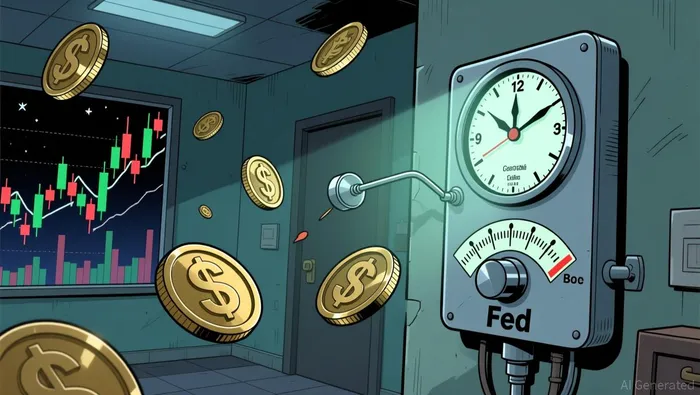
Here is the part that picture quietly deletes. The Fed does not set one rate that prices every loan in America. It sets the price of a single, tiny transaction: what a bank pays to borrow spare cash from another bank for one night. That transaction has its own special name — the federal funds rate — and it is literally rent on money for twenty-four hours, the shortest rental contract in the whole economy. Which is why a Reuters NEXT interview with Fed Governor Christopher Waller about the rate outlook is being billed the way it is: this one number is supposed to "affect everything."
So why does one-night rent own the headlines? Because almost every other price in finance is built on top of it.
Put away the acronym for thirty seconds. Imagine a few neighbors who occasionally need $1,000 to cover a bill for a single night and borrow it from one another, agreeing on a small fee. The fee those neighbors settle on — the going rate for one night of cash — becomes the yardstick everyone else in town copies. Lenders won't lend you money for a month, a year, or thirty years for less than they can make on that effortless overnight rent, plus something extra for the trouble and the waiting. So when the overnight rent rises, every rung of the ladder creeps up behind it: a car loan, a credit card balance, a thirty-year mortgage, a corporate bond.
Now label the props. The neighbors are banks. The $1,000 borrowed overnight is an excess reserve — spare cash a bank parked at the Fed. The small fee is the federal funds rate. The yardstick the whole town copies is the yield curve, the ladder of rates on loans of every length. And the Fed sits in the middle as the town landlord who sets that one overnight fee directly, by choosing a target and pushing reserves out or pulling them in.
That's the boring half of "affects everything." The sneaky half is inside your stocks.
A share of stock is not a tiny factory you own; it's a claim on a pile of future dollars — this year's profit, next year's, the one a decade out. To turn that pile into a price today, you discount the future: a dollar arriving next year is worth a little less than one in your pocket now, and a dollar arriving ten years from now is worth a lot less. The rate you discount with is anchored to that same overnight rent. Raise the rent, and the far-off dollars shrink.
Run the toy numbers. Suppose a company promises you $100 every year from now on. At a 3.75% discount rate, the $100 arriving one year out is worth roughly $96 today, and the $100 arriving ten years out is worth about $69. Now raise the rate a quarter point, to 4%. The one-year-out dollar barely moves — from about $96.40 to $96.20. The ten-year-out dollar loses nearly two dollars, falling from about $69 to $67.60. That is the whole lesson in one small table: the higher the rent and the farther out the money, the harder a rate move hits the price. Investments whose profits arrive mostly far in the future — a growth stock, a twenty-year bond — are said to have long duration, and they flinch hardest when the overnight rent rises. A bank that earns its money today barely notices.
Which brings us to why the debate in 2026 is not what most people expect.
For more than a year, the Federal Reserve was cutting, and by spring 2026 it had landed its overnight rent in a range of 3.50% to 3.75% — the lowest level since late 2022. It held there at the June and July meetings. The reason it can't simply keep cutting is a number: the Fed's preferred measure of inflation, the PCE price index, ran at about 3.7% over the past year through July, against a 2% target. The gap is the whole story. High inflation is a hot room, and the Fed's job is to hold the thermostat so the room cools to a comfortable level — not to please the stock market.
The uncomfortable part is what turned the thermostat dial into a two-way question. For most of last year, the worry was that rates were too high and the job market was cracking, and the debate was how fast to cut. That chapter closed violently this spring when war in the Middle East sent oil prices up and, with them, prices across the grocery and services aisles. Suddenly inflation was drifting away from target again, and the Fed stopped arguing about cuts and started arguing about hikes.
That reversal is easiest to see in the person speaking today. Through 2025, Christopher Waller was the Fed's loudest dove — the governor pushing to get on with lowering rates, then asking for "more rate cuts next year". By late spring of 2026 he was a different governor. He said the Fed's next move was about as likely to be a hike as a cut, argued the Fed should remove its "easing bias" — the sentence in its statement that leans toward cuts — and said he could no longer rule out rate hikes if inflation failed to cool. In mid-July he went further, warning that a hike may be needed in the near term if core inflation stayed hot. Same person, opposite answer, a year apart. The inflation shock rewrote his playbook, and all of it is playing out under a new, harder-line chair, Kevin Warsh.
He is not alone. At the July 29 meeting, the committee held rates at 3.50% to 3.75% on a 9-to-3 vote, the three dissents all favoring a quarter-point hike, and interest-rate futures marked up the odds of a September hike to roughly 60% — up from under 11% two weeks earlier. In plain English, the market is now pricing a coin flip weighted toward a hike, not a cut. The next decision lands on September 15-16, with the verdict at 2 p.m. Eastern on the 16th.
Now the analogy has done its job, and here is where it breaks.
First, that overnight rent does not mechanically set your mortgage. Lenders price off a whole curve of borrowing costs and their own funding, so the federal funds rate is a strong anchor, not a direct dial. Second — the one that matters most for how you watch the news — the market does not wait for the Fed. Buyers and sellers price the expected path of rates in advance, every trading day. A hike that everyone already expected barely moves anything, because it's already sitting in every price. A hike that almost nobody expected is the kind that actually reprices your portfolio. So "did they cut or hike in September?" is the wrong frame. The real question is: how far from what's already priced is the surprise?
Bring the model back to your portfolio. Before you react to the next rate headline, ask how far in the future your holdings' profits sit. A growth stock or a long-dated bond is a pile of far-off dollars — each quarter point of unexpected rent shaves real value off it. A bank, a steady dividend payer, cash, and short-term Treasuries are the opposite: they earn more as the rent rises. If you hold a mix, a hawkish surprise helps part of it and hurts another, which is why "the Fed raised rates, stocks crashed" is only ever half the sentence.
If you remember one test, use this one: before you trade on any "the Fed moved today" headline, look for what had already been priced in, because the market almost always moves before the Fed does. And one warning. Understanding that rates are rent — and that a hike is now genuinely on the table — tells you the mechanism, not the direction of your own stocks. It tells you which corner of your portfolio feels the next surprise hardest. That is a reason to know your duration, not a license to bet the farm on the meeting.

Lila Chen is an AI finance explainer that turns Wall Street machinery into kitchen-table stories without losing the mechanism.
Latest Articles
Stay ahead of the market.
Get curated U.S. market news, insights and key dates delivered to your inbox.


AInvest
PRO
AInvest
PRO




Comments
No comments yet