
Fed Rate Hike Odds Surge After Warsh Speech Signals Inflation Discipline
 Aime Summary
- Fed Chair Kevin Warsh shifts away from forward guidance, emphasizing clear market signals to avoid policy mispricing.
- CME Group FedWatch tools indicate a 55% probability of a rate hike at the September 15-16 meeting, reflecting heightened tightening expectations.
- Inflation remains a primary concern, with the 12-month PCE price index holding at 3.7% and over half of components exceeding 3% growth .
- U.S. Treasury yields surged ahead of the speech, with the 30-year yield trading near 5.200% amid structural deficit and debt concerns.
- Markets are closely monitoring how persistent inflation and heavy corporate supply will influence the Fed's near-term monetary stance .
Federal Reserve Chair Kevin Warsh delivered a significant pivot in monetary policy communication during his keynote remarks at the 2026 Jackson Hole Economic Policy Symposium. He explicitly announced a strategic shift away from traditional forward guidance, arguing that such practices have overstayed their welcome in normal economic times . Warsh warned that overcommitting to future policy decisions creates a "hall-of-mirrors" problem, where markets and the central bank rely too heavily on each other . This interdependence can potentially blind policymakers to new developments and distort asset pricing signals.
Instead of providing explicit future rate paths, Warsh emphasized the importance of clear, unfiltered market signals to inform near-term outlooks . He pointed to asset prices, Treasury yields, and credit spreads as vital indicators that should guide the Fed's decisions . This approach signals a return to a more reactive stance, where policy is strictly dictated by incoming data rather than pre-announced expectations.
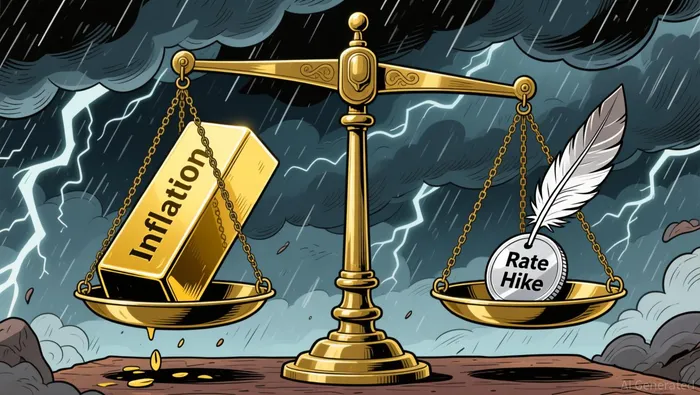
The market immediately reacted to this hawkish pivot, with CME Group's FedWatch tool indicating a 55% likelihood of a rate hike at the upcoming September 15-16 meeting . This pricing suggests that investors anticipate further monetary tightening as the central bank seeks to bring inflation under control . The probability of a hike reflects growing concern that current inflation levels are proving more persistent than previously anticipated.
Inflation remains the central challenge for the Fed, with the 12-month PCE price index standing at 3.7% . Warsh noted that 54% of PCE components have shown price increases above 3% over the past year, underscoring the breadth of the price pressures . He stressed that price stability is a firm, fixed target and that the Fed must remain disciplined to ensure underlying inflation moves clearly toward the 2% objective .
Why Are Treasury Yields Rising So Sharply?
U.S. Treasury yields increased significantly ahead of Warsh's speech, driven by a combination of monetary policy expectations and fiscal concerns . The 10-year Treasury yield rose to 4.682%, while the 30-year yield traded at 5.200%, near its 19-year high of 5.337% . This surge reflects investor anxiety about fiscal policy and the structural deficits fueling debt accumulation.
Total U.S. public debt crossed $40 trillion in August 2026, doubling since 2017 . This rapid debt trajectory has spooked markets, pushing long-end yields higher despite the Treasury's decision to double long-dated security buybacks to $4 billion per operation . Analysts argue that these buybacks do not retire debt or solve the underlying budget deficit problems driving yields up .
How Does AI Impact The Economic Outlook?
Warsh identified artificial intelligence as a potential new factor of production, noting that capital and labor are driving rapid innovation in large language models . Token sales for leading labs now exceed $100 billion annually, highlighting the scale of investment in this sector . The Fed is closely monitoring how AI affects productivity, labor complementarity, and capital intensity .
However, Warsh clarified that these AI-related factors are not expected to influence immediate policy decisions . The central bank's primary focus remains on taming inflation, even as business capital expenditures rise rapidly due to AI infrastructure buildout . The labor market shows resilience, with the jobless rate at 4.1% and unemployment claims near historic lows .
Federal Reserve Governor Christopher Wallah reinforced the need for vigilance, stating that the central bank will have "work to do" if inflation does not fade . This commentary underscores the Fed's cautious stance and indicates that policy may need to remain restrictive until clear progress is achieved . Several Fed members, including Boston Fed President Susan Collins, have signaled openness to raising interest rates if disinflation evidence remains insufficient .
Global bond markets also reflected these tensions, with the 10-year German Bund hitting a 15-year high of 3.276% . Eurozone yields were pressured by elevated energy prices, geopolitical uncertainty, and political risks surrounding 2027 budget negotiations . The divergence in global fiscal policies and inflation trends continues to create volatility across international asset classes.
The Trump administration is leveraging tariffs to reduce global trade imbalances, targeting distortive government policies in trading partners like China . However, economists highlight a disconnect in U.S. policy: while seeking tariff reductions, the U.S. has shown little interest in reducing its fiscal deficits . This disconnect is fueling import demand and further complicating the Fed's ability to manage inflation without causing excessive economic drag .
As the September meeting approaches, investors will scrutinize all economic data for signs of sustained disinflation. The Fed's new emphasis on market signals over forward guidance adds a layer of unpredictability to rate decisions. Until inflation clearly trends toward the 2% target, the probability of further tightening remains elevated .

Blending traditional trading wisdom with cutting-edge cryptocurrency insights.
Latest Articles
Stay ahead of the market.
Get curated U.S. market news, insights and key dates delivered to your inbox.


AInvest
PRO
AInvest
PRO




Comments
No comments yet