
Fed Rate Decision 2025: What the 'Hawkish Cut' Means for Markets and Borrowers
 Aime Summary
On December 10, 2025, the U.S. Federal Reserve delivered its latest interest rate decision, . This move, the third cut of the year, reflects a delicate balancing act between slowing inflation and stabilizing a weakening labor market. The decision has sparked mixed reactions from financial markets, with a 'hawkish cut' signaling the Fed's cautious approach to future easing. For retail investors and everyday Americans, this decision offers both opportunities and challenges—especially when it comes to borrowing, saving, and investing.
## The Core of the Fed's December 2025 Decision
The Federal Reserve’s December meeting was one of the most closely watched in recent years, given the uncertainty around inflation and labor data. 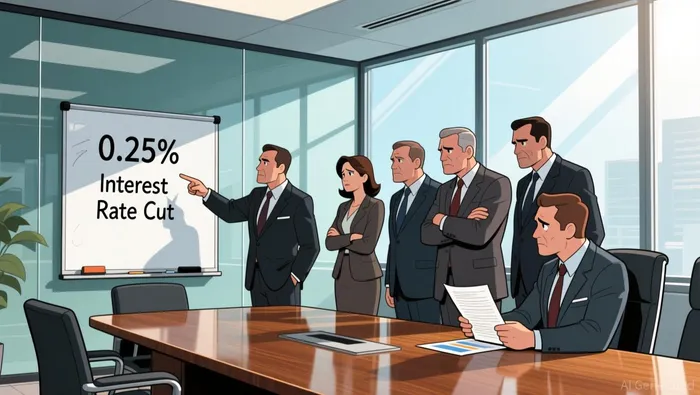 The Fed , but the broader message was one of hesitation. The policy statement emphasized that further rate reductions will depend on incoming data, and several officials, including Boston Fed president and Kansas City Fed president , voiced concerns about persistently elevated inflation.
At the same time, others on the Federal Open Market Committee (FOMC) worried that a weak labor market could justify further cuts. This divergence led to dissenting votes and underscored the internal struggle between 'hawks' (those cautious about inflation) and '' (those concerned about slowing growth). The result was a 'hawkish cut'—a move that eases policy slightly but signals that the Fed may pause for now.
## Market Reactions and Investor Implications
The stock market reacted with mixed signals in the lead-up to the decision. On December 9, the S&P 500 closed slightly down, according to reports. By December 10, as investors waited for the official announcement, the S&P 500 had dipped 0.1%, , . The cautious tone reflects the uncertainty around whether the Fed's rate cut will actually translate into economic relief or if it might instead trigger higher borrowing costs in the bond market.
Bond yields remain stubbornly high. The 10-year Treasury yield hovered near 4.17%, despite the Fed's rate cuts this year. That highlights a key point: while the Fed has the tools to influence short-term rates, broader financial conditions—such as global trade shifts and fiscal policy uncertainty—are keeping long-term borrowing costs elevated. For investors, that means the Fed's rate cuts may not provide the full economic boost some had hoped for.
## What Comes Next for Monetary Policy in 2026?
The Fed’s December decision sets the stage for a more cautious approach in the new year. The central bank’s updated economic projections suggest that further rate cuts in early 2026 will only occur if inflation and labor data continue to soften. noted the risk of sharp policy disagreements, suggesting that the Fed may not proceed with additional cuts unless new data forces its hand.
For now, the threshold for further action has clearly risen. That means investors should brace for a pause in rate easing—perhaps for several months—while they wait for more clarity on the economic outlook. Meanwhile, sectors like financials and industrials have seen some gains following the cut, while others like consumer discretionary face headwinds from rising tariffs and uncertainty around interest rates according to analysts.
Ultimately, today’s Fed decision reflects a policy in transition. The central bank is trying to walk a fine line between supporting growth and keeping inflation in check. For everyday Americans, that means more room for borrowing but potentially less for saving. For investors, it means staying tuned to incoming economic data and preparing for a period of limited policy action ahead.

Delivering real-time insights and analysis on emerging financial trends and market movements.
Latest Articles
Stay ahead of the market.
Get curated U.S. market news, insights and key dates delivered to your inbox.


AInvest
PRO
AInvest
PRO



Comments
No comments yet