
Fed Rate Decision 2025: Will Another Cut Signal a Shift in Policy?
 Aime Summary
The Federal Reserve is set to deliver what many expect to be the third consecutive rate cut of 2025 on Wednesday, December 10, 2025. As the year draws to a close, markets are on edge for signs of the Fed's long-term strategy. This decision will not just influence interest rates for years to come, but also shape the trajectory of inflation, employment, and asset prices. With a divided Federal Open Market Committee (FOMC), the outcome is more than a routine policy shift—it's a pivotal moment in U.S. monetary policy. According to market analysis.
Core Facts and Definitions
The Federal Reserve's key interest rate, currently in the range of 3.75%-4.00%, has been under pressure from slowing labor market data and stubborn inflation. If the Fed cuts by 25 basis points as widely expected, the new range would be 3.50%-3.75%—a level not seen since the middle of 2024. But this cut won't be seen as a full pivot toward easy monetary policy. Instead, analysts are watching for signs of a so-called "hawkish cut"—a reduction in rates that comes with signals from the Fed that no further easing is expected in the near term. This nuanced approach suggests the Fed is walking a tightrope between supporting the economy and keeping inflation under control. According to economic analysis.
The key documents to watch from the meeting include the updated Summary of Economic Projections (SEP), which will show the Fed's latest outlook on inflation and job growth, and the "dot plot",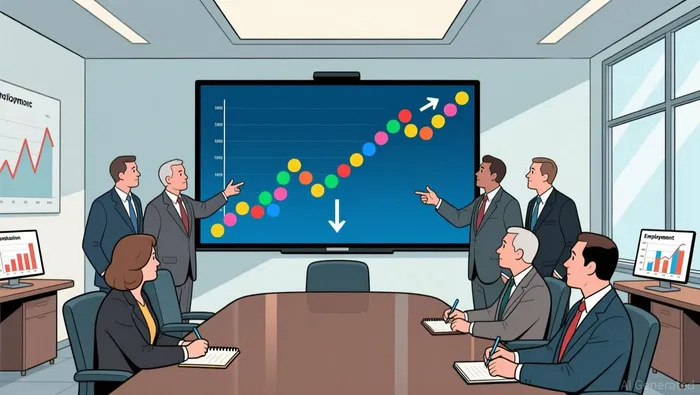 a visual representation of officials' interest rate forecasts. Investors will also closely follow the press conference with Fed Chair Jerome Powell to gauge his tone and any hints about the Fed's future direction. Market analysts expect the Fed to enter a critical "wait and see" meeting.
Key Drivers and Recent Developments
The Fed's decision to cut rates is largely a response to a labor market that is showing signs of cooling. Unemployment rose to 4.4% in recent months, the highest in over four years, and job gains have slowed. At the same time, inflation remains above the 2% target, most recently at 2.8%. This combination—rising joblessness but still-elevated inflation—has created a dilemma for Fed officials.
Some Fed members argue that further rate cuts are needed to prevent a sharper slowdown in hiring and consumer spending. Others, however, fear that cutting too aggressively could reignite inflation. This division is evident in the FOMC's voting patterns, with some officials expected to dissent from the cut. Morgan Stanley has reversed its stance, now expecting a 25-basis-point cut in December and projecting further reductions in early 2026. Previously, the bank had expected the Fed to hold rates steady, a sign that the official stance is evolving toward a more dovish outlook.
The decision is also being made with limited data due to a government shutdown that delayed the release of key economic reports, including jobs and inflation data. This lack of recent information has left officials working with older figures, adding uncertainty to the Fed's decision-making process. Still, the consensus appears to be that a cut is the most prudent move given the current conditions. According to market analysis.
What It Means for Investors and Markets
For investors, the Fed's decision has direct implications for a wide range of assets. A rate cut typically boosts bond prices and lowers yields, which can push investors into higher-risk assets like stocks. The S&P 500 and Nasdaq have already shown signs of optimism ahead of the decision, with tech and rate-sensitive sectors like housing and utilities leading the charge.
The U.S. dollar, which had recently strengthened on inflation data and expectations of a cut, could see mixed reactions depending on how the Fed signals its future path. If the Fed comes off as overly cautious or signals just one more cut in 2026, the dollar might strengthen. On the other hand, if the Fed hints at more aggressive easing, the dollar could weaken against major currencies like the euro and the yen.
Crucially, the Fed's balance sheet and forward guidance will also shape market expectations. If the Fed signals that it may pause after December or slow the pace of cuts in 2026, investors may adjust their portfolios accordingly. For now, the high probability of a cut is already priced in by much of the market, so the bigger focus is on the language and tone used by the Fed. According to market analysis on the December Fed cut despite policymaker divide.
Looking Ahead: What to Expect in 2026
The December 2025 meeting is just one step in the Fed's evolving policy path. If the Fed cuts by 25 basis points and signals a pause in 2026, that could give the economy and markets time to adjust and allow for better data to emerge. However, if the labor market weakens further or inflation shows signs of persisting, the Fed may be forced to reconsider its stance.
One factor to watch in early 2026 is the potential nomination of Kevin Hassett as the next Fed chair. Hassett, a former White House economist, has historically favored lower interest rates to support economic growth. His appointment could signal a more dovish tilt to Fed policy, though he may face resistance from more hawkish members of the FOMC.
For now, the key takeaway is that the Fed is navigating a complex and uncertain economic environment. Its December decision will offer clues about how it plans to manage the delicate balance between inflation and employment in the months ahead. Investors who keep a close eye on the Fed's messaging and policy trajectory will be better positioned to anticipate the next moves in the market.

Delivering real-time insights and analysis on emerging financial trends and market movements.
Latest Articles
Stay ahead of the market.
Get curated U.S. market news, insights and key dates delivered to your inbox.






Comments
No comments yet