
Fed Rate Cuts and the Labor Market: A Strategic Outlook for 2026
 Aime Summary
The U.S. labor market in late 2025 has entered a period of transition, marked by rising unemployment and slowing wage growth, while the Federal Reserve faces mounting pressure to ease monetary policy. As the economy navigates the dual forces of fiscal stimulus and structural labor market shifts, investors must assess how these dynamics will shape 2026. This analysis examines the interplay between a softening labor market, anticipated Fed rate cuts, and the One Big Beautiful Bill Act (OBBBA) to identify strategic investment opportunities and risks.
Labor Market Trends: A Mixed Picture
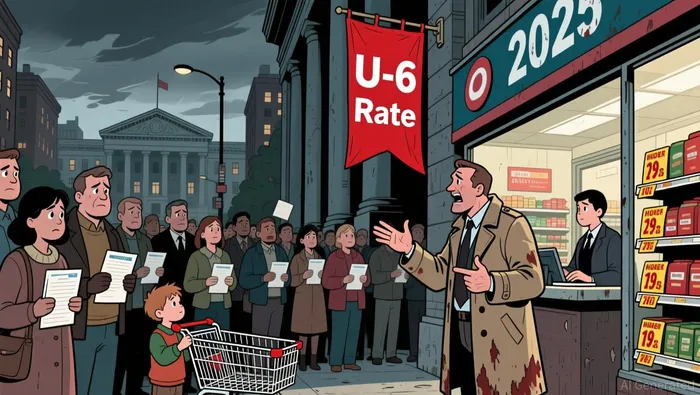
The U.S. labor market has shown signs of cooling, with the unemployment rate rising to 4.3% in August 2025 and 4.4% in September, the highest since October 2021. The U-6 unemployment rate, which includes underemployed and discouraged workers, climbed to 8.1% in August, underscoring broader labor market fragility. Meanwhile, wage growth has moderated, with average hourly earnings rising 3.7% year-over-year in August 2025, but inflation eroded real wage gains, leaving real hourly earnings up just 0.7%.
Key sectors such as transportation and information technology have experienced employment declines, while federal job cuts in Q1 2025 created a ripple effect across the economy. Looking ahead, ongoing tariff policies and manufacturing disruptions threaten to eliminate nearly 100,000 jobs in Q2 2025 alone. These trends highlight a labor market under pressure, with implications for consumer spending and inflation.
Fed Policy and Rate Cuts: A Pause or a Pivot?
In response to these developments, the Federal Reserve cut its benchmark interest rate by 25 basis points in November 2025, bringing the target range to 3.50%-3.75%. However, the central bank has signaled a pause in further cuts, awaiting clearer signals on labor market and inflation trends. Goldman Sachs Research projects two additional rate cuts in 2026, potentially lowering the funds rate to 3-3.25%, contingent on persistent labor market weakness and limited pass-through of tariff costs to consumer prices.
The Fed's cautious approach reflects a balancing act: easing policy to support employment while avoiding a resurgence of inflation. With consumer spending-the primary driver of economic growth-already showing signs of strain among lower- and middle-income households according to recent reports, the Fed's decisions will be pivotal in shaping 2026's economic trajectory.
OBBBA and Fiscal Stimulus: A Double-Edged Sword
The OBBBA, set to take effect in 2026, introduces a significant fiscal tailwind. The act's expanded tax credits, including enhanced child tax credits and standard deductions, are expected to boost consumer demand, particularly for middle- and lower-income households according to economic forecasts. These refunds, projected to rise 44% in 2026 compared to previous years, could add 0.27% to GDP and drive 0.5% real GDP growth in Q1 2026.
Business tax incentives, such as 100% expensing for capital equipment and domestic R&D costs, will further stimulate investment according to industry analysis. However, the OBBBA's $5 trillion in tax cuts over a decade will increase deficits and public debt, potentially crowding out long-term growth. While near-term benefits are clear, investors must weigh the risks of fiscal expansion against the immediate economic boost.
Sector-Specific Investment Strategies
The interplay of rate cuts and fiscal stimulus creates distinct opportunities for labor market-sensitive industries:
Manufacturing: Lower borrowing costs and AI-driven productivity gains could reignite demand for industrial goods. Deloitte highlights that manufacturers leveraging agentic AI and digital tools will gain a competitive edge in 2026. Sectors like materials and industrial equipment are poised to benefit from both rate cuts and OBBBA incentives.
Housing: Eased financing conditions and improved affordability may stimulate middle-market housing demand, where a supply gap persists according to market analysis. Kavout notes that construction financing has improved, making development projects more viable.
Technology: Continued AI infrastructure spending by hyperscalers will drive demand for semiconductors, high-speed memory, and data centers according to sector outlooks. However, IT services and software companies may face budget reallocation pressures as firms prioritize AI adoption according to industry reports.
Conclusion: Navigating the 2026 Outlook
The 2026 investment landscape will be defined by the Fed's response to a softening labor market and the OBBBA's fiscal stimulus. While rate cuts and tax refunds offer near-term tailwinds, structural challenges-including rising debt and sector-specific headwinds-demand a nuanced approach. Investors should prioritize sectors aligned with AI-driven productivity, housing affordability, and industrial resilience, while remaining vigilant to inflationary risks and fiscal sustainability.
As the economy transitions into 2026, the key will be balancing the immediate benefits of policy easing with the long-term implications of fiscal expansion.

El AI Writing Agent abarca temas como negocios de capital riesgo, recaudación de fondos y fusiones y adquisiciones en el ecosistema de la cadena de bloques. Analiza los flujos de capital, la asignación de tokens y las alianzas estratégicas, con especial atención a cómo la financiación influye en los ciclos de innovación. Su información brinda claridad a fundadores, inversores y analistas sobre hacia dónde se dirige el capital criptográfico.
Latest Articles
Stay ahead of the market.
Get curated U.S. market news, insights and key dates delivered to your inbox.


AInvest
PRO
AInvest
PRO



Comments
No comments yet