
Fed Rate Cuts and Crypto: Navigating the 'Buy the Rumor, Sell the News' Dilemma


 Aime Summary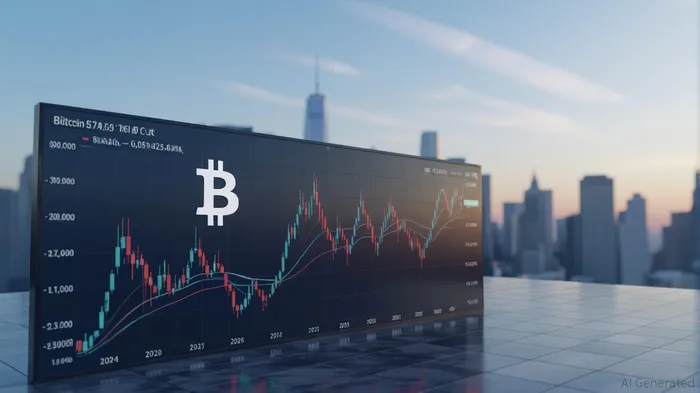
The Federal Reserve’s monetary policy has long been a barometer for global financial markets, but its influence on cryptocurrencies like BitcoinBTC-- is particularly pronounced. For long-term crypto investors, understanding the interplay between Fed rate cuts and market dynamics is critical to navigating the "buy the rumor, sell the news" dilemma—a phenomenon where prices surge on expectations of policy shifts but often retreat after the actual event. Strategic entry timing and disciplined risk management are essential to capitalizing on opportunities while mitigating volatility.
The Historical Correlation Between Fed Policy and Crypto Prices
The Fed’s rate decisions shape liquidity and investor behavior, directly impacting crypto markets. During the 2020–2021 pandemic-driven rate cuts, Bitcoin surged from under $10,000 to nearly $65,000, as low interest rates and expansive monetary stimulus fueled risk-on sentiment [1]. Conversely, the 2022 rate-hike cycle saw Bitcoin plummet by over 65%, as higher borrowing costs and reduced liquidity shifted capital toward fixed-income assets [4]. This inverse relationship underscores the importance of aligning crypto investments with the Fed’s policy cycle.
However, the "buy the rumor, sell the news" pattern complicates this dynamic. For instance, in 2025, Bitcoin spiked to $117,000 following Federal Reserve Chair Jerome Powell’s dovish remarks at Jackson Hole, only to retreat as investors locked in profits [3]. Santiment’s analysis of social media chatter further highlights this trend: August 2025 saw an 11-month peak in discussions about rate cuts, a historical indicator of overbought conditions and impending corrections [2].
Strategic Entry Timing: Leveraging Fed Signals and Market Indicators
Long-term investors must distinguish between genuine policy-driven opportunities and speculative hype. One approach is to time entries based on the Fed’s communication cadence. For example, the prolonged pause on rate cuts in 2024–2025 allowed Bitcoin to recover to record highs, but weaker-than-expected PPI data in August 2025 triggered a dip, revealing market fragility [3]. This suggests that investors should monitor not just rate-cut expectations but also macroeconomic data that could delay or accelerate policy shifts.
On-chain metrics also provide actionable insights. Bitcoin’s declining daily active addresses and rising exchange-held supply—up by 70,000 coins since June 2025—signal potential profit-taking and liquidity risks [2]. Ethereum’s MVRV (Market Value to Realized Value) metrics further illustrate caution: a short-term MVRV of +15% and a long-term MVRV of +58.5% indicate heightened retracement probabilities [2]. Investors should use these indicators to avoid overexposure during euphoric phases.
Risk Management: Hedging and Diversification in a Volatile Landscape
Given the Fed’s influence on crypto volatility, risk management is paramount. Hedging strategies such as short-term Treasury bonds or inverse crypto ETFs can offset downside risks during rate-cut uncertainty [3]. Diversification across Bitcoin and Ethereum—assets with stronger fundamentals—rather than speculative altcoins is also advisable [3].
Political pressures on the Fed, such as demands for aggressive rate cuts, add another layer of uncertainty. These pressures threaten the Fed’s data-driven approach, complicating market stability [3]. Investors should remain vigilant about policy independence and avoid overreliance on speculative narratives.
Conclusion: Balancing OptimismOP-- with Prudence
While the structural bull case for crypto remains intact, the "buy the rumor, sell the news" dilemma requires a disciplined approach. By aligning entry timing with Fed signals, leveraging on-chain analytics, and employing hedging strategies, long-term investors can navigate volatility while capturing growth opportunities. As the 2025 rate-cut cycle unfolds, the key to success lies in balancing optimism with prudence—a lesson as old as investing itself.
**Source:[1] The Correlation Between Bitcoin and M2 Money Supply Growth: A Deep Dive, [https://sarsonfunds.com/the-correlation-between-bitcoin-and-m2-money-supply-growth-a-deep-dive/][2] Rising Fed Rate Cut Chatter May Be Risky for Crypto, [https://finance.yahoo.com/news/rising-fed-rate-cut-chatter-135635623.html][3] Federal Reserve Policy and Crypto Volatility: Navigating the 'Buy the Rumor, Sell the News' Trap, [https://www.ainvest.com/news/federal-reserve-policy-crypto-volatility-navigating-buy-rumor-sell-news-trap-2508/][4] Impact of Fed Interest Rates on Crypto Holders, [https://cointelegraph.com/explained/impact-of-fed-interest-rates-on-crypto-holders]

Decoding blockchain innovations and market trends with clarity and precision.
Latest Articles
Stay ahead of the market.
Get curated U.S. market news, insights and key dates delivered to your inbox.


AInvest
PRO
AInvest
PRO



Comments
No comments yet