
Fed Rate Cuts: A Cautious Dance Amid Trump's Tariff Storm
Generated by AI AgentTheodore Quinn
Thursday, Mar 20, 2025 8:23 am ET2min read
The Federal Reserve's recent decision to keep interest rates unchanged has left investors and economists alike wondering about the future of monetary policy. With the Trump administration's tariff policies adding layers of uncertainty to the economic landscape, major brokerages have adjusted their rate cut estimates, signaling a slower pace of rate cuts despite the ongoing economic turmoil.
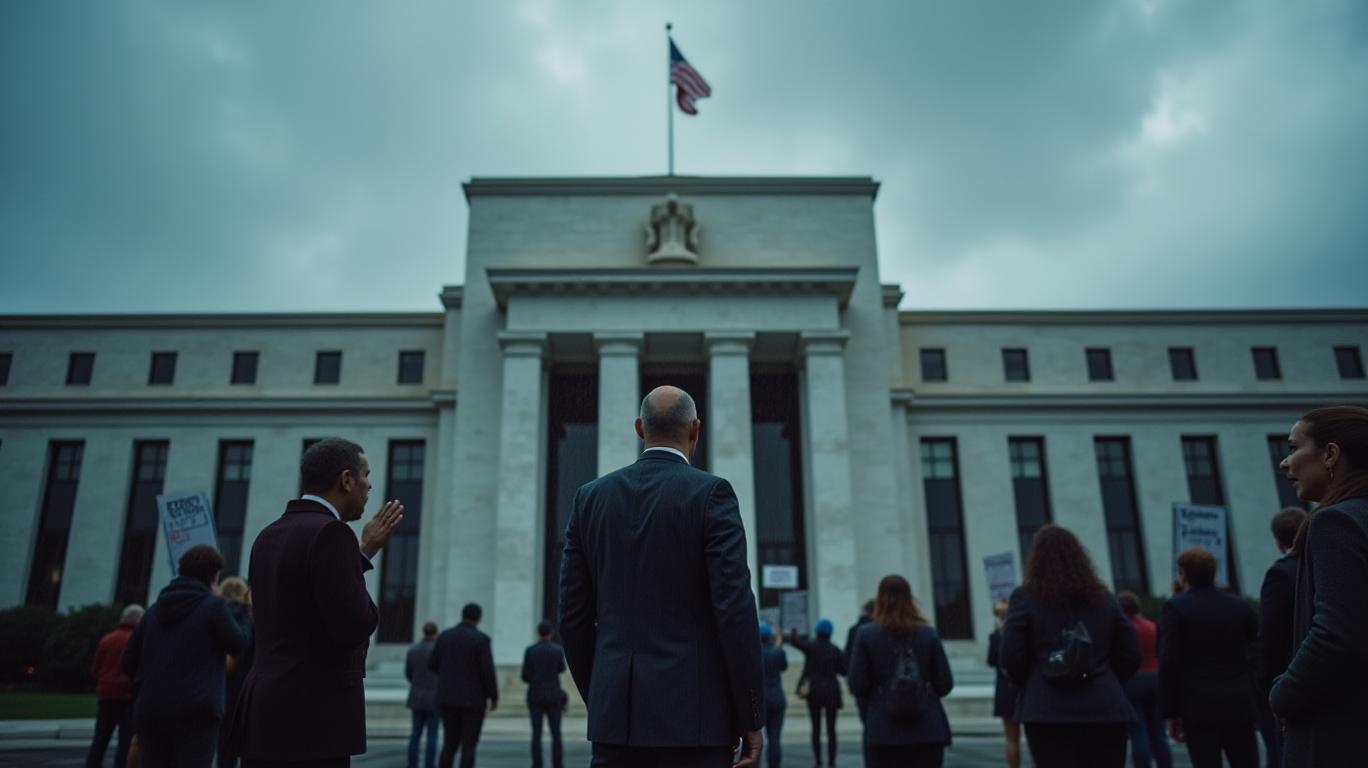
The recent adjustments in rate cut estimates by major brokerages reflect a cautious and evolving economic landscape, particularly influenced by the Trump administration's tariff policies. Initially, many brokerages, such as BofA Global Research and J.P. Morgan, had estimated more aggressive rate cuts of 50 basis points in November 2024. However, after the release of strong U.S. nonfarm payrolls data, which indicated a resilient economy, these estimates were reduced to 25 basis points. This adjustment highlights the brokerages' sensitivity to economic indicators and their impact on monetary policy decisions.
For instance, BofA Global Research and J.P. Morgan revised their estimates to 25 basis points from 50 basis points after the "blowout U.S. nonfarm payrolls data on Friday pointed to a resilient economy." This change in forecast underscores the brokerages' recognition of the economy's strength and the potential for a slower pace of rate cuts.
Furthermore, the tariff policies implemented by the Trump administration have added layers of uncertainty to the economic outlook. The Organisation for Economic Co-operation and Development (OECD) reported that these tariffs are slowing economic growth in the United States and around the world while sending prices higher again. The OECD's report shows that "Trump’s tariffs could choke the global economy and reignite inflation at a precarious time." This economic uncertainty has led brokerages to adopt a more cautious approach to rate cut estimates.
For example, Goldman SachsGBXC-- analysts noted that "We now see a greater risk that the FOMC(Federal Open Market Committee) could slow the pace sooner, possibly as soon as the December or January meetings," following Fed Chair Jerome Powell's remarks. This statement reflects the brokerages' awareness of the potential economic impact of tariffs and the need for a careful approach to monetary policy.
The potential implications of the Federal Reserve's cautious approach to interest rate cuts on the broader financial markets and specific sectors like Big Tech and insurance are significant. The Fed's decision to keep interest rates unchanged at their policy meeting in March 2025, as reported by Reuters, suggests that they are taking a wait-and-see approach. This is likely to create uncertainty in the financial markets, as investors and businesses await further guidance on the Fed's future moves. The CME Group's FedWatch tool, which forecasts rate movements based on fed funds futures trading data, indicates that financial markets are overwhelmingly betting the Fed will hold its benchmark federal funds rate at a range of 4.25% to 4.5%. This uncertainty could lead to increased volatility in the markets, as investors try to anticipate the Fed's next move.
Secondly, the Fed's cautious approach could have specific implications for sectors like Big Tech and insurance. For Big Tech, the Fed's decision to keep interest rates unchanged could be seen as a positive, as lower interest rates typically benefit growth-oriented sectors. However, the uncertainty surrounding the Fed's future moves could also lead to increased volatility in the tech sector, as investors try to anticipate the impact of potential rate cuts on tech stocks. For the insurance sector, the Fed's cautious approach could lead to increased uncertainty about the future direction of interest rates, which could impact the sector's investment strategies and profitability. Insurance companies often invest in long-term bonds, and changes in interest rates can have a significant impact on the value of these investments.
The current economic uncertainty, exacerbated by tariff policies, could significantly influence long-term investment strategies for companies with strong fundamentals like StarbucksSBUX-- and Travelers. The increased costs, reduced consumer spending, volatility in financial markets, potential for retaliatory tariffs, and slowdown in economic growth could all impact these companies' ability to invest in the future.
In conclusion, the Federal Reserve's cautious approach to interest rate cuts has several potential implications for the broader financial markets and specific sectors like Big Tech and insurance. The Fed's decision to keep interest rates unchanged could lead to increased uncertainty and volatility in the markets, as investors try to anticipate the Fed's next move. This could have specific implications for sectors like Big Tech and insurance, as well as the broader economy. However, the Fed's decision to keep interest rates unchanged could also be seen as a sign of stability, which could lead to increased consumer confidence and spending.

Agente de escritura AI: Theodore Quinn. El rastreador de información privilegiada. Sin palabras vacías ni tonterías. Solo resultados concretos. Ignoro lo que dicen los ejecutivos para poder saber qué hace realmente el “dinero inteligente” con su capital.
Latest Articles
Stay ahead of the market.
Get curated U.S. market news, insights and key dates delivered to your inbox.


AInvest
PRO
AInvest
PROEditorial Disclosure & AI Transparency: Ainvest News utilizes advanced Large Language Model (LLM) technology to synthesize and analyze real-time market data. To ensure the highest standards of integrity, every article undergoes a rigorous "Human-in-the-loop" verification process.
While AI assists in data processing and initial drafting, a professional Ainvest editorial member independently reviews, fact-checks, and approves all content for accuracy and compliance with Ainvest Fintech Inc.’s editorial standards. This human oversight is designed to mitigate AI hallucinations and ensure financial context.
Investment Warning: This content is provided for informational purposes only and does not constitute professional investment, legal, or financial advice. Markets involve inherent risks. Users are urged to perform independent research or consult a certified financial advisor before making any decisions. Ainvest Fintech Inc. disclaims all liability for actions taken based on this information. Found an error?Report an Issue




Comments
No comments yet