
Fed Rate Cuts in 2025: Implications for Mortgage Rates and Financial Markets


 Aime Summary
The Federal Reserve's Rate Cut Decision in 2025
The Federal Reserve's decision to cut interest rates in late 2025 has sparked widespread discussion among investors, homeowners, and policymakers. With mortgage rates and broader financial conditions top of mind, the recent rate cuts are more than just a routine adjustment—they signal a shifting economic landscape and raise questions about what lies ahead in 2026. Understanding the Fed's reasoning and the implications of these cuts is key for anyone managing money or planning to make major financial moves in the coming year.
The Fed's December 2025 Rate Cut Decision
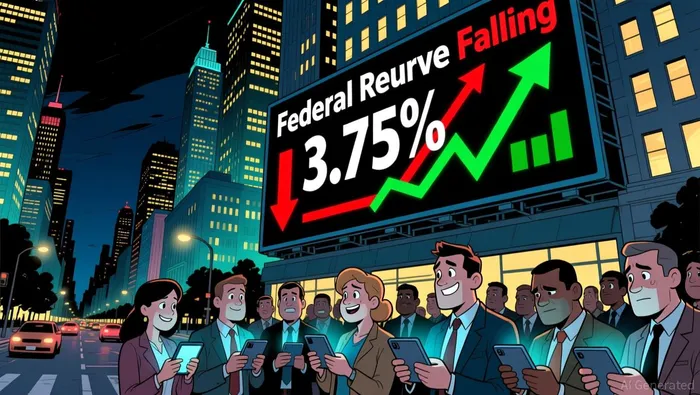
On December 10, 2025, the Federal Reserve cut its benchmark interest rate by 25 basis points, bringing the federal funds rate down to a range of 3.50%-3.75%. This was the third such cut of the year and the first since mid-2023, marking a clear shift in policy from earlier 2024, when the Fed was tightening to curb inflation. The move reflects a more accommodative stance, aimed at supporting the slowing labor market while still keeping an eye on inflation, .
The decision, however, was far from unanimous. —dissented, marking the largest number of dissents in six years. This division highlights the ongoing tension between those who see the need for further easing to support employment and those who fear that rate cuts could fuel a resurgence in inflation. As a result, the Fed's statement suggested a cautious approach for 2026, with just one more rate cut expected.
How the Rate Cuts Impact Financial Conditions and Borrowing Costs
One of the most immediate effects of the rate cuts is the impact on financial conditions, particularly for consumers. Lowering the federal funds rate typically leads to lower borrowing costs across the economy. For example, variable-rate credit cards saw their APRs drop to their lowest level since April 2023, potentially saving consumers $1.93 billion in interest over the next 12 months. Savings account rates are also likely to trend lower, which could affect how people manage their cash.
However, the connection between the Fed's policy rate and is not always direct. While the Fed has cut its key rate, , . This is because mortgage rates are largely driven by the and investor expectations rather than the Fed's short-term rate. Despite the Fed's easing, , , suggesting that investors expect inflation to remain stubbornly elevated or are pricing in a weaker economy.
Market Reactions and Economic Projections
The Fed's decision has been met with mixed reactions in financial markets. Equity investors are looking to sectors like , healthcare, and utilities, which tend to perform well when interest rates are lower. Meanwhile, the bond market has been a source of confusion— have risen even as the Fed cuts rates. Analysts are debating what this means: is it a sign of confidence in a , a return to more traditional , or growing concerns over the U.S. fiscal outlook?
The Fed also released updated economic projections, which paint a cautiously optimistic but realistic picture. in 2026 is moderate, with unemployment expected to decline slightly and inflation to trend downward. However, there is wide divergence among participants, underscoring the uncertainty in the economic outlook. The Fed's projections suggest a gradual path toward long-run , but the path will depend heavily on how the and consumer spending hold up.
What This Means for Investors and Consumers
For investors, the Fed's rate cuts signal a more , which could support , especially for high-quality, . , on the other hand, may need to adjust their strategies—Treasury yields are higher than expected, but the Fed's easing could eventually lead to a more favorable bond market if inflation cools and rates stabilize.
Homebuyers and homeowners, meanwhile, are in a tricky position. While the Fed is cutting rates to lower , mortgage rates have been slow to follow. slowest pace in 14 years, affordability remains a key concern. If the Fed's easing does translate to lower mortgage rates by mid-2026, we could see a modest rebound in and construction activity.
In the near term, the key takeaway is that the Fed is walking a tightrope between supporting growth and avoiding . Investors and consumers should keep a close eye on the January and March 2026 meetings, where the Fed will likely provide more clarity on its path forward. For now, the message is clear: the Fed is leaning toward easing, but it is not done being cautious.

Delivering real-time insights and analysis on emerging financial trends and market movements.
Latest Articles
Stay ahead of the market.
Get curated U.S. market news, insights and key dates delivered to your inbox.


AInvest
PRO
AInvest
PRO



Comments
No comments yet