
The Fed's Rate Cut Surprise: What It Means for Bonds, Stocks, and Your Portfolio


 Aime Summary
The Federal Reserve's December 2025 rate cut-its third consecutive reduction-has sent ripples through financial markets, sparking debates about the central bank's evolving strategy and its implications for investors. By trimming the federal funds rate by 25 basis points to a range of 3.5%-3.75%, the Fed signaled a cautious pivot from its earlier tightening cycle, even as internal divisions within the Federal Open Market Committee (FOMC) underscored the complexity of its balancing act between inflation control and growth support
according to CNBC analysis. This decision, made in a 9-3 vote, reflects a broader shift in monetary policy as the Fed navigates a "low-hire low-fire" labor market, delayed economic data from the government shutdown, and the looming transition of leadership under President Donald Trump
according to CNBC analysis. For investors, the move demands a strategic reevaluation of asset allocations in a landscape where the Fed's actions are both a signal and a catalyst.
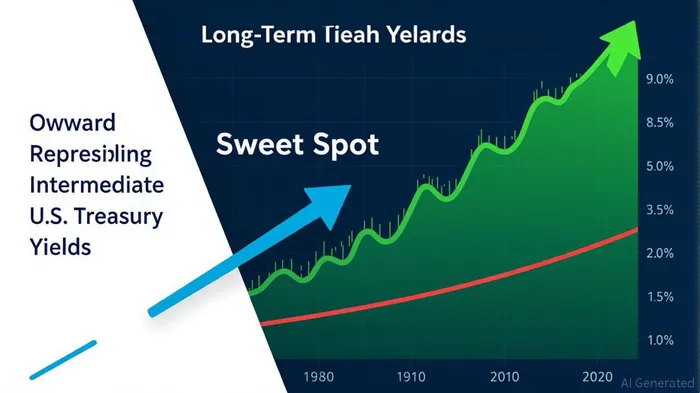
Bonds: The Belly of the Yield Curve Emerges as a Sweet Spot
The Fed's rate cuts have reshaped the bond market's dynamics, with the "belly" of the yield curve-bonds with maturities between 3–7 years-emerging as a favored asset class.
According to BlackRock, this segment is expected to outperform long-term bonds as investors seek intermediate-duration instruments that balance yield and risk in a low-growth environment. Long-dated Treasuries, meanwhile, face headwinds from reduced demand and concerns over U.S. debt sustainability, making them less attractive despite their traditional safe-haven status
according to BlackRock.
The Fed's decision to terminate its balance sheet reduction program in December 2025 further amplifies the case for intermediate bonds. By ending quantitative tightening, the central bank has signaled a more accommodative stance, which could drive yields lower and enhance returns for fixed-income investors with a tactical edge
according to DiscoveryAlert. However, cash holdings are increasingly seen as a liability in this environment. As yields fall, cash will underperform, pushing investors to reallocate into higher-yielding bonds while managing duration risk
according to BlackRock.
Stocks: Growth and Sectors in the Spotlight
For equities, the Fed's rate cuts have created a tailwind for growth stocks, particularly in the technology sector.
Lower interest rates reduce discount rates, making future earnings more valuable and boosting valuations for companies with long cash-flow horizons. Sectors like real estate, healthcare, and consumer staples are also poised to benefit, as
reduced borrowing costs and stronger consumer spending power support corporate profitability.
The dollar's potential weakening adds another layer of opportunity. A weaker U.S. dollar, a common byproduct of Fed easing, could bolster international equities by improving export competitiveness and attracting foreign capital.
Analysts at BNP Paribas note that global fiscal stimulus, particularly in Europe and the U.S., will further underpin corporate earnings in 2026. Meanwhile, alternative assets like gold and BitcoinBTC-- may gain traction as
investors hedge against inflation and currency volatility.
Strategic Reallocation: Fighting the Fed or Aligning With It?
The Fed's December 2025 decision marks a pivotal moment for portfolio construction. With the central bank projecting only one rate cut in 2026 and another in 2027, the path forward remains data-dependent and fraught with uncertainty
according to CNBC analysis. In this environment, experts recommend a dual approach: extending duration in fixed income to capitalize on anticipated rate declines while maintaining flexibility to adjust to hawkish surprises
according to RareView Capital.
The phrase "fight the Fed" takes on new relevance. As the terminal rate is expected to fall below its peak, investors are advised to position portfolios for a regime where rates continue to trend downward. This includes tactical shifts into market-neutral strategies and credit instruments that thrive in accommodative cycles
according to BlackRock. However, caution is warranted. The FOMC's internal dissent-particularly from hawkish members like Stephen Miran-suggests that the Fed may not be as dovish as the headline cut implies
according to CNBC analysis. A "hawkish cut" scenario, where the Fed tightens policy more aggressively than markets expect, remains a risk, particularly if inflationary pressures resurface
according to CNN Business.
Conclusion: Navigating the New Normal
The Fed's rate cut surprise in December 2025 is more than a technical adjustment; it is a signal of a broader shift in monetary policy. For investors, the challenge lies in distinguishing between the Fed's stated intentions and the realities of a fragmented FOMC, a fragile labor market, and a global economy teetering between growth and stagnation. Strategic asset reallocation must be both proactive and adaptive, leveraging the belly of the yield curve, growth equities, and alternative assets while remaining vigilant to the risks of overstimulation and policy reversals.
As the Fed's leadership prepares to change hands under President Trump, the coming months will test the resilience of these strategies. In the words of one market analyst, "The key is to stay nimble, fight complacency, and let data-not dogma-guide your decisions"
according to RareView Capital. In a world where the Fed's actions are both a mirror and a lever, that advice may prove invaluable.

Stay ahead of the market.
Get curated U.S. market news, insights and key dates delivered to your inbox.
AInvest
PRO
AInvest
PRO



Comments
No comments yet